
Muntuwenkosi Robert Mzimela

Muntuwenkosi Robert Mzimela | A Voice of Accountability in South Africa’s Democracy

When a nation drifts, truth becomes leadership.

Muntuwenkosi Robert Mzimela author stands apart in a political moment often defined by noise rather than substance. From Muntuwenkosi Robert Mzimela South Africa emerges a rare kind of public voice: one shaped by lived governance, community service, and an unshakeable belief that democracy only works when citizens and leaders accept responsibility for its outcomes. He does not posture. He measures. He does not trade in slogans. He interrogates systems.

As a Muntuwenkosi Robert Mzimela political writer, Mr. Mzimela brings the authority of experience to a field crowded with opinion. His work is grounded in the realities of institutions, the slow grind of policy, and the everyday consequences of leadership decisions on ordinary people. This is why readers encounter not ideology for its own sake, but carefully argued positions built on history, accountability, and civic duty.

At the heart of his voice is a disciplined commitment to public service. Mr. Mzimela political nonfiction does not seek applause; it seeks reform. He writes for citizens who want to understand how governance truly functions, why promises unravel, and what practical steps can restore trust between the state and the people it serves. His perspective is direct, unsentimental, and deeply human, shaped by decades of observing how laws, budgets, and institutions translate into real outcomes in schools, communities, and families.

This Author Spotlight begins with a simple truth: Mzimela’s work is not commentary from the sidelines. It is a call to stewardship from someone who believes that democracy is not inherited once and for all, but earned by every generation through honesty, accountability, and the courage to confront what is not working.

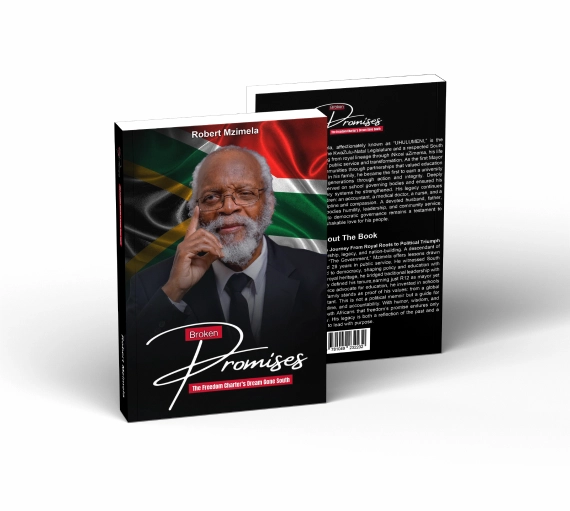
To understand the moral authority behind Mzimela’s voice, one must begin with the lineage that shaped it. Known widely as a South African political author Mzimela, he carries a heritage rooted in traditional leadership, yet his life’s work has been defined by democratic service. His background places him within the continuum of Mr. Mzimela South African history, where customary authority and modern governance intersect not as rivals, but as complementary forces.

As an African political thinker Mzimela, his worldview rejects the false choice between cultural continuity and institutional progress. He does not romanticize tradition, nor does he dismiss it. Instead, he treats heritage as a compass: a source of values that informs ethical leadership in contemporary public life. This balance, honoring origin while advancing reform, has guided his approach to education, local governance, and community development.

What distinguishes his leadership is the consistency between principle and practice. Mzimela’s public service was never symbolic. It was operational. He worked inside governing structures, confronted resource limitations, and made decisions whose consequences he was willing to live with personally. In a political culture often tempted by status and spectacle, his example demonstrates an older ethic: leadership as obligation, not entitlement.

This section of his story matters because it explains the tone of his writing. His arguments do not emerge from abstraction; they are shaped by responsibility inherited, tested, and reaffirmed through service. For readers, this legacy is not merely biographical. It is the foundation of a voice that insists governance must be anchored in dignity, continuity, and the long view of nationhood.

At the center of Mzimela’s political thought stands a document that continues to define South Africa’s moral horizon: The Freedom Charter. Through Mr. Mzimela Freedom Charter analysis, he treats the Charter not as a relic of struggle, but as a living framework for justice, participation, and national dignity. For him, its enduring value lies in its clarity: a society built on equality before the law, shared prosperity, and accountable leadership.

This perspective is inseparable from Mr. Mzimela democracy commentary, where he challenges citizens and officials alike to ask whether the ideals that once mobilized a nation are still guiding its institutions. His writing does not indulge nostalgia. Instead, it interrogates how far democratic practice has drifted from democratic promise. What was meant to unify has, in places, become procedural. What was meant to empower has, at times, become symbolic. Mzimela insists that the Charter’s vision only fails when it is no longer actively defended in policy, participation, and ethical governance.

Within Mr. Mzimela political thought, the Freedom Charter functions as both compass and standard. It offers not only a memory of what was fought for, but a measurable benchmark against which modern governance must be judged. He argues that democracy is not sustained by elections alone, but by fidelity to founding principles that prioritize dignity, fairness, and shared responsibility.

By re-centering the Charter as a practical blueprint rather than historical rhetoric, Mzimela invites readers to re-examine the social contract itself. His message is uncompromising yet hopeful: the promise has not expired. It has simply been deferred. And what can be deferred, he believes, can still be reclaimed.

A patriot’s audit of what went wrong and what must be rebuilt.

In Broken Promises: The Freedom Charter’s Dream Gone South, Mr. Mzimela delivers what can best be described as a civic reckoning. This is not a conventional memoir, nor is it detached academic theory. It is a deeply human Mr. Mzimela political analysis book, written by a statesman who lived the transition from apartheid to democracy and witnessed, from within, how ideals were compromised by mismanagement, complacency, and institutional drift.

Throughout the book, Mr. Mzimela political legacy is not framed as personal achievement, but as responsibility. He positions himself not as a hero of the past, but as a witness to a national promise that remains unfulfilled. His narrative moves carefully between lived experience and structural critique, exposing how systems intended to empower have too often failed the very citizens they were designed to serve. Yet the tone is never bitter. It is disciplined, reflective, and resolutely constructive.

At its core, the book stands as Mr. Mzimela nation-building commentary for a generation that inherited freedom but not always the tools to protect it. He writes directly to students, educators, community leaders, and emerging public servants, challenging them to confront uncomfortable truths without surrendering to cynicism. Each chapter carries a consistent message: accountability is not punitive, it is patriotic. Democracy is not a gift from history, it is a task for the present.

What makes Broken Promises essential reading is its refusal to simplify. Mzimela does not reduce South Africa’s challenges to personalities or party politics. Instead, he dissects the deeper mechanics of governance, participation, and ethical leadership. In doing so, he transforms critique into instruction. This is a book that does not merely explain what went wrong. It insists on asking what must be done next and who must be willing to do it.

Available now on Amazon and other major platforms.

🔗 For Amazon: Click here

The transition into democracy was one of South Africa’s most defining achievements, but Mzimela is clear that liberation alone could not guarantee good governance. Through Mr. Mzimela post-apartheid critique, he examines how early optimism gradually gave way to structural weaknesses, policy missteps, and leadership failures that reshaped the national trajectory. For him, the story of democracy is not a single moment of victory, but a continuous sequence of choices, some courageous, others costly.

As a South African governance author Mzimela, his analysis avoids the convenience of scapegoating. Instead, he dissects the mechanics of decision-making inside public institutions: how priorities were set, how accountability eroded, and how political expediency often replaced long-term planning. His writing reflects a deep understanding of how governance operates not only through laws and offices, but through the everyday discipline of administration, budgeting, and institutional integrity.

Central to this examination is Mr. Mzimela public policy analysis, which frames governance as both moral and technical work. He challenges readers to recognize that even well-intended reforms can fail without transparency, implementation capacity, and ethical leadership. Where others may speak in generalities, Mzimela insists on precision: which systems broke down, where oversight weakened, and how public trust began to fracture.

Yet this section is not merely diagnostic. It is instructive. By tracing how governance decisions shifted the nation from promise to tension, Mzimela offers a framework for renewal. He reminds future leaders that democracy is shaped less by rhetoric than by the quality of policies enacted and the discipline with which they are enforced. For a society still negotiating its post-apartheid identity, his message is both sobering and empowering: the future remains unwritten, but only if governance is reclaimed as a duty rather than a privilege.

Few issues reveal the health of a democracy as clearly as work, dignity, and economic inclusion. In this chapter of his analysis, Mzimela confronts what he sees as the most persistent fault line in modern South Africa: unemployment. Through Mr. Mzimela unemployment analysis, he frames joblessness not merely as an economic statistic, but as a moral and civic crisis that erodes faith in democratic institutions.

For Mzimela, the tragedy of unemployment lies in its ripple effect. When people are excluded from meaningful economic participation, trust in governance weakens, social cohesion frays, and political promises begin to sound hollow. His critique is grounded in decades of observing how policies translate into lived realities. Development, he argues, cannot exist on paper alone. It must be visible in households, classrooms, and communities. Without that connection, democracy risks becoming procedural rather than transformative.

What sets his approach apart is its refusal to simplify. In his Mr. Mzimela political leadership insights, he cautions against populist solutions that promise rapid relief without structural reform. He calls instead for leadership that is patient, evidence-driven, and accountable, leadership willing to invest in education, enterprise development, and long-term economic planning rather than short-term political gain.

This section speaks directly to young citizens and emerging leaders who inherited freedom but not always opportunity. Mzimela’s message is neither despairing nor indulgent. It is a challenge: economic justice is not a side issue of democracy; it is its proving ground. Until governance delivers pathways to work, productivity, and dignity, the democratic project remains incomplete. Through his analysis, he reminds readers that a nation’s political health is ultimately measured not by its speeches, but by the everyday livelihoods of its people.

Land is not merely territory in South Africa; it is memory, identity, and the unfinished business of justice. Mzimela approaches this subject with both moral clarity and institutional discipline. Through Mr. Mzimela land reform views, he acknowledges the historical dispossession that still shapes inequality today, while warning against solutions that prioritize speed over sustainability. For him, land reform is not an ideological slogan, it is a generational responsibility that must be guided by fairness, legality, and long-term social stability.

What distinguishes his position is its insistence on balance. Mzimela rejects both denial and extremism. He recognizes the urgency of redress, yet remains clear that reform cannot succeed if it undermines food security, investment confidence, or constitutional order. His writing frames land policy as a test of democratic maturity: whether a nation can correct injustice without reproducing instability.

This perspective aligns with his identity as Mr. Mzimela political reform advocate, where change is not measured by disruption alone, but by outcomes that expand opportunity while preserving institutional trust. He argues that land reform must be anchored in transparent governance, community participation, and economic planning that enables beneficiaries not merely to own land, but to thrive on it.

In this section of his broader analysis, Mzimela challenges readers to move beyond emotionally charged narratives toward practical nation-building. Justice, he reminds us, is not achieved by shortcuts. It is built through systems that are ethical, inclusive, and resilient. Land, when governed wisely, can become a foundation for dignity and development. When governed recklessly, it risks deepening the very divisions it was meant to heal. Through this lens, Mzimela positions reform not as a rupture with the past, but as a disciplined continuation of the democratic promise.

No challenge, in Mzimela’s view, has done more damage to democratic confidence than corruption. Through Mr. Mzimela corruption commentary, he addresses the slow erosion of public trust that occurs when institutions meant to serve the people become vehicles for personal gain. For him, corruption is not merely a legal failure. It is a moral breach that weakens the very foundation of citizenship.

Mzimela’s critique is direct but disciplined. He does not frame corruption as an abstract evil or a partisan weapon. Instead, he examines how compromised leadership distorts public systems, undermines service delivery, and breeds cynicism among communities that once believed in democratic renewal. When accountability collapses, citizens stop seeing government as a shared project and begin viewing it as something distant, inaccessible, and unworthy of loyalty.

Within this framework, Mr. Mzimela democracy reform becomes a call for restoration rather than reinvention. He argues that reform must begin with transparency, independent oversight, and a renewed ethic of public service. Laws alone, he contends, cannot rebuild trust. What is required is leadership willing to submit to scrutiny and institutions capable of enforcing consequences without fear or favor.

This section of his work is not written to condemn a nation, but to defend it. Mzimela insists that democratic societies are not destroyed by criticism; they are weakened by silence. By confronting corruption openly, he invites citizens to reclaim ownership of their institutions and reassert the values that once defined collective purpose. Trust, in his vision, is not granted by authority. It is earned through integrity, consistency, and the courage to hold power accountable.

For Mzimela, democracy does not end at the ballot box. It begins there. In this section, his work emerges as a Mr. Mzimela civic leadership book, one that reframes citizenship as an active responsibility rather than a passive right. He speaks to a society that has secured political freedom, yet still wrestles with how to sustain it through ethical participation, community engagement, and informed public action.

As a Mr. Mzimela civic responsibility book, his message is uncompromising in its simplicity: rights without responsibility hollow out democracy from within. He challenges citizens to move beyond protest alone and toward constructive leadership in schools, local councils, professional spaces, and civil organizations. Change, he argues, is not only negotiated in parliament, but built daily through service, accountability, and a shared commitment to the public good.

This vision aligns with his broader philosophy of Mr. Mzimela social transformation, where lasting reform is measured not by slogans, but by cultural shifts in how people relate to power, community, and one another. His writing insists that transformation must be social as well as political, rooted in values that prioritize dignity, cooperation, and long-term national cohesion.

As a Mr. Mzimela social justice author and Mr. Mzimela African politics author, he situates South Africa’s democratic journey within a wider continental context, reminding readers that governance challenges are not isolated, but shared across societies seeking equity after historical injustice. Yet his call remains deeply personal: each generation must decide whether it will inherit democracy as entitlement or rebuild it as stewardship.

This section stands as both invitation and challenge. Mzimela does not offer comfort. He offers responsibility. In doing so, he redefines leadership as something not reserved for officeholders, but required of every citizen committed to the future of the nation.

Muntuwenkosi Robert Mzimela | The Legacy Continues

At the close of this journey, one truth remains unmistakable: Muntuwenkosi Robert Mzimela author does not write for recognition, but for responsibility. His body of work, rooted in Mr. Mzimela political nonfiction, stands as a record of service and a roadmap for renewal. Where others retreat into nostalgia or outrage, Mzimela returns again and again to the question that defines democratic survival: who is willing to do the work when the applause fades?

His enduring relevance lies in the clarity of his purpose. Through Mr. Mzimela Freedom Charter critique, he reminds readers that founding ideals are not ornamental. They are obligations. Through Mr. Mzimela governance critique, he insists that leadership must be measured not by rhetoric, but by results, integrity, and accountability. And through his unwavering commitment to Mr. Mzimela South African democracy, he affirms that freedom, once won, must be continuously defended by ethical institutions and engaged citizens.

This is why his legacy does not conclude with a book or a career. It continues in classrooms, community halls, civic organizations, and the quiet decisions of individuals who choose stewardship over apathy. Mzimela’s message to future generations is neither sentimental nor severe. It is resolute: democracy is not a destination. It is a discipline.

The blueprint remains. The responsibility now belongs to those who inherit it. And in that inheritance, Muntuwenkosi Robert Mzimela’s voice endures, not as memory, but as mandate.

Follow Muntuwenkosi Robert Mzimela for future releases, insights, and official announcements.

🔗 For Facebook: Click here