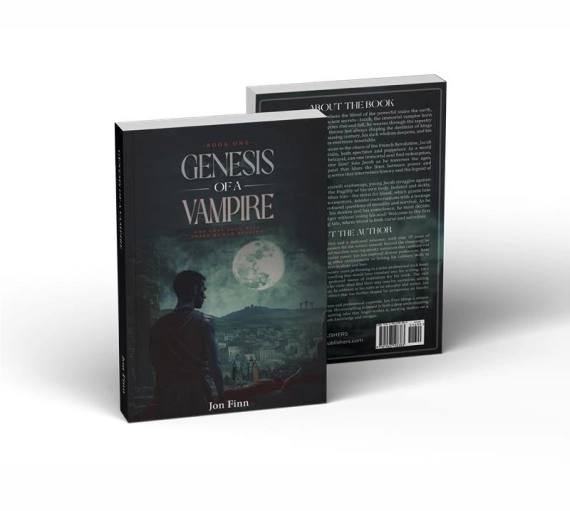
Jon Finn

Jon Finn | Where Darkness, History, and Immortality Begin

In the realm of dark fantasy, few voices feel as grounded, atmospheric, and unsettling as that of Jon Finn author, whose storytelling moves effortlessly between history, myth, and the supernatural. His work does not rely on spectacle alone. Instead, it draws readers into worlds where power is earned through suffering, immortality carries consequence, and darkness is shaped by human choice rather than fate. This is fiction that lingers, not because it shocks, but because it understands the fragile line between survival and monstrosity.

Jon Finn’s storytelling is deeply rooted in atmosphere. Every scene feels intentional, layered with moral tension and historical weight. His narratives explore what happens when humanity is stripped to its core and reshaped by forces older than civilization itself. Rather than presenting good and evil as absolutes, his writing examines how fear, cruelty, resilience, and hunger intertwine to form identity. The result is a reading experience that feels both intimate and epic, personal yet mythic

What sets Jon apart is his ability to merge darkness with intellect. His fiction carries the echo of ancient belief systems, forgotten histories, and the unsettling idea that legends are often born from truth. Readers are not merely observers in his stories. They are pulled into the shadows, forced to question morality, power, and the cost of endurance. Each chapter unfolds with purpose, guiding the reader deeper into a world where immortality is not a gift, but a burden shaped by time, blood, and memory.

This is where the journey begins. Not with a monster, but with a voice unafraid to explore what creates one.

At the core of Jon Finn’s work is a deliberate refusal to soften the truth of darkness. As a Jon Finn dark fantasy author, his stories do not rush to comfort the reader or offer simple moral resolutions. Instead, they invite reflection. His writing explores the spaces where fear and power coexist, where survival demands sacrifice, and where transformation is never without consequence. Darkness, in his hands, is not decorative. It is purposeful, psychological, and deeply human.

Jon approaches storytelling with the precision of a craftsman. Every narrative choice is shaped by atmosphere, pacing, and emotional weight rather than spectacle. His scenes breathe with tension, allowing dread to build slowly and naturally. This measured approach gives his work a haunting quality, one that lingers long after the final page. Readers are not told what to feel. They discover it themselves, through characters shaped by cruelty, endurance, and choice.

As a dark fantasy storyteller, Jon’s voice is distinguished by restraint. He understands that the most unsettling moments are often the quiet ones, where moral conflict simmers beneath the surface. Violence and horror are never gratuitous. They exist only when they serve the story’s deeper themes. This creates narratives that feel grounded, immersive, and unsettling in the most effective way.

His fiction does not seek to explain darkness away. It examines it, challenges it, and allows it to exist as a natural force within human history and mythology. Through this lens, Jon Finn builds worlds that feel ancient yet immediate, fictional yet disturbingly plausible, and impossible to forget.

The depth found in Jon Finn’s fiction is inseparable from the life experience that shaped his voice. As a supernatural fantasy author, his storytelling is informed by more than imagination alone. It is grounded in years of observing human behavior, power structures, and the enduring patterns of history. With over twenty-five years dedicated to teaching history, Jon developed a sharp understanding of how belief systems are formed, challenged, and often weaponized across generations.

That historical perspective gives his narratives a rare sense of authenticity. Supernatural elements in his work do not exist in isolation. They are embedded within real social tensions, moral contradictions, and moments of cultural upheaval. This allows his stories to feel credible even at their most fantastical. The supernatural becomes an extension of human behavior rather than an escape from it.

Beyond academia, Jon’s varied professional life has exposed him to people from all walks of society. From disciplined environments shaped by hierarchy and order to creative spaces that demanded adaptability and intuition, each experience has left a mark on his narrative voice. As a fantasy author exploring darkness, he draws on these contrasts to craft characters who feel real, flawed, and emotionally complex.

His work reflects a clear understanding that darkness is not born in isolation. It grows through fear, imbalance, and unchecked power. By blending lived experience with historical insight, Jon Finn creates stories that resonate with readers seeking depth, realism, and meaning beneath the supernatural surface.

At the center of Jon Finn’s dark mythology stands Genesis of a Vampire, as a Genesis of a Vampire novel, it positions itself firmly as an origin narrative that challenges traditional interpretations of immortality, that redefines how vampirism is understood, not as folklore alone, but as consequence, evolution, and survival. This is not a tale driven by romance or spectacle. It is a story forged in suffering, shaped by cruelty, and fueled by the relentless pull between power and restraint. As a

At the center of Jon Finn’s dark mythology stands Genesis of a Vampire, as a Genesis of a Vampire novel, it positions itself firmly as an origin narrative that challenges traditional interpretations of immortality, that redefines how vampirism is understood, not as folklore alone, but as consequence, evolution, and survival. This is not a tale driven by romance or spectacle. It is a story forged in suffering, shaped by cruelty, and fueled by the relentless pull between power and restraint. As a Genesis of a Vampire book, it positions itself firmly as an origin narrative that challenges traditional interpretations of immortality.

The story unfolds through the life of Jacob, a character born into abandonment and shaped by violence long before supernatural forces fully reveal themselves. His transformation is gradual, unsettling, and deeply psychological. Rather than presenting vampirism as a sudden awakening, the novel treats it as an extension of lived trauma, a response to a world governed by predators and victims. This approach gives the narrative weight and credibility, allowing readers to understand not just what Jacob becomes, but why.

What elevates the novel is its grounding in history, belief, and myth. Set against a backdrop where religion, empire, and superstition collide, the story examines how legends are born and how truth is often distorted by power. As a vampire origin story book, it resists modern clichés and instead builds a foundation rooted in ancient fear, moral ambiguity, and human desperation.

The result is a narrative that feels timeless and unsettling. It invites readers to question whether monsters are created by darkness itself or by the world that demands their existence.

🔗 Where to Buy Genesis of a Vampire

🔗 For Amazon: Click here

🔗 For Barnes & Noble: Click here

🔗 For AbeBooks: Click here

🔗 For Goodreads: Click here

🔗 For eBay: Click here

🔗 For Waterstones: Click here

🔗 For Booktopia: Click here

What gives Genesis of a Vampire its lasting power is its deep connection to mythological thinking and historical belief systems. This is not a story that treats vampirism as a modern invention or a simple curse. Instead, it frames immortality as something ancient, feared, and misunderstood across generations. As a vampire mythology book, the novel draws strength from the idea that legends are shaped by the fears of their time and preserved through whispered stories rather than written truth.

Jon Finn approaches mythology as a living force. Religious symbolism, superstition, and early concepts of good and evil are woven naturally into the narrative, grounding the supernatural elements in the mindset of the era in which the story unfolds. This creates a world where darkness is not an anomaly, but an accepted and often unspoken presence. Readers are immersed in a setting where belief holds power, and where fear can be just as influential as law or reason.

As an author writing supernatural mythology, Jon understands that lore must feel earned. Every myth hinted at in the story serves a narrative purpose, reinforcing the idea that immortality is both a burden and a weapon. The supernatural is never separate from humanity. It grows out of it, shaped by injustice, survival, and the need for control.

This layered approach allows the novel to stand apart from conventional vampire fiction. It feels ancient, deliberate, and unsettling, inviting readers to explore the origins of darkness not as fantasy alone, but as a reflection of humanity’s oldest fears.

At the heart of Genesis of a Vampire lies a transformation that is as psychological as it is supernatural. This is not a sudden awakening marked by glamour or ease. Instead, the change unfolds slowly, shaped by trauma, hunger, and necessity. As a vampire transformation novel, the story treats immortality as an irreversible shift in identity, one that forces its central character to confront what survival truly costs.

Jacob’s evolution is driven by circumstance rather than desire. His growing power does not free him from suffering. It complicates it. Each step forward demands a deeper compromise, creating an internal struggle between restraint and instinct. This tension becomes the emotional core of the narrative, pushing the character into morally uncertain territory where right and wrong lose their clarity. The reader is left to wrestle with the same questions that haunt him. How much humanity can be lost before there is nothing left to save?

What makes this transformation compelling is its psychological realism. As psychological vampire fiction, the novel explores fear, guilt, control, and the slow erosion of innocence with remarkable precision. Jacob is not driven by cruelty, yet violence becomes an unavoidable tool for survival. This contradiction gives the story its weight, forcing readers to recognize that monsters are often shaped, not born.

Through this lens, transformation becomes more than a supernatural event. It is a study of endurance, power, and the fragile boundaries that define morality when survival is no longer optional.

Atmosphere plays a defining role in Genesis of a Vampire, shaping every moment with a sense of unease and restrained menace. The novel thrives on shadow, silence, and anticipation, allowing dread to build organically rather than relying on constant confrontation. As a dark fantasy vampire novel, it embraces darkness not just as a setting, but as a living presence that presses in on every character and decision.

Jon Finn understands that fear is most effective when it is suggested rather than explained. Scenes unfold slowly, saturated with tension, where the supernatural is felt long before it is seen. The world of the novel is heavy with decay, belief, and secrecy, creating a gothic atmosphere that feels immersive and oppressive without becoming excessive. This careful balance keeps readers engaged, alert, and emotionally invested.

As a horror influenced fantasy author, Jon blends elements of dread with narrative restraint. Horror is never gratuitous. It exists to heighten psychological tension and reinforce the consequences of power and immortality. Violence, when it occurs, feels earned and unsettling, leaving lasting impressions rather than fleeting shocks.

This approach creates a story that lingers in the reader’s mind. The supernatural does not overwhelm the narrative. It sharpens it. The result is a haunting, slow-burning experience where fear seeps through the cracks of history, myth, and human weakness, reinforcing the novel’s dark and gothic identity.

Genesis of a Vampire is not driven by spectacle or fantasy alone. Beneath its darkness lies a sharp examination of power, justice, and survival. As a dark fantasy vampire novel, it asks difficult questions about who deserves protection, who becomes expendable, and how far one can go before becoming the very force they once feared. The story refuses easy answers, instead presenting a world where every choice carries weight and consequence.

Jacob’s existence becomes a study in balance. He is both protector and predator, shaped by a society that failed him long before immortality entered his life. The novel challenges readers to consider whether violence committed in the name of survival can ever be justified. Power, once gained, does not bring peace. It creates responsibility, temptation, and isolation. These themes run consistently through the narrative, giving the story a philosophical depth rarely found in genre fiction.

As a paranormal thriller author, Jon Finn infuses tension into every decision his characters make. Danger is not limited to supernatural threats. It exists in human ambition, cruelty, and fear. This duality keeps the narrative grounded and unpredictable, blurring the line between monster and man.

Rather than glorifying immortality, the novel exposes its cost. Survival demands sacrifice, and justice often arrives stained with blood. This purposeful storytelling elevates Genesis of a Vampire beyond genre expectations, transforming it into a reflection on power, morality, and the enduring consequences of choice.

Within contemporary dark fantasy, Jon Finn stands apart for his commitment to depth, restraint, and myth-driven storytelling. As a Jon Finn published author, his work reflects a clear refusal to follow trends or soften narratives for easy appeal. Instead, he focuses on building worlds that feel lived-in, morally complex, and shaped by consequence. His stories challenge readers to engage rather than consume, to question rather than escape.

Jon’s approach places character above spectacle. Power is never glamorous, immortality is never effortless, and darkness is never without cost. This deliberate narrative philosophy positions him as an emerging dark fantasy author whose work resonates with readers seeking substance beneath the supernatural. His fiction rewards patience, drawing its strength from slow-burning tension and psychological realism rather than excess.

What defines Jon’s voice is consistency. Across theme, tone, and structure, his writing maintains a clear identity rooted in mythology, history, and human conflict. He trusts his audience to sit with discomfort and ambiguity, allowing stories to unfold without forced resolution. This confidence in storytelling creates a strong connection with readers who value complexity and authenticity.

As his body of work grows, Jon Finn continues to carve a space for himself within dark fantasy fiction, offering narratives that respect both the intelligence and emotional endurance of the reader. His voice is measured, purposeful, and unmistakably his own.

Jon Finn | The Legacy Continues

The journey Jon Finn has begun with Genesis of a Vampire is not confined to a single story or character. It is the foundation of a wider mythology, one shaped by history, belief, power, and the enduring consequences of immortality. As a Jon Finn author, his work signals a long-term commitment to storytelling that values depth over trend and substance over spectacle.

What defines Jon’s legacy is not merely the darkness of his worlds, but the intelligence with which they are constructed. His narratives respect the reader, trusting them to engage with moral ambiguity, psychological tension, and unresolved questions. Immortality in his fiction is never an escape. It is a responsibility that stretches across centuries, carrying memory, guilt, and consequence in equal measure. This thematic consistency ensures that his stories resonate beyond their final pages.

Jon Finn’s writing suggests that the myths we inherit are often shaped by fear, misunderstanding, and power, and that the truth behind them is far more complex. By grounding supernatural fiction in history and human experience, he creates stories that feel timeless rather than temporary. Each narrative becomes part of a larger conversation about survival, justice, and the cost of endurance.

As his body of work expands, so too does the scope of his creative universe. For readers drawn to dark fantasy rooted in meaning, Genesis of a Vampire marks not an ending, but a beginning. The legacy has started, and its shadows are only beginning to stretch forward.

For future updates and upcoming release follow Jon Finn on his official social media pages.

🔗 For Facebook Profile: Click here