
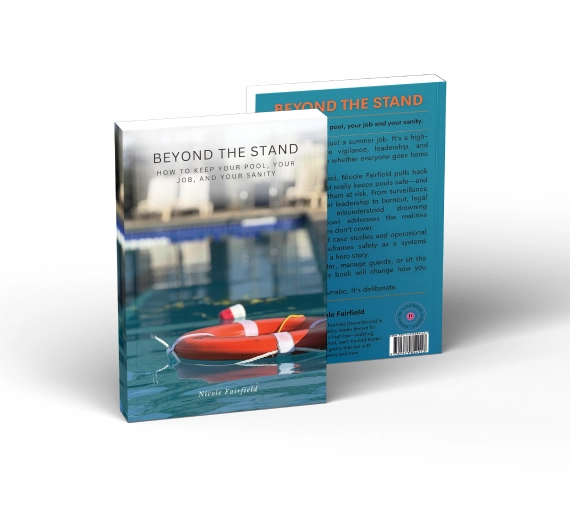
Beyond the Stand

Beyond the Stand: How to Keep Your Pool, Your Job, and Your Sanity

The Beyond the Stand book by Nicole Fairfield challenges everything people think they know about lifeguarding. In Beyond the Stand: How to Keep Your Pool, Your Job, and Your Sanity, Fairfield presents lifeguarding not as a seasonal job, but as a professional responsibility rooted in operational safety, leadership, and prevention systems.

Unlike many traditional guides, Beyond the Stand Nicole Fairfield approaches aquatic safety from a real-world perspective, exposing the operational gaps that often exist in aquatic facilities. Through practical analysis, research, and lived experience, Nicole Fairfield Beyond the Stand reframes lifeguarding as a structured safety profession rather than a heroic narrative built around dramatic rescues.

This Beyond the Stand lifeguard book explores how modern aquatic environments require more than strong swimmers and whistles. Facilities need strong systems, trained leadership, and consistent safety protocols. As a lifeguard leadership book, the work focuses on how prevention, surveillance, and operational structure ultimately determine whether a pool environment remains safe.

By redefining water safety leadership, Fairfield highlights the responsibilities shared by lifeguards, aquatic directors, and facility managers. The message is clear: saving lives is not about individual heroics. It is about building systems where tragedies never have the opportunity to occur.

For decades, lifeguarding has been framed as a simple summer job. However, the Nicole Fairfield lifeguard book makes it clear that the profession involves far greater responsibility than many people realize. Lifeguards operate in environments where seconds matter and where constant vigilance determines whether a routine day at the pool remains safe.

The lifeguard mental health book perspective presented in Beyond the Stand reveals the psychological pressure many guards experience. Lifeguards must maintain continuous awareness of dozens of swimmers while managing environmental factors such as glare, crowd density, and water clarity. This mental load often leads to challenges associated with lifeguard mental health awareness, particularly in high-traffic facilities.

Fairfield also addresses a topic rarely discussed in aquatic training programs: lifeguard burnout book realities. Long shifts, emotional responsibility, and operational stress can create serious challenges related to lifeguard stress management. Over time, guards may struggle to maintain the mental resilience for lifeguards required for effective surveillance.

By exploring these pressures openly, Beyond the Stand demonstrates that lifeguarding is not just a technical role. It is a profession that demands awareness, discipline, and support systems that protect both the public and the guards responsible for keeping aquatic environments safe.

One of the most important insights presented in Beyond the Stand is that drowning prevention is not built on heroics. It is built on systems. Many aquatic facilities still operate under the assumption that lifeguards will simply react when something goes wrong. However, effective drowning prevention strategies rely on proactive planning, surveillance design, and operational accountability.

The book explains how strong safety environments function through layered systems that reduce risk before emergencies occur. A well-structured aquatic program incorporates professional lifeguard safety systems, structured zone coverage, and clearly defined emergency action plans. These systems ensure that guards are not left alone to compensate for operational gaps.

Fairfield also examines the broader philosophy behind drowning prevention leadership guide principles, emphasizing that prevention is a management responsibility as much as it is a lifeguard skill. When aquatic leaders prioritize training, staffing, and operational oversight, they create environments where incidents are significantly less likely to occur.

Understanding how lifeguards prevent drowning ultimately requires looking beyond the stand itself. Surveillance, communication, and operational planning work together to create a safety structure that protects swimmers before a crisis develops. In this way, Beyond the Stand encourages aquatic professionals to view safety not as reaction, but as deliberate prevention.

While lifeguards are often the most visible safety presence at a pool, Fairfield argues that many incidents originate from deeper operational issues. In numerous facilities, leadership failure in aquatics creates conditions where lifeguards are expected to manage risks without the resources or support necessary to do so effectively.

Through practical examples and industry analysis, the book highlights how poor supervision, inconsistent policies, and unclear authority structures can undermine safety operations. When leaders fail to define responsibilities or enforce protocols, lifeguards are placed in difficult situations that demand quick decisions without proper guidance. This is where lifeguard leadership and accountability becomes essential.

Fairfield emphasizes that strong aquatic organizations invest in aquatics leadership training to ensure managers understand the operational realities of pool environments. Leaders who have practical knowledge of surveillance systems, staffing requirements, and risk assessment are far better equipped to support their teams.

By promoting aquatics safety leadership strategies, the book encourages organizations to move away from reactive management and toward proactive oversight. When leadership prioritizes structure, communication, and accountability, aquatic facilities can create safer environments where lifeguards are empowered to perform their roles effectively.

One of the most practical lessons in Beyond the Stand focuses on surveillance, the core skill that determines whether lifeguards detect a drowning in time. Many people assume that lifeguarding is simply watching swimmers, but effective surveillance requires structured training and constant focus. Through detailed explanations, Fairfield highlights how scanning zones lifeguard training plays a critical role in professional aquatic safety.

Effective surveillance depends on proper zone coverage and disciplined observation patterns. Guards must master lifeguard scanning techniques that allow them to detect subtle changes in swimmer behavior before distress becomes visible. These techniques often involve methodical movement of the eyes and body to maintain full coverage of assigned areas.

The book also discusses lifeguard surveillance techniques used by experienced aquatic professionals. These strategies include maintaining clear sightlines, identifying high-risk swimmers, and using structured scanning patterns to monitor crowded pools. In many cases, guards rely on professional drowning detection skills to recognize early signs of distress that may go unnoticed by untrained observers.

Ultimately, effective surveillance is a learned discipline built through repetition and practice. Strong lifeguard vigilance training helps guards maintain focus, recognize danger signals quickly, and intervene before a swimmer’s situation becomes critical.

While surveillance is essential, Fairfield explains that aquatic safety also depends on strong operational systems. The book positions itself as an aquatic facility management book that explores how daily operations influence safety outcomes. From staffing levels to maintenance routines, every operational decision affects the effectiveness of lifeguard supervision.

Modern aquatic environments require detailed attention to swimming pool safety operations. Facility managers must ensure that equipment is functional, safety procedures are clearly defined, and staff receive consistent training throughout the season. Without proper operational support, even skilled lifeguards may struggle to maintain safe conditions.

Fairfield also explores the importance of structured planning through aquatic operations training programs. These programs prepare staff to handle emergencies, coordinate responses, and maintain communication during high-pressure situations. When implemented correctly, they strengthen both individual performance and team coordination.

In addition, the book highlights the importance of aquatics risk management guide principles. Managers must evaluate potential hazards, implement preventative policies, and monitor compliance with safety standards. As a comprehensive aquatic risk management book, Beyond the Stand demonstrates how strong operational leadership forms the foundation of effective aquatic safety systems.

One of the most overlooked topics in aquatic safety is the emotional toll of lifeguarding. While the profession focuses heavily on physical skills and rescue techniques, Beyond the Stand brings attention to the human side of the job. Fairfield explains that long hours of constant vigilance, high responsibility, and intense incidents can lead to serious challenges related to lifeguard burnout prevention.

Lifeguards often operate in environments where mistakes carry enormous consequences. When incidents occur, guards may struggle with lingering stress and emotional impact, making lifeguard trauma awareness an important part of professional training. Without proper support systems, these experiences can contribute to lifeguard trauma and burnout, affecting both individual wellbeing and job performance.

The book emphasizes the importance of building stronger support structures within aquatic teams. Programs that promote peer support for lifeguards allow staff members to discuss difficult experiences, learn from incidents, and maintain emotional resilience. When aquatic facilities acknowledge the psychological demands of lifeguarding, they create healthier work environments that benefit both employees and patrons.

By addressing mental health openly, Beyond the Stand encourages the aquatic industry to recognize that effective safety programs must protect not only swimmers but also the professionals responsible for guarding them.

One of the most powerful sections of Beyond the Stand focuses on how drowning actually occurs in real aquatic environments. Contrary to popular belief, most drowning incidents do not involve dramatic splashing or loud cries for help. Instead, they often appear as subtle behavioral changes that can easily go unnoticed without proper training.

Fairfield introduces the concept of technical eyes drowning detection, a skill that allows lifeguards to recognize early physiological signs of distress. Through specialized drowning detection training, guards learn to observe movement patterns, breathing behavior, and body positioning that may signal a swimmer is struggling.

These observational techniques are essential because drowning is frequently silent and rapid. Lifeguards must rely on careful attention to small cues rather than obvious signals. Advanced aquatic programs also implement pool surveillance systems designed to support human observation. These systems may include structured zone coverage, improved visibility planning, and technological tools that assist guards in monitoring large areas.

By teaching guards to recognize subtle warning signs, Fairfield demonstrates how prevention begins long before a swimmer slips beneath the surface. The ability to observe, interpret, and act quickly can mean the difference between a routine day at the pool and a life-threatening emergency.

While many people see lifeguarding as a temporary position, Beyond the Stand presents it as a profession with long-term development opportunities. The book explores how structured training, mentorship, and operational knowledge can help lifeguards grow into leadership roles within the aquatic industry. In this sense, the work functions as a lifeguard career development book that highlights the broader pathways available in aquatics.

Developing a successful lifeguard career in aquatics requires more than rescue skills. Guards must understand operations, communication, and team coordination. Fairfield discusses how professional lifeguard development programs can prepare staff members for responsibilities that extend beyond the stand, including supervision, training, and facility oversight.

Strong teams also depend on collaboration. Building trust among staff members helps prevent communication failures during emergencies. Facilities that invest in building strong lifeguard teams create environments where guards support each other and maintain consistent surveillance standards.

Ultimately, effective aquatic programs rely on integrated systems of people and procedures. When lifeguards understand their roles within broader guards and pool safety systems, they become more confident, coordinated, and capable of maintaining safe aquatic environments.

Available now

🔗For Amazon: Click here

At the center of Beyond the Stand is the experience and perspective of Nicole Fairfield aquatic safety author and long-time water safety advocate Nicole Fairfield. Through years of teaching swimming and working within aquatic environments, Fairfield developed a deep understanding of the challenges faced by lifeguards and aquatic professionals.

Her work reflects a commitment to improving safety standards across the industry. As the creator of a Nicole Fairfield aquatic safety leadership book, she focuses on bridging the gap between frontline lifeguards and the operational decisions made by facility managers. By examining topics such as pool operations safety book principles and leadership accountability, Fairfield encourages organizations to strengthen the systems that support aquatic safety.

The book also highlights operational realities that many facilities overlook, including issues such as water clarity and lifeguard safety. Visibility, staffing, and equipment maintenance all play critical roles in preventing incidents and ensuring effective surveillance.

Through research, case analysis, and practical guidance, Fairfield has created what many consider a professional water safety training guide for lifeguards, managers, and aquatic directors. Beyond the Stand ultimately serves as a call for the aquatic industry to rethink safety systems and build environments where prevention becomes the standard rather than the exception.

For the latest book releases, exclusive discounts, and updates, follow Nicole Fairfield:

🔗For Facebook: Click here

Want to hear Nicole share her insights and stories firsthand? Tune into her podcast, where she dives deeper into water safety, child development, and the joy of swimming.

🔗 Listen to Nicole on her podcast here.