Navigating the Storms of Life

Navigating the Storms of Life

All Within a Year Learning to Adapt Through Trauma, Pain and Sorrow

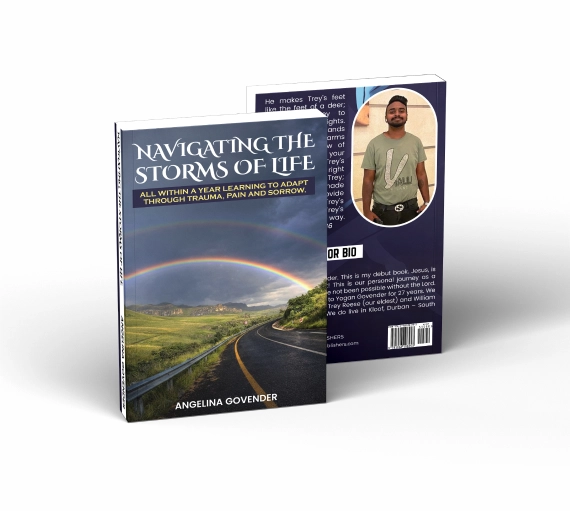
There are books that inspire, and then there are books that anchor you when life begins to break. Navigating the Storms of Life book stands firmly in the second category. This is not a fictional account shaped by imagination. It is a lived testimony, written in hospital corridors, whispered through midnight prayers, and carried by a mother who refused to surrender her faith.

Navigating the Storms of Life by Angelina Govender tells the deeply personal story of one family’s sudden confrontation with trauma after a devastating car accident left their son fighting for his life. What unfolds is more than survival. It is endurance shaped by belief, resilience strengthened by Scripture, and love that refuses to collapse under pressure.

As a Christian inspirational book Navigating the Storms of Life speaks directly to readers walking through their own uncertainty. It stands as a powerful Christian living nonfiction book, rooted in faith rather than theory. Every page carries the weight of lived experience, reminding us that storms may come without warning, but faith can steady even the fiercest winds.

This is not simply a story of pain. It is a declaration that God remains present in the middle of it.

Every life has a dividing line, a moment when ordinary becomes unrecognizable. For the Govender family, that moment arrived in the stillness of night, with a phone call no parent ever wants to receive. In seconds, peace gave way to panic. In minutes, faith was tested in ways it never had been before.

This is not merely a memoir of events. It is a Christian book about life storms and faith, where belief is not decorative but necessary. As doctors spoke in clinical language and machines began to measure survival, the only response that remained steady was prayer.

In the hospital waiting room, fear pressed heavily against hope. Yet even in the uncertainty, there was a conscious decision to practice trusting God in adversity. It was not denial of reality, but defiance against despair. Scripture became oxygen. Every whispered petition became an act of survival. This was prayer during hardship in its rawest form, not polished or poetic, but desperate and real.

What began that night was not just a medical journey. It was the beginning of strengthening faith in uncertainty, a walk through darkness where belief was no longer optional but essential.

And the storm had only just begun.

Between ICU and Hope

The days that followed blurred into a rhythm of machines, medical updates and fragile hope. Intensive Care became both a battlefield and a sanctuary. Behind glass doors and under fluorescent lights, life was measured in oxygen levels, heart rates and neurological responses. Yet beyond the clinical language, something deeper was unfolding.

This season of waiting transforms the book into a powerful Christian hope and resilience book, not because the fear disappeared, but because faith refused to. Every update from the neurosurgeon carried both caution and possibility. The words “spinal cord injury” echoed heavily, yet Scripture echoed louder.

The family leaned into biblical encouragement during trials, drawing strength from verses that once felt familiar but now felt urgent. ICU corridors became places of worship. Silent tears became offerings. The ventilator’s steady rhythm became a reminder that God was still sustaining breath.

The experience reads like living spiritual resilience literature, not abstract theology but embodied endurance. Each chapter demonstrates how faith matures when it is stretched. Through every setback, through every night without sleep, there remained an unwavering commitment to Scripture-Based Encouragement, anchoring the family in truth when circumstances tried to define the outcome. Hope did not arrive dramatically. It arrived in small stabilizing moments. And those moments were enough to keep believing.

Healing is rarely linear. Just as stability began to take shape, new complications emerged. Infections, blood pressure fluctuations and frightening episodes like autonomic dysreflexia reminded everyone that recovery is often a storm within a storm.

In this stage of the journey, the message deepens into what it truly means to practice overcoming life challenges with God. Faith was no longer about inspiration; it became survival. It was choosing belief when medical charts offered uncertainty. It was holding Scripture when fear felt louder than logic.

This chapter reflects faith-based encouragement for believers who understand that resilience is not loud. It is quiet consistency. It is standing firm when answers are delayed. The family learned what it meant to be walking with God through trials, not ahead of Him, not questioning every step, but trusting His nearness.

There were nights when exhaustion overtook strength. Moments when tears spoke louder than prayers. Yet even in those fragile spaces, gratitude remained. That steady gratitude turned this testimony into authentic Christian motivational reading, not because it promises easy outcomes, but because it reveals how courage grows in surrender. Faith did not eliminate fear. It outlasted it.

When Trey was transferred into rehabilitation, the focus shifted from survival to rebuilding. The environment changed, but the challenge deepened. Every day became a lesson in patience, humility and endurance. Learning to sit upright again. Learning to hold balance. Learning to trust a body that no longer responded the way it once had.

For many readers, this section resonates deeply as an inspirational Christian book for women, especially mothers who understand the ache of watching a child struggle. It is a portrait of strength shaped not by control, but by surrender.

The journey reflects the heart of a Christian women spiritual growth book, where faith matures under pressure. Tears fell during therapy sessions. Frustration surfaced. Yet belief remained steady. This season required intense Christian Self-Reflection, asking difficult questions about identity, purpose and dependence on God.

Rehabilitation felt like living inside devotional style Christian encouragement, where each small victory, a finger twitch, a longer breath, became a daily testimony. The hospital gym was no longer just a room with equipment; it became sacred ground. Progress was slow. Pain was real. But faith was growing stronger than both.

Leaving the hospital after five and a half months was both triumphant and terrifying. Home had been prepared with ramps, equipment and caregivers. Yet no physical adjustment could prepare the heart for the responsibility ahead.

Coming home transformed this story into a living example of a faith anchored life book, where belief does not end at discharge. It begins again. The ordinary became holy, mealtimes, medication routines, temperature checks. Every small act of care became worship.

The family leaned into a God centered life guidance book reality, where daily structure was built around prayer and vigilance. Their journey reflects deep Religious Personal Development, not shaped by comfort but by commitment. Trust became a discipline, not just a feeling.

This stage also embodies a faith based personal development book, where resilience extends beyond the hospital walls. Adjustments were constant. Sleepless nights returned. Episodes of medical fear surfaced again. Yet gratitude remained louder than anxiety.

Home was no longer just a place. It became a testimony that healing is not defined by perfection, but by perseverance grounded in faith.

Recovery did not end at discharge. It simply changed location. Beyond the structure of hospital care, Trey had to rediscover identity, purpose and independence within a new reality. The visible wounds were healing, but the emotional and psychological adjustments required equal strength.

This stage of the journey unfolds as a powerful Christian faith journey book, not confined to a hospital bed but lived out in daily choices. Every morning demanded courage. Every movement required determination. Yet hope was no longer fragile; it was forming roots.

The testimony deepens into a visible Christian Personal Faith Journey, shaped by discipline, therapy and spiritual conviction. Trey’s resilience inspired not only those around him, but visitors and friends who came seeking encouragement. His willingness to keep believing, even when progress felt slow, became a living sermon.

The narrative also stands as authentic Christian inspirational literature, rooted in reality rather than platitudes. There were days of frustration, tears and silent grief for what had been lost. Yet there was also laughter, brotherhood and renewed vision.

Through it all, this remained hope filled Christian writing, demonstrating that resilience is not the absence of struggle but the refusal to surrender to it. The storm had not defined him. It had refined him.

Just as home life began to stabilize, a new possibility emerged, advanced neuro-rehabilitation in India. It was not a casual decision. It required faith, financial planning and emotional courage. But when healing calls, faith often answers before certainty arrives.

This chapter speaks to anyone searching for how to trust God during difficult times book guidance in practical form. The decision to travel abroad was not rooted in desperation, but in belief that God still had more ahead. It became an expression of Prayer & Perseverance Literature, where persistence meets divine timing.

At its core, this moment represents intentional Spiritual Growth. The family was no longer reacting to crisis; they were stepping forward in faith. They believed that healing could continue beyond familiar walls. That obedience sometimes requires movement.

Throughout this process, the message remains grounded in Christian encouragement book principles, reminding readers that forward steps often begin with prayerful surrender. Conversations with pastors. Blessings from church family. Faith-filled planning sessions. Every detail bathed in prayer.

India was not just a destination.

It was a declaration that the journey upward and onward was still unfolding.

For readers who have walked through fire, or who are currently standing in the middle of their own storm, this story offers more than comfort. It offers companionship. If you are searching for where to buy Navigating the Storms of Life, this testimony is now available to readers ready to be strengthened through faith and truth.

As Navigating the Storms of Life published, it stands as a living witness to resilience shaped by prayer and perseverance. The journey documented within these pages is not polished or idealized. It is real. It is costly. And it is deeply anchored in belief.

Readers can find Navigating the Storms of Life Amazon listing, making this powerful testimony accessible to a global audience. This release marks an important milestone, as it is also recognized as an Angelina Govender new release, reaching those who need hope in seasons of uncertainty.

This book is not simply purchased.

It is received.

It is placed beside hospital beds, carried into quiet prayer rooms, and opened in moments when strength feels thin. It becomes a companion in crisis and a reminder that storms may shake the ground, but they do not remove God’s presence from it.

If you are standing in your own waiting room, this story will sit beside you.

🔗 For Amazon: Click here

At the heart of this testimony stands Angelina Govender author, a mother whose faith was not theoretical but tested. Her words are not drawn from distant observation but from lived surrender. Through every hospital corridor, every midnight prayer and every uncertain diagnosis, her belief remained steady.

As an Angelina Govender Christian author, she writes with authority shaped by experience. Her voice carries gentleness, but also conviction. This is not a motivational narrative built on positivity alone. It is a faith based book by Angelina Govender, grounded in Scripture and refined through adversity.

Recognized as a powerful Christian encouragement book 2026, her work speaks to families navigating trauma, to believers wrestling with fear and to readers who need reassurance that faith can withstand pressure. She does not promise easy endings. She offers anchored hope.

Behind every chapter is a woman who chose trust when fear was loudest. A mother who believed before outcomes were visible. A writer who understands that testimony is not about perfection, but perseverance.

Angelina Govender’s story reminds us that storms may arrive without warning, but faith, when rooted deeply enough, does not break. It stands.