Her Journey | From The Netherlands to the Hollywood Hills
Every extraordinary career begins long before the world begins paying attention. For Christine Forsyth-Peters, the roots of her creative brilliance trace back to The Netherlands, where imagination and discipline were nurtured with equal care. Long before Hollywood lights illuminated her path, she was a young artist studying at the renowned Royal Academy of Arts in The Hague, immersed in form, composition, and the language of visual storytelling. It was here that she learned to see the world not just as it was, but as it could be shaped, frame by frame, idea by idea.
Her leap to the United States was more than a geographic shift, it was a declaration. Christine entered the American film industry with the steady confidence of someone who understood the power of craft. As Vice President of Foreign Sales and Distribution for Intercontinental Releasing Corporation, she navigated global markets, learning how stories travelled across borders and why certain narratives transcend culture entirely. It was a masterclass in strategy, audience psychology, and the business of storytelling.
But her destiny sharpened when she stepped into the role of story analyst at the Guber-Peters Company. Here, Christine’s instincts moved from promising to undeniable. She contributed to the development of films such as Batman, Gorillas in the Mist, The Witches of Eastwick, and Rain Man, examining structure, character, and emotional rhythm long before these titles became cinematic landmarks. She wasn’t just reading scripts, she was shaping the early DNA of stories the world would one day celebrate.
By the time she secured her production deal at Sony Pictures, Christine Forsyth-Peters had already built a creative foundation most spend a lifetime chasing. From European art student to Hollywood powerhouse, her journey is a testament to courage, reinvention, and relentless vision. Now, settled in the Hollywood Hills, she channels that same artistic pulse toward a new frontier, the living, breathing stories found in the wild world outside her window.
A Legacy of Film | The Credits That Defined a Generation
Some film careers shine for a moment; Christine Forsyth-Peters’ shines across eras. In an industry where trends rise and fall overnight, she built her name on something far more enduring: stories that outlived the decade that produced them. Her work has shaped cultural conversations, set new standards for romantic comedy, and reminded Hollywood of the power of character-driven storytelling.
Christine’s influence within the studio system is the result of a career forged through precision, instinct, and an unshakeable command of narrative structure. Her first-look deal with Sony Pictures opened doors to a series of bold, memorable productions, each guided by her ability to see the emotional core beneath the spectacle. Films such as Money Train, Bonfire of the Vanities, and This Boy’s Life solidified her as a producer unafraid of complexity, nuance, and risk, a rare alignment in a business built on predictability.
But it was her long-standing creative partnership with legendary producer Robert Evans that revealed the full scope of her storytelling power. Together, they delivered The Saint, a sleek thriller that went on to gross more than $118 million and remains a defining title of 90s action cinema. Later, The Out-of-Towners, starring Steve Martin and Goldie Hawn, showcased her versatility, proving she could master comedy with the same clarity she brought to drama and action.
Then came the film that secured her status in global pop culture: How to Lose a Guy in 10 Days. What began as a $10,000 collection of stick-figure illustrations exploded into a cinematic phenomenon that grossed $177 million worldwide and redefined what a modern, female-led romantic comedy could be. Its success remains a testament to Christine’s ability to spot potential where others see simplicity, to elevate small ideas into international sensations.
Today, her legacy stands on two pillars that few creatives ever master simultaneously: artistic instinct and cultural impact. She didn’t follow the currents of Hollywood, she helped steer them. And now, as she brings that same clarity to children’s literature and contemporary fiction, her voice continues to bridge worlds, reminding us that great storytelling is timeless, whether it reaches us from the big screen or the quiet pages of a book.
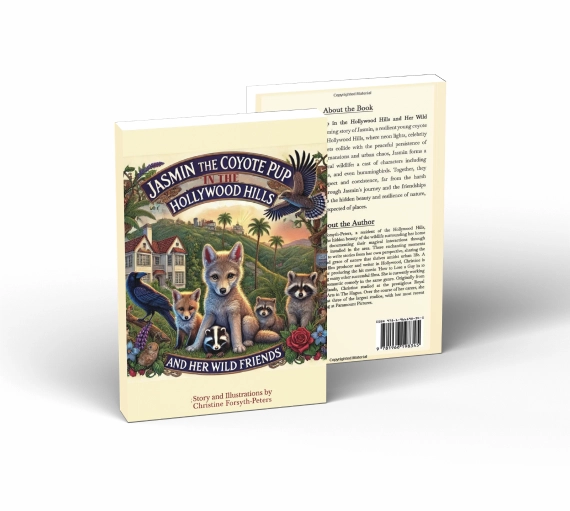
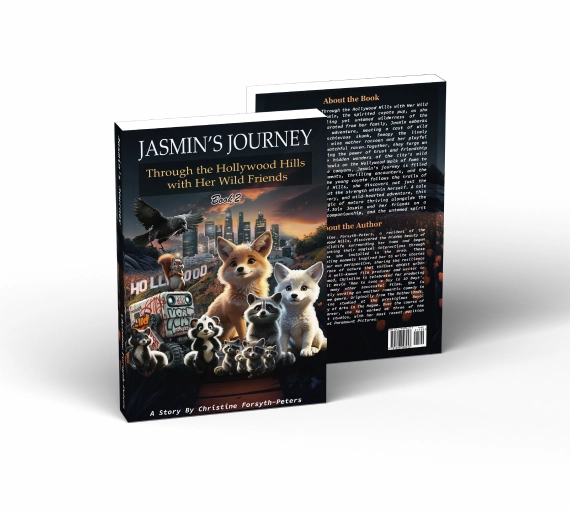
From Film to Forest | The Inspiration Behind The Jasmin Series
Long before The Jasmin Series became a beloved collection of children’s wildlife stories, it lived quietly in the shadows of the Hollywood Hills. Christine Forsyth-Peters’ transition from film producer to L.A. wildlife author wasn’t a sudden reinvention, it was an awakening. After decades of shaping narratives for the screen, she found herself captivated by a different kind of drama, one unfolding just beyond her windows at dusk.
In the quiet hours of the evening, where city lights softened and the hills breathed, Christine noticed movement along the ridgelines. A lone coyote pup. A cautious raccoon. A raven perched with regal stillness. These weren’t random sightings, they were characters. Curious, vulnerable, brave, and navigating a world that mirrored the emotional arcs she had written for actors on soundstages. The more she watched, the more she realized that the wildlife around her held stories just as compelling as anything crafted in a studio.
Cameras placed around her property began capturing the rhythms of their lives: the slow approach of a skunk on a moonlit trail, the gentle playfulness of squirrels in the early morning hours, the quiet resilience of animals adapting to the encroaching human world. What others dismissed as background activity, Christine saw as a living screenplay, filled with heart and instinct and survival.
And so, her creative compass shifted. Not away from film, but deeper into the essence of storytelling. Her evolution into an L.A. wildlife children’s author was rooted in the same mastery that shaped her cinematic career, only now the stars were creatures of the hillside, and the stage was nature itself. With compassion guiding her pen, The Jasmin Series was born, a testament to coexistence, courage, and the extraordinary beauty found in the wild corners of Los Angeles.