
Table Of Content
- What Is a Theme in Literature?
- Why Literary Themes Still Matter Today
- Universal Literary Themes: What They Are & Why They Resonate
- Themes in Modern Storytelling: Across BookTok, Anime & Film
- Theme Examples in Famous Books, Films & Series
- How to Use Themes in Writing (3-Step Guide)
- FAQs
- Final Reflection: Why We Remember Themes More Than Plots
Introduction
Ever wondered why certain stories stick with you long after the last page? It’s not just the plot twists or the cliffhanger endings. It’s the themes in literature, the deeper truths about life, love, power, and identity that hide between the lines. Whether you’re reading a classic novel, binging a Netflix series, or sobbing over your favorite anime character, chances are you’re connecting with a common literary theme that hits close to home.
In literature, themes are the invisible threads that connect character to conflict, reader to meaning, and story to culture. From The Hunger Games to The Kite Runner, from One Piece to Coraline, we see the same popular themes in literature, love, survival, betrayal, redemption, reimagined in infinite ways. As storytelling continues to evolve across books, film, and digital worlds, so do the universal literary themes that guide them.
This blog is your deep dive into the 100 most common themes in literature, explained, categorized, and updated with real theme examples in literature drawn from books, anime, pop culture, and even the forgotten Disney characters we grew up with. So, if you’re a reader, writer, teacher, or daydreamer, you’re in the right place.
WHAT IS A THEME IN LITERATURE?
Let’s break it down simply:
A theme literary definition is the central idea, message, or emotional current that runs through a story. It’s not what happens, it’s what it means.
Think of it like this:
- Plot: A girl enters a dangerous competition to save her sister.
- Theme: The cost of survival, the corruption of power, and the burden of sacrifice.
Now you’re not just reading The Hunger Games, you’re experiencing an example of a theme in a story.
In literature, common themes in novels aren’t always stated directly. Sometimes they’re subtle. They rise through the character’s choices, the setting’s tone, or the conflict’s stakes. A theme might ask a question, like “Is freedom ever truly free?”, or present a truth, like “Love can be both healing and destructive.” Writers often explore universal themes in literature, like identity, justice, or grief, because they resonate across cultures, age groups, and genres.
So, if you’ve ever said “This book really made me feel something,” you were probably reacting to a literary theme. That’s the quiet magic of storytelling; it doesn’t just tell stories; it reveals truths we didn’t know we were looking for.
WHY LITERARY THEMES STILL MATTER TODAY
Let’s be real, in a world flooded with content, from TikTok’s to ten-season TV shows, what actually sticks? Not just cool characters or twisty plots. It’s the story themes that make us stop scrolling, clutch a book to our chest, or cry over a fictional breakup like it’s our own.
Themes in literature aren’t just old-school English class material; they’re the heartbeat of modern storytelling. Whether you’re watching Attack on Titan and questioning freedom, or sobbing over Heartstopper and its quiet portrayal of first love and self-acceptance, you’re connecting to something deeper: a theme of the story that speaks to you. That’s why even in today’s digital age, common themes in literature continue to thrive across anime, graphic novels, BookTok sensations, and indie cinema alike.
Take The Ballad of Songbirds and Snakes, sure, it’s a prequel to a bestselling series, but what really hooked fans was its exploration of ambition, betrayal, and the cost of power. Or Stranger Things, where themes of books like found family, fear of the unknown, and childhood trauma are just as important as the Upside Down. Even “forgotten” Disney characters like Meg from Hercules or Kida from Atlantis carried popular story themes, redemption, independence, invisibility that shaped generations, even if they weren’t always in the spotlight.
In short? Themes of the story never go out of style. They evolve with us, reflect us, and challenge us. And today, more than ever, they stretch beyond literature into games, series, fanfics, and global media, proving that the best stories are the ones that say something true, no matter where or how they’re told.
UNIVERSAL LITERARY THEMES: WHAT THEY ARE & WHY THEY RESONATE
No matter where you are in the world, whether you’re curled up in a bookstore in France, watching dubbed anime in another corner of the globe, or journaling in a New York subway, certain themes just hit home. These are called universal literary themes, and they’re the ones that transcend language, time, and culture.
A universal theme in literature is an idea so deeply human that it resonates with almost everyone, everywhere. It might not look the same in every story, but the emotional core is always familiar. Think of Your Name (Japan) and The Little Prince (France), two wildly different works, yet both explore longing, memory, identity, and connection across time. That’s the power of universality: same feelings, different voices.
Writers often reach for universal themes in literature because they create immediate emotional access. They’re the bridge between author and reader, no matter the genre or generation. Whether it’s a tale of rebellion set in a dystopian empire (Legend), or a quiet moment of grief in a coming-of-age story (Normal People), these themes of a story make narratives relatable, reflective, and real.
So, if you’re writing, reading, or even bingeing a series and wondering why does this move me so much? chances are, it’s tapping into something below the surface. Something truly universal themes in action.
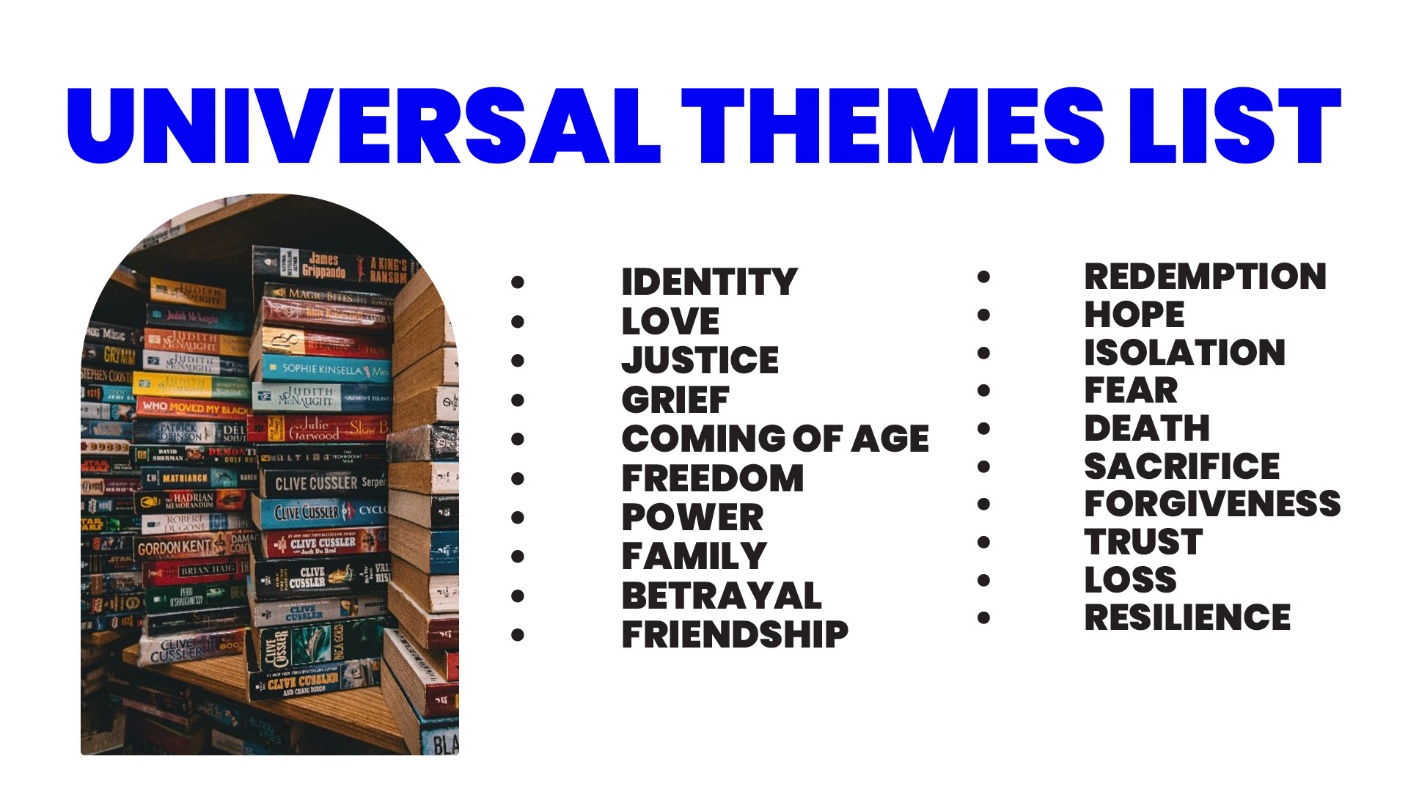
UNIVERSAL THEMES LIST
- Identity
- Love
- Justice
- Grief
- Coming of Age
- Freedom
- Power
- Family
- Betrayal
- Friendship
- Redemption
- Hope
- Isolation
- Fear
- Death
- Sacrifice
- Forgiveness
- Trust
- Loss
- Resilience
These are the themes that live forever, in every book, every generation, every heart.
LOVE & RELATIONSHIPS
Love in literature isn’t just romance. It’s friendship, betrayal, heartbreak, healing, obsession, and loyalty. It’s first glances, final goodbyes, messy family ties, and moments of found family that feel more real than blood. Whether you’re reading Six of Crows, crying over Bridge to Terabithia, or falling for an enemies-to-lovers arc that has no business being that good, you’re witnessing how relationship themes and themes of a story list anchor narratives to our hearts.
From grand love epics to small, quiet bonds, here are the examples of themes of love and connection that keep stories alive across every genre. These good themes for stories remind us that no matter how different the setting or characters may be, the heart of storytelling often lies in relationships that mirror our own hopes and fears.
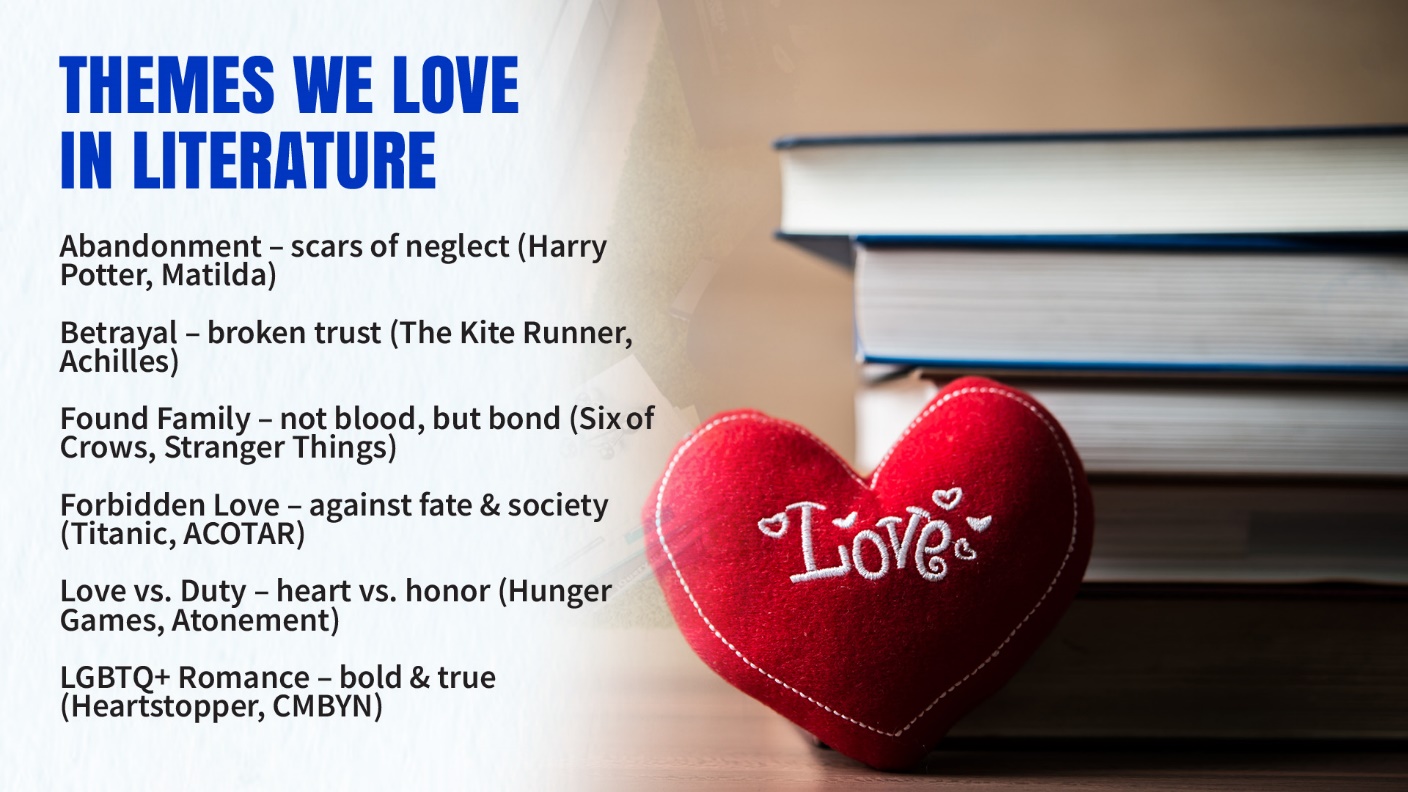
Abandonment
When love is withdrawn or never given in the first place, this theme explores the scars of emotional neglect.
Examples: Harry Potter, Matilda, BoJack Horseman
Popular Take: Characters who were abandoned often build the strongest found families.
Betrayal in Love
When trust is broken between lovers, friends, or family, betrayal sharpens emotional tension and changes relationships forever.
Examples: The Kite Runner, The Song of Achilles, Game of Thrones (Catelyn/Robb)
Found Family
When blood doesn’t define family, but loyalty and love do.
Examples: Six of Crows, Stranger Things, One Piece, Encanto
Why We Love It: Found family is the heart-hug we all need. Especially when it’s full of chaotic softies who’d kill for each other.
Forbidden Love
When two people aren’t supposed to be together because of society, war, class, species, or literal universes.
Examples: A Court of Thorns and Roses, Titanic, Across the Universe, Attack on Titan (Ymir/Historia)
Modern Lens: This trope is often used to explore oppression, identity, and resistance.
Love vs. Duty
When loving someone conflicts with responsibility, honor, or purpose.
Examples: Shadow and Bone, The Hunger Games, Atonement (by Ian McEwan)
Pain Level: Off the charts. Think choosing the world over the one you love.
LGBTQ+ Romance
Love outside heteronormative standards, nuanced, bold, and beautiful.
Examples: Heartstopper, They Both Die at the End, Call Me by Your Name, Brokeback Mountain, Portrait of a Lady on Fire
Why It Matters: These themes aren’t just about love, they’re about identity, safety, joy, and being seen.
Unrequited Love
When love isn’t returned or not in the same way.
Examples: Normal People, The Great Gatsby, The Office (Pam/Roy/Jim arc)
Relatability Score: 100/10. We’ve all been there.
Unconditional Love
Love with no limits, through illness, war, change, or time.
Examples: Wonder, Me Before You, The Little Prince
Often Seen In: Parent-child stories, animal friendships, and those rare romances that go the distance.
Toxic Love / Obsession
When love becomes control, jealousy, or dangerous dependence.
Examples: You, Wuthering Heights, Lolita, Gone Girl
Trigger Warning: These themes often explore manipulation, power dynamics, and obsession masked as love.
Enemies to Lovers
The trope we all pretend to hate but secretly adore. Two characters go from hating each other’s guts to being soulmates.
Examples: Pride and Prejudice, Shatter Me, Throne of Glass, Howl’s Moving Castle
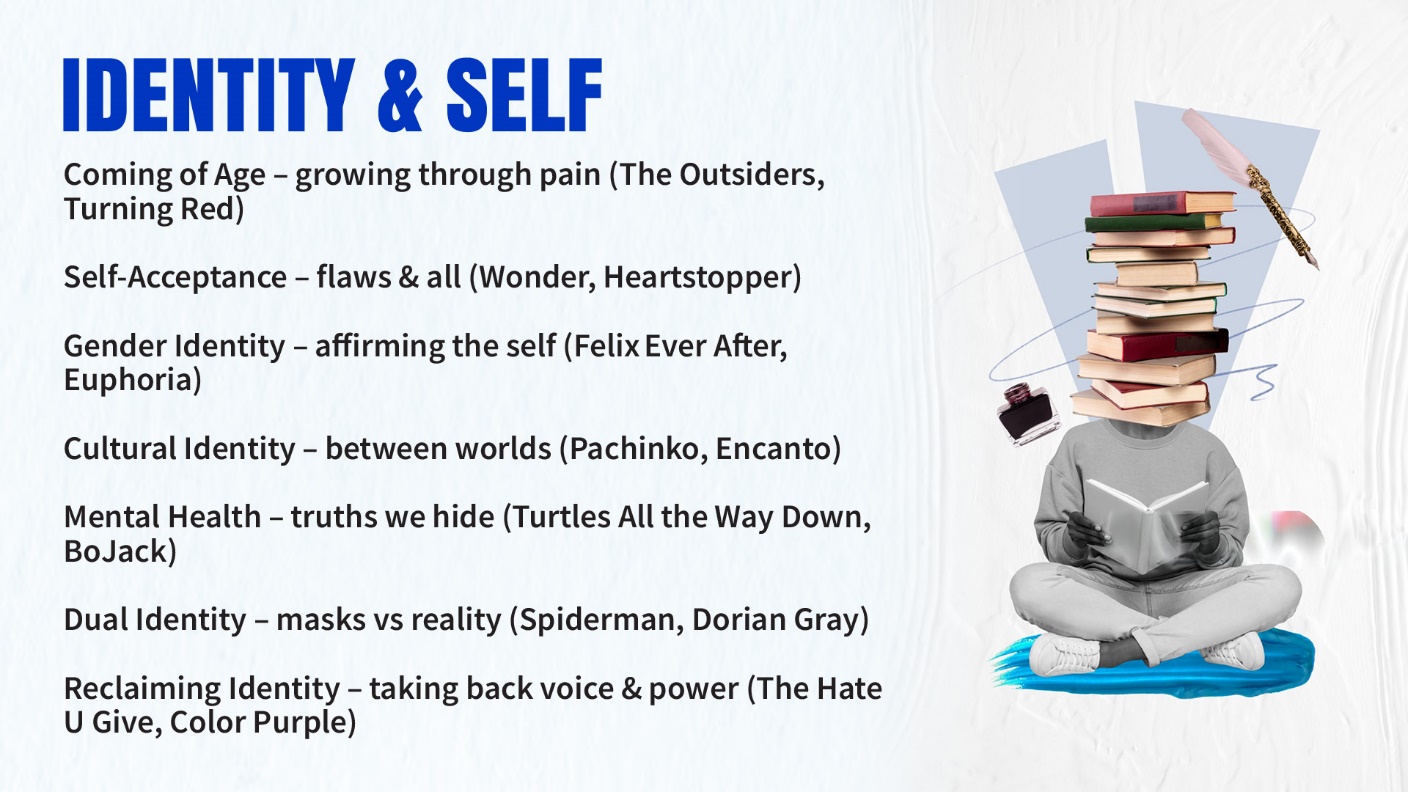
IDENTITY & SELF
Who am I? Where do I belong? What makes me… me?
These questions fuel some of the most unforgettable books and characters in history. Whether it’s a quiet internal struggle or an all-out rebellion against the world, themes of identity and self are what turn a plot into a personal journey. From The Perks of Being a Wallflower to Your Name, from graphic novel heroes confronting their fears to memoirs about culture and queerness, stories about finding, questioning, or redefining identity always hit different.
This category explores the many shades of self, in all their messy, painful, beautiful forms, serving as examples of common themes in storytelling. In fact, these arcs often appear in a novel themes list or a narrative themes list, because identity is one of those different themes in a story that never loses relevance.
Coming of Age
The classic transformation arc, growing up, growing aware, growing through pain.
Examples: The Outsiders, Normal People, Turning Red, Boyhood
Relatable Rant: “Coming of age isn’t always magical. Sometimes it’s anxiety, silence, and standing alone at lunch.”
Self-Acceptance
Learning to love (or at least live with) who you are, flaws and all.
Examples: Wonder, Heartstopper, Inside Out
Soft Moment Alert: Self-acceptance arcs hit hard because they mirror our inner conversations.
Gender Identity
Exploring or affirming one’s gender and the journey, joy, and pain that can come with it.
Examples: Felix Ever After, She-Ra, Euphoria
Why It Matters: These stories create space. They validate, educate, and empower.
Cultural Identity
Navigating between traditions, languages, expectations or reclaiming what was taken.
Examples: Pachinko, The Namesake, Persepolis, Encanto
BookTok Thought: “I saw my own struggle between two cultures and I didn’t even know how much I needed to.”
Mental Health / Emotional Struggles
Depression, anxiety, trauma, or grief, not as plot twists, but as truths.
Examples: It’s Kind of a Funny Story, Turtles All the Way Down, BoJack Horseman
Real Talk: These themes de-stigmatize what we’ve all felt but don’t always say out loud.
Dual Identity / Secret Self
Who you show the world vs who you really are.
Examples: The Picture of Dorian Gray, Spiderman, Moon Knight
Vibe: The mask gets heavy. And sometimes the secret self is the truest one.
Reclaiming Identity
Taking back a name, a heritage, a story, or a voice.
Examples: The Hate U Give, The Color Purple, Attack on Titan (Ymir’s arc)
Why We Stan: These stories are about power. Healing. Ownership. Legacy.
Identity vs Society
When being yourself means pushing against what the world expects.
Examples: The Bell Jar (by Sylvia Path), A Clockwork Orange, Mulan, A Silent Voice
Modern Take: “She didn’t rebel. She just refused to shrink.”
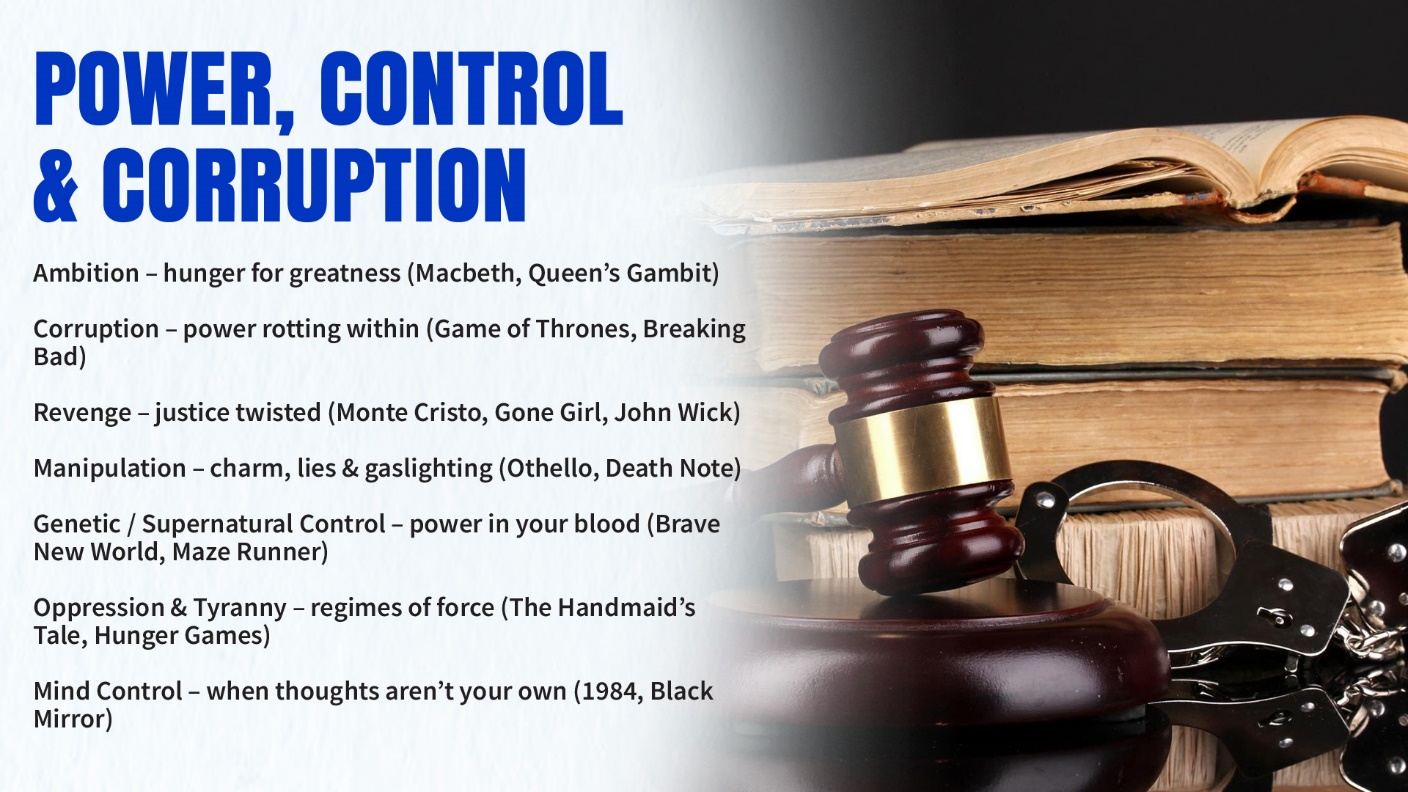
POWER, CONTROL & CORRUPTION
Power stories don’t whisper, they roar. This theme of a work of literature is where villains are born, empires rise and fall, and characters are forced to choose between domination and dignity. Whether it’s political power (The Handmaid’s Tale), magical power (Death Note), or social power (Mean Girls yes, it counts), this category reveals how control shapes people, breaks them, or turns them into something they never meant to become.
And let’s be honest, we love a good downfall. From rulers undone by greed to heroes swallowed by ambition, these arcs remain some of the most popular themes for books. They stand as timeless examples of themes in literature, reminding us that power isn’t just a tool, it’s a test. That’s why lists of types of themes in a story always highlight corruption, control, and ambition, because they echo real struggles across history and fiction alike.
Ambition
The hunger for power, success, or greatness, no matter the cost.
Examples: The Ballad of Songbirds and Snakes, Macbeth, The Queen’s Gambit,
BookTok Buzz: Was Lucy Gray always planning her escape? Or was Snow too blinded by his own ambition to see the truth?
Corruption
Power without accountability, when systems or people rot from the inside out.
Examples: Game of Thrones, The Godfather, Divergent, Breaking Bad, The White Lotus, The Wolf of Wall Street, House of Cards
Popular Take: “It’s not just evil people who become corrupt; it’s those who crave control more than justice.”
Revenge
When justice isn’t enough and someone decides to take matters into their own hands.
Examples: Gone Girl, The Count of Monte Cristo, Promising Young Woman, Kill Bill, John Wick, The Nightingale (Kristin Hannah)
Modern Lens: Revenge stories often highlight injustice that’s been silenced too long.
Manipulation
Power through deceit, charm, or gaslighting, this theme is quiet, slow-burning, and deadly.
Examples: Othello, You, Death Note
Note to Writers: The best manipulators are the ones who believe they’re right.
Genetic or Supernatural Control
When control is literally in your blood or forced into your DNA.
Examples: Brave New World, Attack on Titan, The Maze Runner
Cultural Angle: These stories often reflect fears about government surveillance, bioethics, and erasure of autonomy.
Oppression & Tyranny
When power is used to suppress, control, or erase, by force or law.
Examples: The Hunger Games, The Handmaid’s Tale, Les Misérables
Real Talk: These aren’t just dystopias. They mirror real regimes and real resistance.
Mind Control / Psychological Power
When thoughts aren’t even your own, power turns internal.
Examples: 1984, Black Mirror, The Truman Show
Modern Relevance: These stories question how tech, media, and institutions shape what we believe.
The Rise of the Antihero
When the main character isn’t good, just driven.
Examples: Breaking Bad, Kaz Brekker, Light Yagami, Zuko from ATLA
BookTok Meltdown: “He’s not a villain. He’s just… morally exhausted.”
Themes like these remind us that power always comes with a price and sometimes the biggest battles aren’t fought with swords, but with decisions.
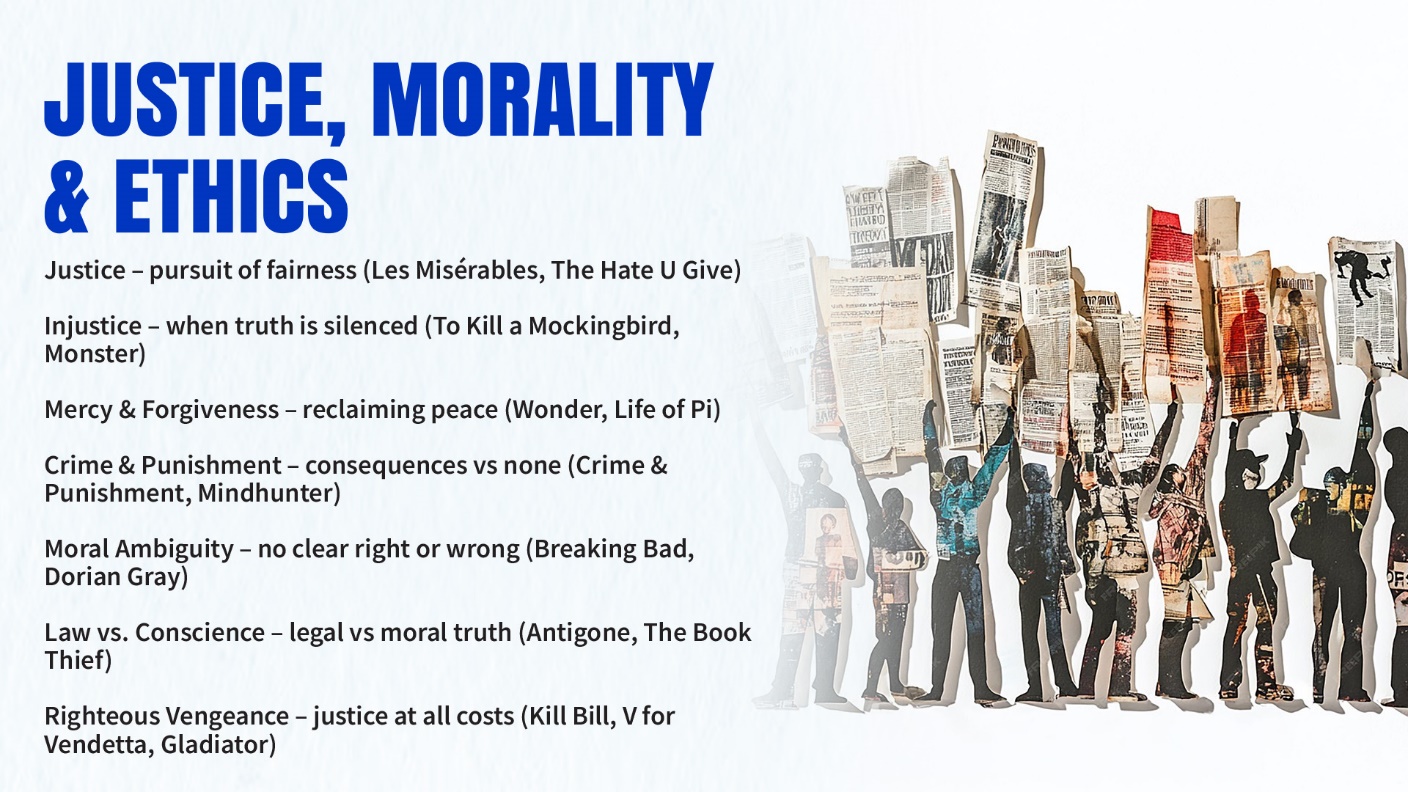
JUSTICE, MORALITY & ETHICS
Some stories ask: What’s right?
Others ask: What’s right… for whom?
This category dives into the themes of books that push us to confront our values. From vigilante justice to ethical dilemmas, from mercy to punishment, these arcs don’t give clean answers, and that’s the point. Whether it’s Les Misérables or Monster, The Hate U Give or The Good Place, these are clear examples of themes that shine brightest when they’re uncomfortable.
Such stories often appear in a list of literary themes, because questions of morality, fairness, and truth have shaped literature for centuries. They force readers to reflect on choices, consequences, and responsibility, showing us, how different book themes can challenge both characters and readers long after the last page is turned.
Justice
The pursuit of fairness, in systems, in relationships, or in the soul.
Examples: Les Misérables, Just Mercy, The Hate U Give, The Shawshank Redemption
Modern Lens: Justice isn’t always about punishment. Sometimes it’s about repair.
Injustice
When systems fail, bias wins, or the truth is silenced.
Examples: To Kill a Mockingbird, When They See Us, Monster
BookTok Comment Section: “The scariest part is that this wasn’t fiction. It still happens.”
Mercy & Forgiveness
Choosing to release anger, even when the world says you shouldn’t.
Examples: Wonder, The Shack, Life of Pi
Why It Hits: Forgiveness arcs show strength, not softness. They’re about reclaiming peace.
Crime & Punishment
When wrongdoing collides with consequence… or the lack of it.
Examples: Crime and Punishment, Dead Poets Society, Mindhunter
Hot Take: Some of the best characters in this theme are deeply conflicted.
Moral Ambiguity
When there’s no clear right or wrong, just shades of choice.
Examples: Breaking Bad, An Ember in the Ashes, Dorian Gray
BookTok Buzz: “Okay but hear me out… he did terrible things… but was he wrong?”
Law vs. Conscience
When doing the legal thing isn’t the same as doing the right thing.
Examples: Antigone, A Time to Kill, The Book Thief
Theme Vibe: The best stories here are driven by internal moral revolutions.
Righteous Vengeance
When characters believe their version of justice is absolute, even if it costs everything.
Examples: Kill Bill, The Punisher, V for Vendetta, Old Boy, Gladiator
Modern Tie-In: This theme often explores radicalization and blurred lines between hero and extremist.
Themes of justice and morality make literature a mirror, reflecting who we are and who we wish we could be. They remind us that doing the right thing isn’t always easy. Or obvious.
GRIEF, FEAR & LOSS
If love is what binds us, grief is what lingers when it’s gone. This category is tender, heavy, and full of silences that say more than words. These themes in literature explore death, dread, trauma, and the ache of things we can’t get back, whether it’s a person, a version of ourselves, or a world that no longer feels safe.
From Bridge to Terabithia to If Cats Disappeared from the World, from Grave of the Fireflies to The Midnight Library, these arcs don’t just make us cry, they serve as story theme examples that remind us we’re not alone. Grief and fear often appear in a list of themes in stories, proving that even the heaviest emotions can connect readers across cultures and generations.
These are not just sad tales, but some examples of themes that help us process the hardest truths of being human.
Death & Mortality
The most universal theme of all, the inevitability of endings.
Examples: The Book Thief, Tuesdays with Morrie, Death Parade
Why It Resonates: These stories don’t just mourn death, they honor life.
Grief
The emotional aftermath of loss, messy, nonlinear, and deeply personal.
Examples: A Man Called Ove, Normal People, Wandinha (Wednesday), Manchester by the Sea, Pieces of a Woman, Beasts of the Southern Wild, The Lovely Bones
BookTok Whisper: “This book didn’t break me. It held me while I broke.”
Abandonment
When someone leaves, emotionally or physically and the emptiness sets in.
Examples: BoJack Horseman, Matilda, The Umbrella Academy
Popular Take: Sometimes, what hurts isn’t that they left, it’s that they never looked back.
Fear of the Unknown
The dread of what you can’t see, understand, or predict.
Examples: Coraline, Stranger Things, The Leftovers
Modern Read: This theme thrives in horror, sci-fi, and stories where the setting feels wrong even when it looks right.
Identity Loss / Dissociation
When you lose who you are, slowly or all at once.
Examples: Eternal Sunshine of the Spotless Mind, A Silent Voice, Black Swan, Shutter Island, Fight Club, Moonlight, Sybil
Emotional Warning: These arcs are unsettling because they mirror real mental spirals.
Regret & What-Ifs
Looking back with longing, shame, or aching curiosity.
Examples: The Midnight Library, The Remains of the Day, Violet Evergarden
Why It Stings: We all wonder what could’ve been and sometimes that’s its own grief.
Loss of Innocence
When the world stops being kind and starts being real.
Examples: Lord of the Flies, Grave of the Fireflies, Persepolis, Beasts of No Nation, Atonement, Requiem for a Dream
Why It Hits Hard: These stories aren’t about childhood. They’re about leaving it behind.
These themes are the ones we feel the longest, the ones that make stories unforgettable, not just for what they say, but for what they leave us holding in silence.

SOCIETY, REBELLION & RESISTANCE
Some stories shake the world by showing characters who refuse to be silenced. Whether it’s rising against injustice, exposing corruption, or simply existing in defiance of the norm, these arcs highlight themes of the story that remind us rebellion isn’t always loud. Sometimes, it’s survival.
From dystopian uprisings to quiet acts of protest, these narratives stand as examples of common themes in storytelling. They often appear in a story themes list or a novel themes list, because resistance, freedom, and justice are among the most common literary themes across history.
These aren’t just dramatic plots, they’re different themes in a story that push readers to ask: What do you do when the world says no?
Rebellion
Fighting back, for justice, truth, or freedom.
Examples: The Hunger Games, Legend, Les Misérables
Revolution
When resistance spreads and everything changes.
Examples: V for Vendetta, The Handmaid’s Tale, Attack on Titan
The Underdog
The powerless going up against impossible odds.
Examples: The Hate U Give, Erin Brockovich, Rudy
Social Injustice
When society fails its people and they rise anyway.
Examples: Just Mercy, When They See Us, 1984
Silence as Resistance
When not conforming is the boldest move.
Examples: The Book Thief, A Quiet Place, Parable of the Sower
Protest & Activism
Taking up space, making noise, choosing impact.
Examples: Dear Martin, Milk, The Trial of the Chicago 7
Existing as Defiance
When your truth itself is rebellion.
Examples: Moonlight, Pose, A Fantastic Woman
Rebellion stories don’t just speak to revolution; they speak to resilience. To all the ways people rise, break patterns, and write new endings.
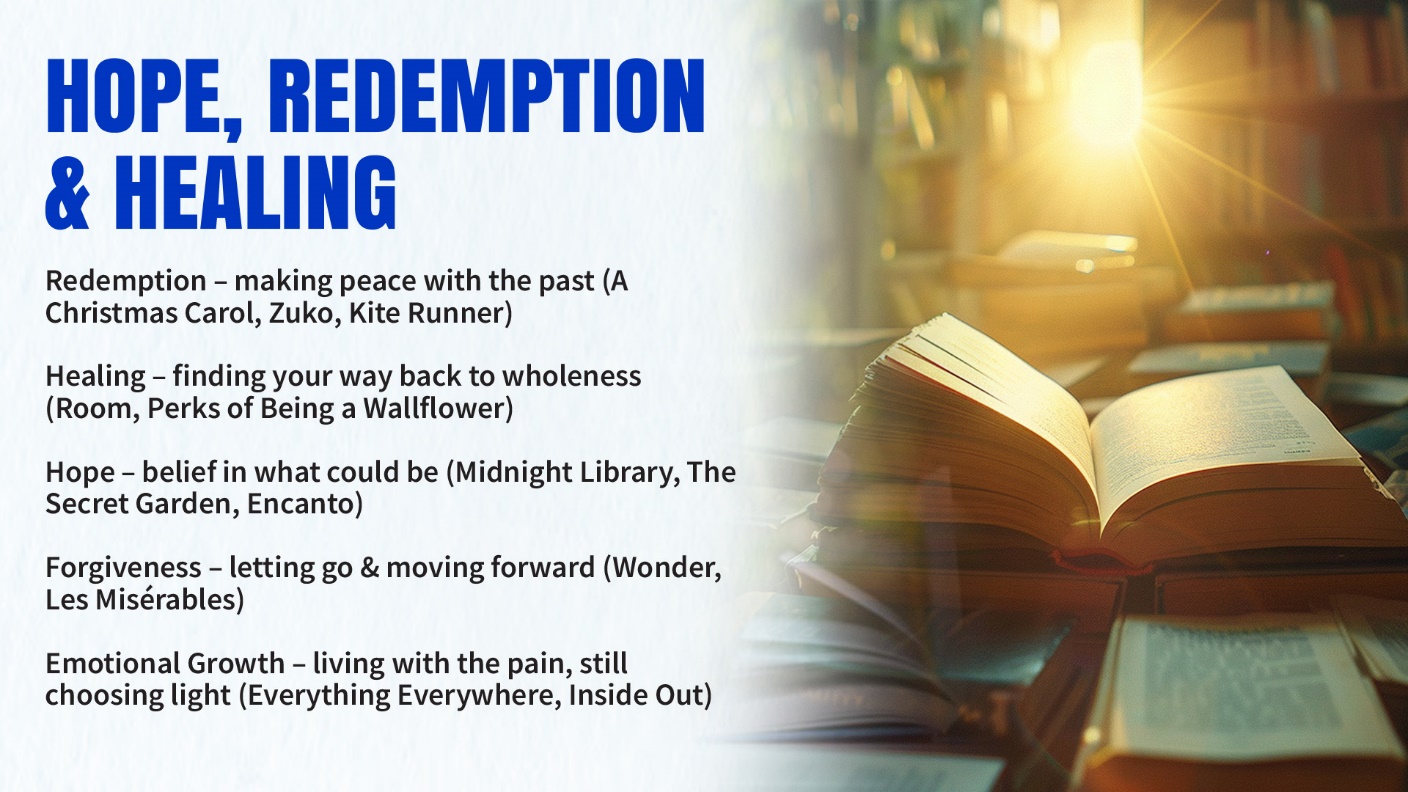
HOPE, REDEMPTION & HEALING
These are the stories that hold your hand when everything feels broken and quietly remind you that it’s not over yet. Whether it’s someone trying to make things right, rebuild after trauma, or simply choose light after living in the dark, this category is about second chances, new beginnings, and the strength it takes to heal.
Not every story has a happy ending. But some have hope and that’s enough.
Redemption
Making peace with the past, even when it’s messy.
Examples: A Christmas Carol, Zuko (ATLA), The Kite Runner, Schindler’s List
Healing
Emotionally, physically, spiritually, finding your way back to wholeness.
Examples: Big Little Lies, Room, The Perks of Being a Wallflower, Good Will Hunting
Hope
A quiet belief in what could be, even if it isn’t yet.
Examples: The Midnight Library, The Secret Garden, Encanto
Forgiveness
Letting go, of guilt, shame, or blame.
Examples: Wonder, Les Misérables, The Shack
Emotional Growth
Learning how to live with what hurts and still move forward.
Examples: Everything Everywhere All At Once, Inside Out, Perks of Being a Wallflower
These themes are the heartbeats behind some of the most healing books we’ve ever read. They show that growth is nonlinear, forgiveness is radical, and softness is strength.
Themes in Modern Storytelling: Across BookTok, Anime & Film
The platforms may change, TikTok, anime, podcasts, prestige TV, but the themes? They’re as old as storytelling itself. What makes today’s narratives so powerful is how they remix these common themes in literature to speak to a generation that’s more open, vulnerable, and globally connected than ever before. From gothic classics to surreal cinema, today’s stories reframe trauma, freedom, and legacy in unexpected ways, mixing horror with healing, fantasy with grief, and science fiction with deeply personal stakes. The boundaries of genre are blurring, but the emotional truths remain timeless.
Modern creators aren’t afraid of contradiction: stories can be both deeply spiritual and fiercely political, tender and terrifying. BookTok readers cry over found family arcs, debate morally grey protagonists, and find themselves in stories that reflect identities that were once erased. Whether it’s a Netflix series, a Studio Ghibli film, or a viral indie novel, the literary themes that rise are still love, grief, power, and healing, but with fresh voices, diverse perspectives, and unfiltered honesty.
The world may feel louder, faster, and more fragmented, but at the heart of it all, these themes of books still ask the same thing: What does it mean to be human? They prove that even in a digital age, the theme definition in a story hasn’t changed, it’s still about connection, meaning, and truth.
Theme Examples in Famous Books, Films & Series
The most beloved books and films aren’t remembered for their plots alone, but for the emotional weight their themes carry. The Great Gatsby isn’t just a story about a man chasing a woman, it’s a meditation on longing, illusion, and the hollow promise of the American Dream. In The Hunger Games, beneath the action and rebellion, lies a narrative about survival, trauma, and the morality of power. Even fantasy epics like The Lord of the Rings are rooted in timeless literary themes: friendship, sacrifice, the temptation of evil, and the quiet strength of ordinary people.
Across cinema and animation, the same emotional currents flow. Studio Ghibli’s Spirited Away wraps a coming-of-age story inside a strange spirit world, yet its theme examples in literature, identity, memory, and courage, feel universally human. Films like Interstellar ask what love looks like across time and space, while The Kite Runner confronts guilt, redemption, and the cost of silence. These are story themes examples that resonate far beyond the page or screen.
What connects all these works is not just genre or acclaim, it’s how their examples of literary themes speak to our private fears, hopes, and desires. They remind us that the best stories don’t just entertain, they leave us changed.
How to Use Themes in Writing (A 3-Step Creative Guide)
Themes aren’t something you force, they emerge. Still, keeping them in mind while writing can give your story depth and purpose. It starts with a question: what truth are you exploring? Maybe it’s the loneliness of modern life, or the quiet strength of forgiveness. Once you’ve got that emotional core, let it shape your characters’ decisions, the stakes they face, and the arcs they follow. You don’t need to declare the theme outright; just let it rise naturally through what your story values.
Sometimes, the theme won’t appear until the second draft, and that’s okay. The writing process is often where patterns reveal themselves. Pay attention to repeated imagery, emotional beats, or internal conflicts. These are often sample themes in literature waiting to be uncovered. Don’t be afraid to revise your plot to serve the heart of the story more clearly. Even short story themes can carry the same depth as sprawling epics when handled with care.
Finally, take inspiration from authors and creators exploring similar ideas. Read widely. Watch stories outside your comfort zone. The way someone else handles a theme, whether it’s listed in a type of themes guide or hidden in a character’s smallest choice can unlock your own voice. Because in the end, the best themes don’t just guide the story, they give it soul.
Frequently Asked Question
-
How do you define theme in literature?
A theme in literature is the central idea, message, or insight that a story explores. It’s not what happens in the plot, but what the story is really about underneath the surface. Think of it as the emotional or philosophical thread connecting every part of the narrative.
-
What is the theme literary definition?
The literary definition of a theme is a universal idea or concept that recurs throughout a literary work. It reveals the deeper meaning behind the story’s events, characters, or conflicts, offering commentary on human nature, society, or values.
-
What is the theme definition in a story?
In a story, the theme is the underlying message or moral the writer wants to convey. It reflects the story’s emotional truth, whether it’s about love, justice, identity, or grief.
-
What is a narrative themes list?
A narrative themes list refers to the collection of common topics that appear in storytelling across genres, such as coming of age, betrayal, freedom, or redemption.
-
Can you give sample themes in literature?
Sure! For example, survival in The Hunger Games, guilt and redemption in The Kite Runner, and identity in The Perks of Being a Wallflower.
-
Where can I find a full list of themes in stories?
Themes appear across literature, film, and anime. Examples include hope, rebellion, justice, and loss. A full list helps writers shape emotional direction and helps readers understand meaning.
-
What are good themes for a story?
Good themes are universal and meaningful—love, forgiveness, revenge, identity, fear, healing, freedom—reflecting real human experiences.
-
What is the theme of a work of literature, really?
It is the underlying message the story conveys. Not stated outright, but felt through characters’ choices, struggles, and transformations.
-
Can a story have more than one theme?
Absolutely. Strong stories often combine themes such as identity, betrayal, forgiveness, and grief, making them emotionally layered.
-
How do I know what the theme of my story is?
Look for repeated emotional truths, character motivations, symbolic elements, and the moments that feel most meaningful.
-
What is the theme of a story? (Examples)
A theme is the deeper meaning behind the plot. For example, in The Hunger Games, beyond survival, themes include sacrifice and corruption of power.
More examples:
- The Great Gatsby: The illusion of the American Dream and the emptiness of wealth.
- Harry Potter: Friendship, courage, and the fight against injustice.
- To Kill a Mockingbird: Racial inequality, empathy, and moral growth.
- Inside Out (film): The complexity of emotions and the value of sadness.
So, when you ask “what is the theme of a story examples?”, it’s about identifying those universal truths that stay with you long after the final page or scene.
Final Reflection: Why We Remember Themes More Than Plots
Long after the final chapter, the twist ending, or the favorite quote, what stays with us is how a story made us feel. And at the center of that feeling is often a theme. It’s the quiet realization behind the action, the emotional truth that gives the plot meaning. You might forget the details of a story, but you’ll remember the loneliness, the hope, the rage, or the grief it stirred in you. That’s the answer to what does a theme mean in a book, it’s the heartbeat beneath the words.
Themes give stories their heartbeat. They’re what make a fantasy world feel real, a tragic ending feel earned, and a single sentence feel like it was written just for you. Whether you’re reading to escape or to reflect, to find answers or feel less alone, you’re really searching for that thread, the one that says: someone else has felt this too. These are not just tropes; they are what are themes of a book and why they matter across every genre.
That’s the beauty of literary themes. They don’t just help us understand stories. They help us understand ourselves, showing us what are some examples of themes that connect across time and culture. From what is the theme in a novel to the timeless themes of words that carry emotion beyond plot, themes remain the most unforgettable part of any story.
