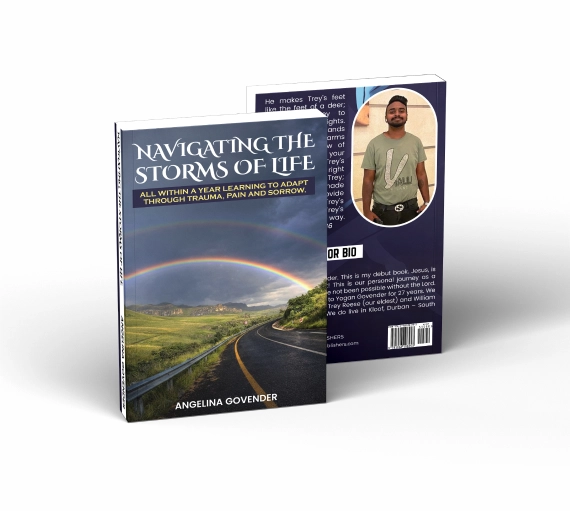
Every life has a dividing line, a moment when ordinary becomes unrecognizable. For the Govender family, that moment arrived in the stillness of night, with a phone call no parent ever wants to receive. In seconds, peace gave way to panic. In minutes, faith was tested in ways it never had been before.
This is not merely a memoir of events. It is a Christian book about life storms and faith, where belief is not decorative but necessary. As doctors spoke in clinical language and machines began to measure survival, the only response that remained steady was prayer.
In the hospital waiting room, fear pressed heavily against hope. Yet even in the uncertainty, there was a conscious decision to practice trusting God in adversity. It was not denial of reality, but defiance against despair. Scripture became oxygen. Every whispered petition became an act of survival. This was prayer during hardship in its rawest form, not polished or poetic, but desperate and real.
What began that night was not just a medical journey. It was the beginning of strengthening faith in uncertainty, a walk through darkness where belief was no longer optional but essential.
And the storm had only just begun.
Between ICU and Hope
The days that followed blurred into a rhythm of machines, medical updates and fragile hope. Intensive Care became both a battlefield and a sanctuary. Behind glass doors and under fluorescent lights, life was measured in oxygen levels, heart rates and neurological responses. Yet beyond the clinical language, something deeper was unfolding.
This season of waiting transforms the book into a powerful Christian hope and resilience book, not because the fear disappeared, but because faith refused to. Every update from the neurosurgeon carried both caution and possibility. The words “spinal cord injury” echoed heavily, yet Scripture echoed louder.
The family leaned into biblical encouragement during trials, drawing strength from verses that once felt familiar but now felt urgent. ICU corridors became places of worship. Silent tears became offerings. The ventilator’s steady rhythm became a reminder that God was still sustaining breath.
The experience reads like living spiritual resilience literature, not abstract theology but embodied endurance. Each chapter demonstrates how faith matures when it is stretched. Through every setback, through every night without sleep, there remained an unwavering commitment to Scripture-Based Encouragement, anchoring the family in truth when circumstances tried to define the outcome. Hope did not arrive dramatically. It arrived in small stabilizing moments. And those moments were enough to keep believing.