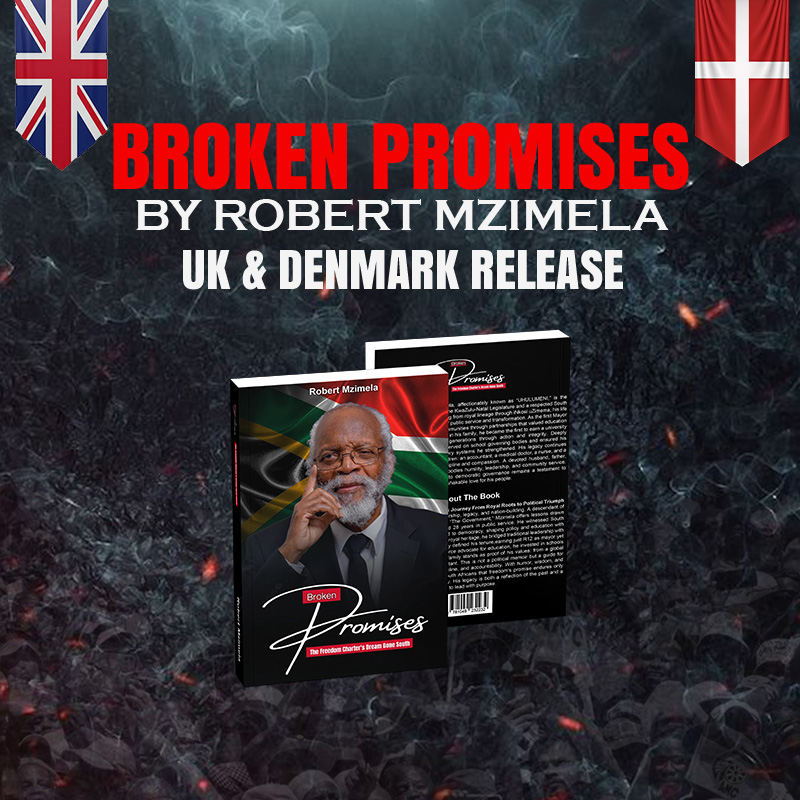
The Freedom Charter Dream Gone South book release does not reject the Charter’s vision; instead, it examines whether structural and policy limitations have constrained its realization. By grounding discussion in documented clauses and historical context, the book presents a measured reflection on constitutional inheritance and democratic stewardship. It becomes less about accusation and more about accountability, asking whether reform aligned with original national commitments.
As a Robert Mzimela political book, the manuscript navigates themes of unemployment, labour relations, and economic reform without rhetorical excess. Positioned clearly as political nonfiction by Robert Mzimela, it dissects economic strain through case studies, policy analysis, and historical comparison.
The work situates itself within a broader African political reform book tradition, addressing how institutional decisions affect long-term development. By examining labour structures, public sector inefficiencies, and reform stagnation, it also speaks to audiences searching for a political reform book worldwide that explores governance beyond surface-level debate.
Rather than isolating criticism, the narrative emphasizes systemic reflection. Economic challenges are framed not as singular failures but as cumulative consequences of administrative patterns. In doing so, the book contributes to global discussions on reform in post-liberation states.
The themes explored in Broken Promises Robert Mzimela UK availability resonate strongly within British readership circles interested in post-colonial governance studies. As a South African history book UK readers can engage with, the text connects apartheid-era education policies to contemporary inequality patterns.
Through its analysis, the work functions as a political commentary book UK scholars may find relevant, particularly in its assessment of access to higher education, systemic preparation gaps, and reform inconsistencies. By revisiting constitutional guarantees alongside implementation outcomes, it reinforces its identity as a Freedom Charter book UK audiences can evaluate within comparative political studies.
Education reform is not framed as isolated failure but as structural inheritance shaped by policy continuity and funding realities. This measured approach ensures the conversation remains analytical rather than reactionary.
The discussion surrounding land reform remains one of the most sensitive dimensions of post-apartheid governance. With Broken Promises Robert Mzimela Denmark now reaching Nordic readers, the debate gains broader international visibility. As a South African political book Denmark audiences can access, the work explores how restitution policy, expropriation discourse, and historical dispossession intersect with modern economic stability.
Through its examination, the book becomes relevant to readers seeking a Freedom Charter book Denmark perspective that does not simplify the issue into binaries. Available among political books Denmark Saxo carries, the text situates land reform within constitutional responsibility and long-term productivity concerns.
Rather than advancing extreme solutions, the manuscript emphasizes administrative clarity, economic sustainability, and legal precision. It invites readers to reflect on whether reform strategies align with both justice and viability in a modern democratic framework.
The release of Broken Promises Ryefield Books edition marks an important step in extending this conversation to British readers. With Broken Promises UK availability now confirmed, the title joins a growing catalog of internationally relevant political works.
As part of the Robert Mzimela Ryefield Books listing, the publication positions itself among serious political books UK Ryefield distributes. The Broken Promises United Kingdom release ensures that this Robert Mzimela UK book release reaches scholars, policy observers, and diaspora communities examining democratic development models.
Through Ryefield Books political nonfiction distribution, the manuscript enters formal retail circulation in the UK, reinforcing its standing as a structured analytical work rather than a partisan manifesto.
The availability of Broken Promises Saxo Denmark further expands the book’s European reach. With Robert Mzimela Saxo now listed, the text becomes accessible to readers exploring comparative governance studies.
This Broken Promises Denmark availability allows the work to stand among Saxo English political books, strengthening its visibility as a Broken Promises Denmark platform feature. Positioned as a global political book Saxo distributes, it broadens dialogue around post-liberation state reform and institutional accountability.
Denmark’s readership, known for engagement with policy discourse and international governance analysis, provides a fitting context for the book’s measured and reflective tone.
Beyond regional circulation, this development reflects Robert Mzimela global publication momentum. As a global distribution political book, the title contributes to a wider international political nonfiction release conversation about democracy under pressure.
With Broken Promises global publication expanding across markets, the book reinforces its position as a political reform book worldwide that situates South Africa within comparative reform debates. It also strengthens the profile of Robert Mzimela author spotlight, highlighting a governance figure whose reflections are rooted in lived institutional experience.
The manuscript’s international positioning does not dilute its national focus. Instead, it contextualizes South Africa’s democratic evolution within global post-transition governance studies.
Broken Promises: The Freedom Charter’s Dream Gone South by Robert Mzimela remains anchored in constitutional reflection rather than political spectacle. As a book about the Freedom Charter, it challenges readers to reconsider whether foundational democratic promises have been fully realized.
The Freedom Charter Dream Gone South book release now accessible in the United Kingdom and Denmark invites structured engagement rather than emotional reaction. Through careful documentation and measured critique, the work contributes meaningfully to ongoing discussions about governance, accountability, and reform in modern democracies.
Broken Promises: The Freedom Charter’s Dream Gone South by Robert Mzimela
UK & Denmark Availability Announcement
🔗 For Ryefield Books (United Kingdom): Click here
🔗 For Saxo (Denmark): Click here