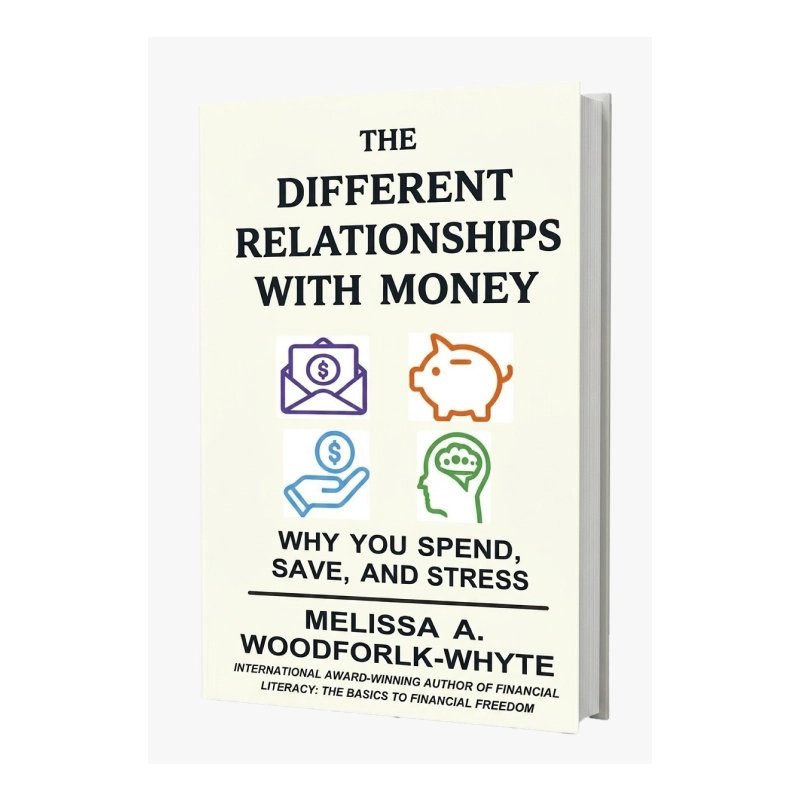
Money Is Never Only About Numbers
Money appears as numbers, but its influence rarely ends there. It can represent independence, responsibility to the person expected to support a family or belonging to someone who learned that generosity proves love. It may become evidence of achievement, a defense against uncertainty or a closely guarded subject. This emotional relationship with money helps explain why similar circumstances can produce very different reactions. A growing balance may reassure one person while leaving another convinced that it is still not enough. An unexpected expense may feel manageable to one household and destabilizing to another, even before its consequences are calculated. This is why people stress about money for reasons that cannot always be understood through income and expenses alone. The Different Relationships With Money: Why You Spend, Save, and Stress brings those meanings into view without suggesting that skills are unimportant. Budgets, saving plans and financial information remain valuable, but they operate alongside identity, expectation and experience. By examining both dimensions, the book creates a compassionate starting point: before judging a decision by its outcome, readers can ask what money has come to represent in their lives.
Why Knowing Is Not Always the Same as Doing
Most people have encountered familiar financial instructions: spend less than you earn, prepare for emergencies, avoid unnecessary debt and plan for the future. The difficulty is that understanding an instruction does not guarantee that it will remain persuasive when a decision becomes emotionally charged. A constructed plan can lose its influence when spending promises immediate relief, when saying no threatens a sense of belonging or when keeping every available dollar feels like the only protection against uncertainty. At such moments, the choice is not being made by information alone. Emotion, habit, identity and context may all compete with what a person already knows. The field of financial behavior psychology helps describe this distance between knowledge and action, but Melissa’s book approaches it through recognizable human experience rather than abstract rules. It asks readers to notice when their financial responses change, which situations make certain choices feel urgent and what need a repeated behavior appears to serve. This process can help people identify their money habits without immediately reducing them to failures of discipline. Recognition does not remove accountability or make every reaction beneficial. It gives readers more useful questions to ask. Instead of repeating advice that has already failed to change a pattern, they can begin exploring why that pattern remains convincing and what a more intentional response might require.
Financial patterns may begin forming before a person has the language or independence to examine them. Children observe who controls money, which purchases cause conflict, whether financial questions are welcomed and what a family treats as necessary, wasteful or impressive. Culture can add expectations about success, generosity, privacy, gender, caregiving and responsibility. Later experiences, including hardship, sudden loss, increased income or periods of dependence, may reinforce or challenge those early lessons. These influences can become money scripts from childhood: quiet assumptions about what money means, who deserves it and what might happen if it disappears. Inherited money beliefs do not determine every adult choice, however, and recognizing them should not become an exercise in blaming parents, families or communities. Nor should every uncomfortable financial response automatically be described as trauma. The more useful question is whether an earlier lesson is still directing a present decision without being consciously reconsidered. A rule that once helped someone feel protected may become restrictive after circumstances change. A cultural expectation rooted in care may become difficult when it repeatedly overrides personal limits. By placing these influences within its exploration of financial behavior, The Different Relationships With Money: Why You Spend, Save, and Stress encourages readers to separate what they learned from what they currently need, value and want their financial decisions to support. That keeps reflection grounded in personal agency.
Meet the Core Identities in The Different Relationships With Money: Why You Spend, Save, and Stress
To make those recurring responses easier to recognize, Melissa Woodforlk-Whyte organizes the book around nine core identities. Public descriptions confirm four of them: the Spender, Saver, Avoider and Investor. The remaining identities belong to the complete framework presented in the book and should be encountered there, rather than guessed from familiar financial labels. What matters is not merely the name attached to each pattern, but the questions a money identity book can help someone ask. Which decisions feel natural, and which immediately create resistance? Does a response remain consistent, or change during stress, celebration, conflict or uncertainty? Is money treated primarily as something to enjoy, preserve, escape or grow? The nine core identities offer a vocabulary for observing such tendencies without insisting that one label explains an entire person. Someone may recognize more than one identity, respond differently across areas of life or find that a familiar pattern becomes stronger under particular conditions. Identity in this context is therefore a lens, not a permanent verdict. It helps connect visible actions with the meanings beneath them. By noticing those connections, readers can move beyond describing themselves as simply good or bad with money and begin examining the emotional logic that makes certain choices repeatedly feel necessary, rewarding or safe. The framework invites recognition while leaving room for contradiction, development and circumstance.
Every money identity can contain a capacity that supports a person and a tendency that complicates their choices. A Spender may value enjoyment, generosity and the freedom to use money in the present, yet become vulnerable when purchasing turns into an automatic response to pressure or discomfort. A Saver may create consistency and protection while finding it difficult to use money for needs, opportunities or pleasure. An Avoider may distance themselves from a subject that feels overwhelming, gaining relief while allowing unanswered decisions to become more demanding. An Investor may bring patience and future orientation to financial planning, but confidence, pressure or an appetite for growth can affect how risk is understood. These contrasts prevent the framework from becoming a ranking in which one identity is praised and another is treated as defective. They also show why the same outward behavior can arise from different motives. Saving may reflect preparation, fear or a combination of both. Spending may express generosity, celebration, status, relief or necessity. Self-awareness develops by examining the context, trigger and purpose of a response, not by judging the action in isolation. The book’s framework gives readers a way to notice distinctions while remaining open to complexity and change.
From Financial Shame to Financial Self-Awareness
Recognition becomes useful when it leads somewhere other than shame. People can be harsh with themselves when they understand a principle but continue behaving against it, interpreting the gap as evidence that they are irresponsible, weak or incapable of change. The Different Relationships With Money: Why You Spend, Save, and Stress offers a starting point through relatable examples, reflective prompts and insights designed to support observation. These elements invite readers to consider what happens before, during and after a decision: the feeling that appears, the story attached to it, the action that follows and whether the result supports what they value. This compassionate approach does not remove responsibility, excuse harmful decisions or suggest that understanding a trigger is the same as changing a habit. Instead, it can help readers overcome financial shame and examine their choices. A person who feels condemned may hide it or defend it. Someone who understands its function has information with which to respond. Awareness can create space between a trigger and an automatic choice, allowing financial knowledge to become more relevant. In that sense, to rewrite your money story is not to deny the past. It is to question whether the lessons and protections formed there should continue directing present decisions.
The Educator Behind the Book
Melissa Woodforlk-Whyte brings an educator’s attention to the experiences behind financial decisions. She is an international award-winning author, global award-winning educator, financial-literacy educator and CEO and co-founder of Whyte Warehouse Connection LLC. Her background matters to this book because its framework does not treat readers as problems to be corrected. It reflects a teaching approach centered on making complex subjects understandable, connecting information with lived experience and creating space for people to recognize how they learn and respond. The Different Relationships With Money: Why You Spend, Save, and Stress is Melissa Woodforlk-Whyte’s seventh book following six published titles, but this feature is not another account of her publishing journey. Its significance lies in how she extends financial education beyond instruction about budgets, saving, credit or investing. By examining the identity and emotion surrounding those skills, she addresses the person receiving the advice as carefully as the advice itself. That balance helps explain the book’s compassionate tone. Melissa does not position self-awareness as a replacement for sound financial action. She presents it as a way for readers to understand what may be supporting or obstructing that action.
Who Should Read The Different Relationships With Money: Why You Spend, Save, and Stress
The Different Relationships With Money: Why You Spend, Save, and Stress is for readers who have wondered why financial advice can feel straightforward in theory and difficult in practice. It may be relevant to someone whose choices change during stress, celebration or conflict, as well as someone who follows a plan but remains uncomfortable whenever money must be discussed or used. Readers noticing repeated family patterns may find language for examining what they inherited without assuming that the past controls their future. Those entering a stage of life, income, responsibility or independence may benefit from reconsidering whether a response still matches their present circumstances. Because it is a relationship with money book rather than a single budgeting system, its questions can remain useful across income levels and financial positions. The purpose is not to tell every reader to spend less, save more or adopt one definition of success. It is to help people observe the connection between behavior, emotion and meaning before deciding what should change. This can strengthen financial self-awareness and make knowledge easier to apply with intention. Readers do not need to identify with every example or fit within one identity. They need only be willing to examine the story operating beneath their decisions.
America Publishers’ Lead Spotlight Selection
America Publishers selected The Different Relationships With Money: Why You Spend, Save, and Stress as its Lead Spotlight because the book examines a question with broad personal relevance: what if a financial habit makes more sense when its emotional history is understood? That question does not promise a solution, and the book does not guarantee that recognition will transform someone’s circumstances. It offers a place to begin. Readers can name responses, consider the experiences attached to them and decide whether patterns continue supporting the life they want to build. Released on Tuesday, September 1, 2026, The Different Relationships With Money: Why You Spend, Save, and Stress moves the conversation from judgment toward understanding while preserving the importance of responsibility and action. Explore The Different Relationships With Money: Why You Spend, Save, and Stress and discover a new perspective on financial identity, habits, and self-awareness. America Publishers Lead Spotlight recognizes a book that moves the conversation from judgment toward understanding while preserving the importance of responsibility and action. Rewriting a money story does not require erasing where it began or claiming pressures do not exist. It means recognizing which beliefs belong to the past, which values matter in the present and which choices can carry those values forward. Before changing the numbers, readers need to understand the relationship behind them.
For additional book details, explore the publisher, retailer and catalog listings below:
🔗 Amazon: Click here
🔗 Indigo: Click here
🔗 Google Books: Click here
🔗 BookBaby: Click here