
Neo Dipale

Neo Dipale | A Courageous Voice of Faith, Truth, and Transformation

Some authors write from imagination; others write from the places where life tested their faith, identity, and will to survive. Neo Dipale author and emerging voice in Christian literature, belongs to the latter. Her storytelling is shaped by lived experience, spiritual conviction, and the courage to revisit chapters many people would rather leave unspoken.

The developing Neo Dipale biography is not defined by hardship alone. It is equally a story of perseverance, awakening, and the restoring love of God. Her writing confronts painful realities without surrendering to despair, creating space for honest conversations about childhood trauma, domestic abuse, rejection, fear, forgiveness, and the difficult work of becoming whole again.

As a Neo Dipale Christian author, she approaches these subjects through a deeply personal understanding of faith. Her voice does not emerge from a life untouched by suffering; it emerges from the decision to seek God while walking through it. That distinction gives her storytelling emotional weight and spiritual sincerity.

What makes Neo a compelling Neo Dipale inspirational author is her willingness to present transformation as a journey rather than an instant victory. She writes about faith that is questioned, strengthened, refined, and ultimately lived. Through honest reflection, she gives readers more than an account of survival, she offers a voice of hope for anyone who has wondered whether pain can still become part of a meaningful and redeemed life.

From Survival to Spiritual Awakening | The Journey Behind the Author

The Neo Dipale author story begins long before the writing of a manuscript. It begins in a childhood shaped by instability, family conflict, cultural traditions, spiritual questions, and experiences that forced her to understand survival at an early age. Growing up around domestic violence and emotional uncertainty left wounds that would influence how she understood love, relationships, safety, and herself.

Yet pain is not the only inheritance carried through the Neo Dipale author journey. Her life was also surrounded by powerful expressions of faith. Stories of her grandmother’s spiritual calling, the prophetic meaning attached to her name, and her own early encounter with what she understood as a divine presence remained embedded in her memory. Even during seasons when she avoided spiritual matters, those experiences continued to form part of a larger story she could not yet fully recognize.

The Neo Dipale faith journey eventually moved beyond inherited religion and into a personal pursuit of God. Salvation brought her an unfamiliar sense of hope and peace, while her growing awareness of the Holy Spirit transformed Christianity from a cultural identity into a living relationship. Her circumstances did not immediately change, but something within her began to shift.

This is what gives the Neo Dipale testimony its depth. Spiritual awakening did not erase her struggles; it changed how she walked through them. Survival gradually became surrender, fear began giving way to faith, and a woman accustomed to rejection started discovering an identity rooted in God’s love.

Writing with Purpose | A Voice for Awareness, Healing, and Hope

For Neo Dipale writer and witness to a deeply personal journey, storytelling carries a responsibility greater than simply documenting the past. Her work seeks to create awareness for readers confronting emotional pain, abusive relationships, fractured family dynamics, rejection, spiritual uncertainty, and the quiet consequences of unresolved trauma.

By bringing difficult experiences into the light, Neo creates room for recognition. A reader may encounter parts of their own struggle in her words: the exhaustion of living in survival mode, the confusion of mistaking endurance for healing, or the fear that brokenness has become permanent. Her purpose is not to offer an easy formula, but to demonstrate that transformation can begin even when circumstances seem beyond repair.

Her work develops as a spiritual transformation story because its central movement is internal. It follows the reshaping of identity, belief, emotional responses, and relationships through an increasingly surrendered life with God. The deepest change does not arrive through pretending that pain never happened. It comes through confronting the truth, accepting divine love, and allowing that love to challenge fear, resentment, pride, and despair.

Readers searching for books about God’s love may find particular meaning in Neo’s portrayal of love as restoring rather than merely comforting. Among contemporary inspirational books about faith, her work has the potential to stand apart through its emotional honesty. It speaks not from a distance, but from inside the struggle, offering hope that acknowledges the wound while still believing in healing.

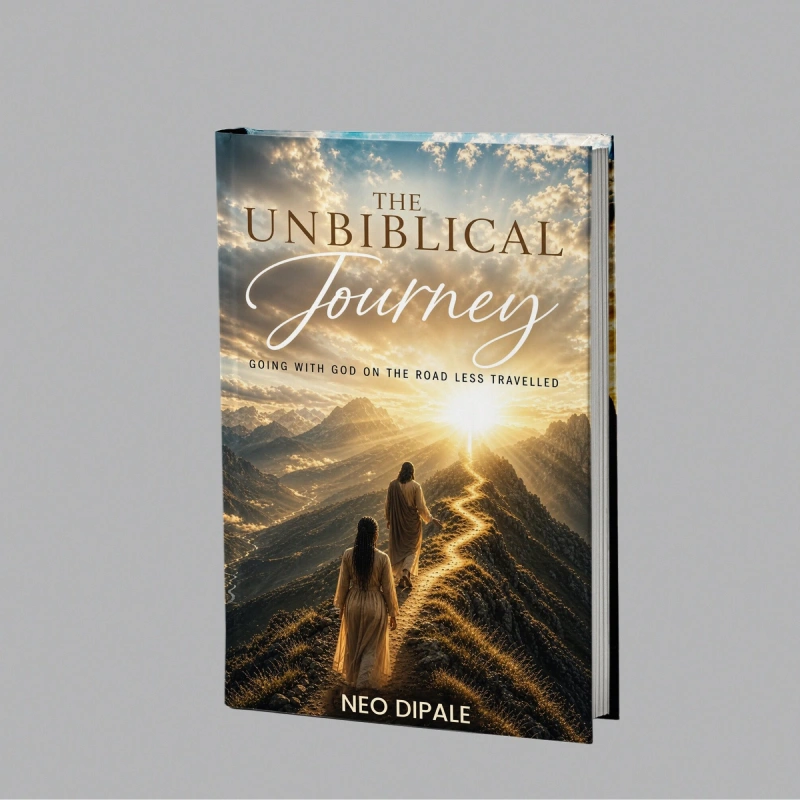
The Unbiblical Journey emerges naturally from Neo Dipale’s life as the literary expression of a path that often appeared impossible to understand. Its title captures the tension at the heart of her testimony: why would a loving God permit a journey marked by such difficulty, and how could suffering become the setting for spiritual transformation?

Rather than providing a simple answer, The Unbiblical Journey by Neo Dipale explores what happens when human expectations collide with surrender. Neo entered the journey believing that God intended to transform someone else. With time, she encountered a more personal revelation: she was also the one being refined, healed, challenged, and remade.

This understanding gives The Unbiblical Journey book its emotional and spiritual centre. The narrative moves through childhood wounds, domestic conflict, abuse, motherhood, fractured relationships, spiritual warfare, forgiveness, legal struggles, and the gradual rebuilding of a life through faith. However, its purpose extends beyond recounting events. The book asks readers to consider what transformation looks like when circumstances do not change quickly, and what trusting God means during seasons that resist easy explanation.

As The Unbiblical Journey author, Neo does not present surrender as passivity or the denial of pain. She portrays it as the demanding process of placing fear, control, anger, and unanswered questions before God. The result is a testimony in which the apparent death of an old identity becomes the beginning of a new creation grounded in faith, courage, and spiritual awakening.

Neo’s story enters emotionally difficult territory with remarkable openness. Her early exposure to domestic violence, later experiences of abuse, periods of fear and anxiety, family fractures, and prolonged legal conflict reveal how trauma can affect identity, relationships, motherhood, and a person’s understanding of love. Yet her Christian testimony book is not designed to sensationalize suffering. Its strength lies in showing the human cost of pain while refusing to let pain deliver the final verdict.

As a faith based memoir, the narrative demonstrates that healing rarely follows a straight line. Neo describes moments of spiritual clarity alongside seasons of confusion, resistance, grief, and exhaustion. Faith does not remove every consequence or resolve every conflict immediately. Instead, it becomes the foundation from which she begins confronting wounds that survival once required her to suppress.

This quality gives the work the emotional substance of a Christian inspirational memoir. Its inspiration does not come from minimizing what happened or presenting endurance as effortless. It comes from the courage to name harmful experiences, recognize destructive patterns, pursue safety, and believe that God’s restoring love can reach the parts of a life damaged by fear and rejection.

For readers exploring overcoming trauma through faith, Neo’s testimony offers reflection rather than a universal prescription. It does not suggest that forgiveness eliminates accountability or that faith requires remaining in danger. Instead, it presents healing as the gradual recovery of spiritual freedom, emotional clarity, and identity, a testimony of survival transformed into a voice of hope.

At the center of Neo Dipale’s faith and forgiveness story is a difficult truth: healing is not the same as forgetting, and forgiveness does not require pretending that harm never occurred. Her journey reveals forgiveness as an inward release, a process through which pain, anger, and resentment gradually lose their power to govern a person’s identity.

Neo’s experience of healing through God’s love begins with receiving a love she did not believe she had earned. Accustomed to instability and rejection, she encountered God not simply as a distant authority but as a Father who could find her in emotional desolation and restore what suffering had fractured. That love became the foundation from which she could examine her wounds without allowing them to define her future.

Her surrendering to God story also demonstrates that surrender is not weakness, passivity, or permission for abuse to continue. It is the courageous decision to relinquish destructive fear, the demand to control every outcome, and the emotional burden of carrying unresolved offences. In Neo’s testimony, surrender creates space for spiritual maturity, accountability, and a renewed understanding of love.

Readers seeking a Christian book about forgiveness will encounter a perspective that respects both grace and truth. Forgiveness does not remove consequences, eliminate boundaries, or automatically reconcile unsafe relationships. Instead, it becomes part of Neo’s liberation from the internal captivity of trauma. Through that freedom, she begins rebuilding her identity and important family relationships, not by denying the past, but by refusing to let it possess the future.

The Christian healing journey presented through Neo Dipale’s writing extends beyond emotional recovery. It also reflects her growing awareness of prayer, discernment, spiritual discipline, and the unseen battles she believes influence human decisions, relationships, and personal identity.

Her spiritual warfare testimony is deeply connected to her developing relationship with God. Throughout the manuscript, Neo recounts moments she understands as divine guidance, protection, correction, and preparation. These experiences are presented through the lens of her personal faith, revealing how prayer became a place of refuge when circumstances appeared threatening or impossible to control.

However, spiritual warfare in Neo’s work is not limited to dramatic confrontations. Some of its most significant battles occur within: choosing truth over deception, love over bitterness, obedience over pride, and trust over fear. The struggle to forgive, surrender personal judgment, and respond with spiritual maturity becomes as important as confronting any external opposition.

Readers drawn to books about spiritual growth will find a testimony that portrays discernment as something developed through prayer, humility, reflection, and an increasingly intimate knowledge of God. Growth does not mean Neo always understands what is happening. It means she learns where to turn when understanding fails.

This dimension strengthens the work as a powerful Christian testimony. Its message is not that faith prevents every battle, but that faith can transform how those battles are faced. Neo’s courage develops through dependence on God, allowing fear to lose its authority and trust to become the foundation of her life.

Neo Dipale writes with particular relevance for women who have carried pain quietly, women navigating abuse, rejection, damaged self-worth, fractured relationships, motherhood under pressure, or the emotional aftermath of living in survival mode. Her work gives language to experiences that are often hidden behind silence, shame, or the expectation to remain strong.

As a domestic abuse recovery faith story, her testimony must be understood with care. It represents one woman’s spiritual and emotional journey rather than a universal direction for every survivor. Faith should never be used to pressure someone into remaining in danger, tolerating violence, or abandoning necessary boundaries. Safety, trusted support, professional assistance, and legal protection may all be essential parts of recovery.

Readers looking for a Christian book about healing may recognize the complexity Neo presents. Healing is not portrayed as a single prayer followed by instant relief. It involves truth, grief, accountability, spiritual surrender, and the gradual rebuilding of identity and trust.

Among books about trauma and healing, Neo’s emerging work carries strength because it does not observe brokenness from a comfortable distance. Her insight is shaped by experiences she has personally endured and spiritually examined. Likewise, readers seeking books about overcoming abuse may find encouragement in her movement from fear and emotional captivity towards clarity, courage, and renewed purpose.

Her voice reminds women that being wounded does not make them worthless. A painful chapter can leave lasting marks without becoming the complete definition of a life.

As an upcoming Christian book, The Unbiblical Journey is positioned to reach readers who want more than a polished account of effortless faith. Neo Dipale’s story acknowledges that spiritual growth can unfold amid confusion, injustice, disappointment, and deeply complicated relationships.

The work represents a new Christian author book grounded in lived testimony rather than abstract encouragement. Neo does not write as someone untouched by hardship. She writes as a woman who has questioned, resisted, grieved, survived, surrendered, and gradually discovered that God’s work may be most transformative in the places that initially appear irredeemable.

For readers searching for books about faith and survival, the manuscript offers an honest exploration of what it means to continue when hope feels distant. Its message does not depend on denying emotional struggle. Instead, it shows faith developing within that struggle, through prayer, reflection, difficult acts of forgiveness, and the recovery of an identity no longer governed by fear.

The book may hold special significance among Christian books for women healing from trauma, rejection, abuse, family conflict, or spiritual confusion. Rather than offering a rigid recovery formula, it invites readers into reflection. Where has pain influenced their understanding of love? What burdens are they still carrying? What might healing through surrender look like in their own lives?

Through these questions, The Unbiblical Journey creates anticipation not merely for a new release, but for a testimony capable of beginning meaningful conversations about survival, faith-filled transformation, and God’s restoring love.

Neo Dipale | A Legacy of Faith-Filled Transformation Continues

The connection between Neo Dipale America Publishers represents more than the arrival of an upcoming publication. It marks the emergence of an author prepared to transform personal history into a message of faith, resilience, healing, and hope for others.

With The Unbiblical Journey coming soon, readers can prepare to encounter a deeply personal account of trauma, spiritual awakening, forgiveness, surrender, and transformation. Neo’s testimony shows that survival may preserve a person through a painful season, but healing invites them to become more than what happened to them. Her story moves towards restoration without erasing the difficulty of the road that came before it.

For anyone seeking a faith story for broken people, Neo’s work offers a compassionate reminder that brokenness is not evidence of abandonment. A life can be wounded and still carry purpose. Faith can be tested and still grow stronger. What appears to be an ending can become the place where God begins rebuilding identity, courage, relationships, and hope.

As part of the America Publishers Author Spotlight, America Publishers proudly congratulates Neo Dipale on writing The Unbiblical Journey. We celebrate her courage in sharing a testimony that can inspire readers to reflect on God’s love, trust Him through difficult seasons, and believe in the possibility of healing after pain.

Neo’s journey as an author is only beginning. Her voice carries the honesty of survival, the strength of surrender, and the promise of faith-filled transformation. Readers are warmly invited to get ready for a powerful upcoming book, and for the continuing legacy of an author writing from a life restored by faith.

For further updates and releases follow Neo Dipale on her official social media page.

🔗 For Facebook: Click here