
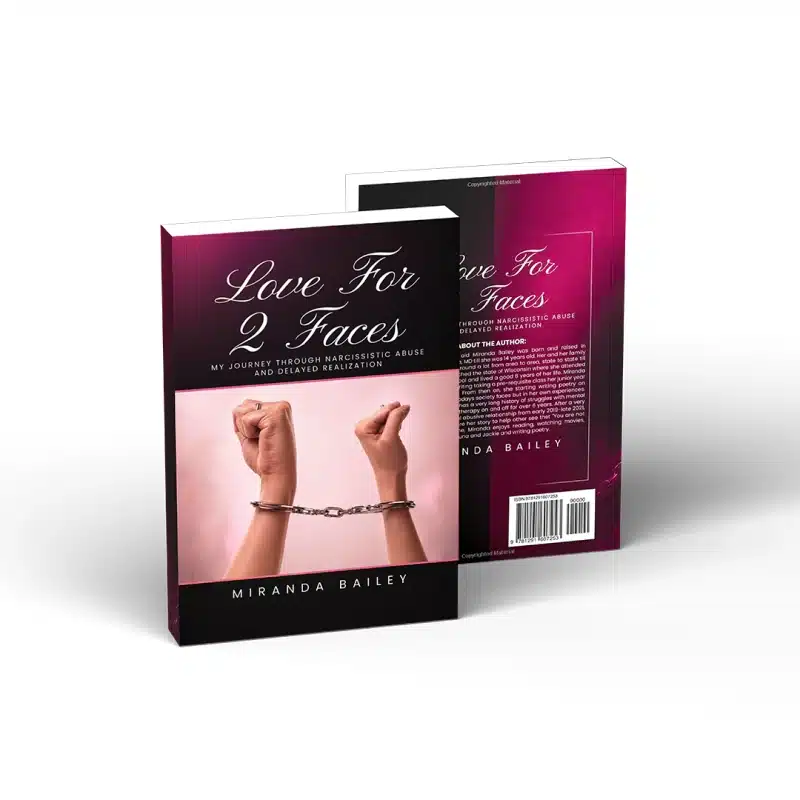
Love For 2 Faces: My Journey Through Narcissistic Abuse and Delayed Realization

Love For 2 Faces: My Journey Through Narcissistic Abuse and Delayed Realization

The affection that makes a relationship feel promising can also make its changing reality difficult to accept. When someone’s attention once offered hope, recognising that the same relationship now brings confusion and pain means confronting more than their behaviour. It means reconsidering the future you imagined together.

In Love For 2 Faces by Miranda Bailey, that conflict becomes the centre of a deeply personal memoir drawn from lived experience. Miranda’s relationship with Kevin begins with an intense connection and the possibility of the love she wants. As another side of the relationship emerges, those hopes become entangled with betrayal, emotional manipulation, and the struggle to protect her sense of self.

At twenty-three, Miranda dreams of love, independence, and a life she can build on her own terms. Kevin appears within that search for a different future. Yet his struggle to choose between Miranda and his wife brings broken promises and emotional turmoil into a relationship already carrying considerable hope.

The memoir follows the tension between wanting that connection to succeed and beginning to recognise its cost. Its subtitle, My Journey Through Narcissistic Abuse and Delayed Realization, gives particular weight to the distance between experiencing harm and understanding it.

That distance is central to the book’s appeal. Readers encounter a personal story in which love and pain coexist, and where recognising a damaging pattern involves questioning something Miranda wanted to believe in. Her account explores emotional abuse alongside resilience, awareness, and the difficult work of reclaiming identity.

For readers drawn to a memoir about love and betrayal, the book opens a more searching question: how do you begin to choose yourself when so much of your hope has become attached to someone else?

Drawing on three years of real-life experiences, Love For 2 Faces follows Miranda’s hopes for a relationship and the painful changes that challenge them. After meeting Kevin, she believes she may have found the love and future she has wanted. His affection is intense, his attention captivating, and their connection initially seems full of possibility.

Those expectations matter because they establish what Miranda stands to lose emotionally as the relationship deteriorates. She is invested in a future, as well as in the person who appears to offer it. Broken promises and betrayal therefore unsettle both the relationship and the hopes she has placed within it.

Her desire for independence also shapes the story. As she struggles to escape a controlling home and create a life of her own, the relationship becomes part of a wider search for freedom and belonging. The memoir brings these pressures together without reducing her experience to a single romantic disappointment.

As Kevin’s other side becomes visible, Miranda describes gaslighting, emotional manipulation, isolation, financial control, and escalating abuse. These themes move the narrative beyond heartbreak into an examination of a relationship that increasingly undermines her well-being.

The emotional conflict lies in her attachment to someone who is also causing her pain. Wanting love, facing betrayal, and struggling to understand what is happening become intertwined.

As an emotional abuse memoir, the book also looks towards recognition and survival. Its broader concern is how Miranda comes to understand her experience and begins the difficult journey of reclaiming her identity. The relationship supplies the narrative’s central conflict, while her sense of self gives that conflict its deeper significance.

One of the memoir’s most unsettling contrasts is the change in what Kevin’s attention means within Miranda’s life. Early affection offers the prospect of closeness and a shared future. As manipulation and control emerge, that promise becomes harder to reconcile with the relationship she is experiencing.

Miranda’s account gives this change a personal context. The initial intensity remains part of the story even after the relationship becomes painful. It helps explain the emotional tension between the connection she hoped to preserve and the behaviour she increasingly has to confront.

The memoir explores emotional manipulation in relationships through that tension. Gaslighting, isolation, and financial control affect more than individual moments of conflict. Within the book’s narrative, they belong to a broader deterioration that challenges Miranda’s confidence, independence, and understanding of the relationship.

Kevin’s struggle to choose between Miranda and his wife adds another source of uncertainty. The future Miranda wants remains bound up with broken promises and the question of whether that future will become possible. Hope and betrayal occupy the same emotional space.

This is where the book’s title acquires particular resonance. The loving face and the harmful side cannot be understood separately when Miranda is attached to the same person. Recognising one does not simply erase her feelings about the other.

The memoir invites readers to consider the cost of that contradiction. Its focus stays with Miranda’s experience: what happens when a relationship that appeared to support her hopes begins restricting her ability to live with confidence and independence?

Alongside its personal narrative, this narcissistic abuse memoir examines idealization, devaluation, discard, and hoovering. These terms provide a framework for considering the changing relationship and the confusion that accompanies it.

Idealization concerns the intense affection and attention associated with the relationship’s promising beginning. In Miranda’s account, Kevin initially seems to offer the love and future she has imagined. That opening helps establish the attachment at the centre of the memoir.

Devaluation shifts attention towards the diminishing of a person’s worth within the relationship. Read alongside the book’s themes of emotional manipulation and gaslighting, it introduces a contrast between feeling valued and beginning to question oneself. The emotional significance lies in how far that experience departs from the early promise.

Discard concerns rejection or withdrawal, while hoovering describes attempts to draw someone back into a damaging relationship. The memoir includes these stages in its discussion of narcissistic abuse, extending its focus beyond initial affection to patterns that can complicate recognition and separation.

The framework gives readers language with which to consider Miranda’s story. It does not require them to treat her experience as a clinical case or reach a diagnosis about Kevin. The book’s emphasis remains on the behaviour described, its emotional consequences, and the survivor’s perspective.

Together, these patterns help explain why the narrative involves more than a straightforward change from happiness to heartbreak. Attachment, uncertainty, and pain can remain intertwined as the relationship changes. Understanding the cycle of narcissistic abuse becomes part of the memoir’s wider exploration of how Miranda makes sense of what she has experienced.

Trauma bonding is one of the themes through which the memoir explores Miranda’s attachment to Kevin alongside the pain of the relationship. That coexistence is essential to understanding the story’s emotional complexity. Recognising harm and feeling detached from the person causing it are different experiences.

Miranda’s hopes for love and a shared future do not disappear from the narrative once manipulation becomes visible. They remain part of what makes the relationship difficult to understand. The person associated with her pain is also the person in whom she has invested affection and expectation.

The subtitle’s emphasis on delayed realization gives this conflict particular importance. It directs attention to the process of understanding an experience while emotionally involved in it. Miranda’s story asks readers to consider how difficult it can be to reconcile a relationship’s early promise with its damaging reality.

This perspective also resists the easy judgement that someone experiencing abuse should simply leave. Such a response overlooks the attachment and emotional confusion at the centre of the memoir. It offers little understanding of what Miranda is trying to recognise or what that recognition means for the future she wanted.

Delayed realization after abuse is therefore a defining theme rather than a passing phrase. It connects the relationship narrative with the book’s survivor-focused information, giving space to the struggle of naming what has happened.

For readers interested in understanding trauma bonding through personal storytelling, Miranda’s account places emotional attachment beside its cost. It makes room for the uncomfortable fact that loving someone can coexist with needing protection from the relationship, and that coming to understand this conflict can itself be a difficult part of survival.

The emotional consequences in Love For 2 Faces extend beyond disappointment in a relationship. Miranda’s account includes depression, anxiety, hopelessness, and a deterioration in her mental well-being as she struggles with attachment to Kevin and the harm she experiences. The memoir also addresses self-harm as part of that struggle, placing it within a wider story of distress and survival.

These experiences give weight to the question of self-worth running through the book. Miranda begins with hopes for love and independence. As the relationship becomes damaging, the struggle to protect those hopes becomes inseparable from the struggle to preserve her identity.

Gaslighting and emotional manipulation are especially relevant to that conflict. Within the narrative, questioning the relationship also means confronting uncertainty about her own perceptions. The difficulty is not limited to deciding what Kevin means to her. It involves understanding what the relationship is doing to her.

As a memoir about emotional abuse, the book brings attention to the personal cost behind its relationship narrative. Broken promises carry consequences beyond the moment they are made. Betrayal affects the future Miranda has imagined, while control threatens the independence she wants.

Her emotional experience gives the story its seriousness. Readers are invited to consider what it means to keep seeking love while struggling to maintain a sense of worth, and how that struggle can shape the way a person understands herself.

Miranda’s experience of abuse is central to the memoir, but it does not encompass everything the book has to say about her. Recognition, survival, and the difficult journey towards reclaiming identity give the narrative a direction beyond the relationship’s harm.

Recognition changes the questions at the heart of the story. The hope of winning Kevin’s love sits alongside a more urgent concern: protecting herself. That shift matters because it brings Miranda’s own needs, independence, and well-being into focus.

Her desire to build a life of her own is present from the beginning. As the memoir explores emotional abuse, that desire becomes an important thread connecting her early hopes with the broader search for self-worth. Independence carries a personal meaning within her story, shaped by both the controlling home she wants to escape and the relationship she struggles to understand.

Reclaiming identity after emotional abuse is presented as a difficult journey. The memoir’s discussion of emotional effects that may continue after a relationship ends allows space for that difficulty. Recognition can provide a new understanding of the past without immediately resolving its consequences.

This survivor memoir gives Miranda room to be more than the person to whom painful things happened. She is also the person reflecting on those experiences and putting them into words. Her account holds distress and resilience together, allowing neither to erase the other.

The possibility of rediscovering herself gives the book its forward movement. Self-worth becomes something Miranda has reason to protect, even when the relationship has made that protection emotionally complicated.

Love For 2 Faces combines personal memoir with survivor-focused information. That combination gives readers two ways to engage with the book: through Miranda’s relationship narrative and through the language she uses to examine the patterns surrounding it.

The personal story provides context for themes such as gaslighting, emotional manipulation, and trauma bonding. Readers encounter these subjects alongside Miranda’s hopes, attachment, and struggle for independence. The information belongs to a human experience rather than standing apart from it as a list of terms.

The book’s awareness-focused purpose is particularly relevant to readers who have questioned their reality or felt alone in a damaging relationship. Miranda’s account offers a survivor’s perspective from which to consider experiences that may be difficult to describe.

A personal story of narcissistic abuse can also give readers space to reflect without requiring their lives to match the author’s. They may recognise an emotional conflict, a struggle with self-worth, or the difficulty of accepting that a hoped-for relationship has become harmful.

The memoir’s contribution lies in making those experiences discussable. Its survivor-focused information supports the story’s themes while Miranda’s voice keeps the attention on the person experiencing them. Together, these elements create an invitation to awareness grounded in the account she has chosen to share.

Readers interested in true-life memoirs about complicated relationships may connect with Miranda’s account of love, betrayal, and the search for independence. The book follows a relationship in which the hope of a shared future becomes entangled with broken promises and emotional harm.

For those seeking books about unhealthy relationships, its appeal lies in the attention given to attachment and recognition. The narrative considers why understanding a damaging relationship can involve more than identifying hurtful behaviour. Miranda also has to reckon with her feelings and the future she wanted.

Readers drawn to an abuse survivor story may find particular relevance in the memoir’s focus on identity and self-worth. Its discussion of trauma bonding and delayed realization gives those themes a more specific context.

The book may also interest people who want to understand a survivor’s perspective, including readers whose own experiences differ from Miranda’s. Personal storytelling can encourage closer attention to the emotional complexity behind an experience that may appear simpler from outside.

The memoir addresses distressing subjects, so its subject matter deserves consideration when choosing a book. For readers prepared to engage with those themes, it offers a personal narrative alongside an awareness-focused examination of the relationship patterns Miranda explores.

By writing about lived experience, Miranda Bailey brings her own perspective to a story shaped by love, emotional abuse, and the struggle to rediscover herself. Her role as the author matters because she is the person giving that experience language, deciding how to reflect on it, and making it available for readers to consider.

The memoir’s personal narrative and survivor-focused information come together through that voice. Miranda shares a relationship story while drawing attention to the questions it raises about attachment, awareness, and identity. The book allows her experience to become a starting point for reflection without asking every reader to reach the same conclusion about their own life.

What happens when the relationship you hoped would give you love begins taking away your sense of self? Throughout her account, that question carries the weight of the future Miranda wanted and the well-being she needs to protect.

Recognition and survival give the memoir a direction beyond heartbreak. Its attention to delayed realization acknowledges the difficulty of understanding harm, while its focus on reclaiming identity makes room for a life whose meaning extends beyond the damaging relationship.

For readers interested in emotional abuse memoirs, narcissistic relationship dynamics, trauma bonding, and the difficult process of rediscovering self-worth, Love For 2 Faces by Miranda Bailey offers a deeply personal survivor perspective. Discovering the memoir means encountering those themes through the voice of the woman telling her own story.

Love For 2 Faces | Available Now

🔗 Amazon: Click here

For further updates and upcoming releases follow Miranda Bailey on her social media pages.

🔗 Facebook: Click here

🔗 Instagram: Click here