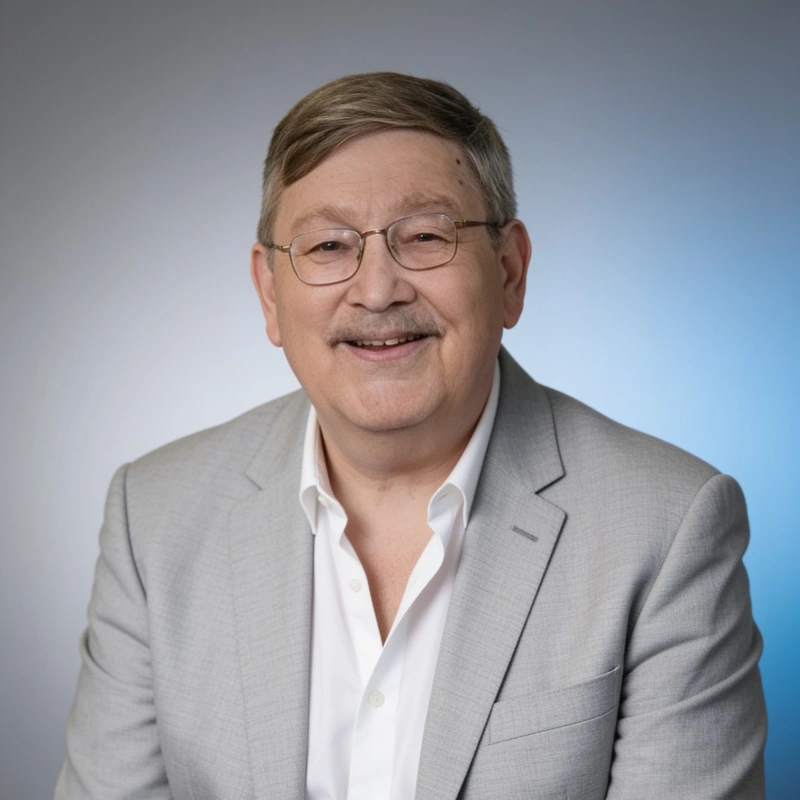
Dr. Matthew C. Johnsen

Dr. Matthew C. Johnsen: A Journey Through Sociology, Peacebuilding, Music, and Poetry

Where Scholarship Meets Creative Expression

Dr. Matthew C. Johnsen has built a journey connecting sociology, education, peacebuilding, music, poetry, and public engagement. Rather than existing as separate interests, these disciplines form different parts of his continuing effort to understand human experience and contribute to constructive social change. As a sociologist and educator, he has examined how people interact with communities and social systems. As a musician, he has participated in forms of creative expression rooted in listening and collective voice. As a poet, he has found an accessible way to explore awareness, connection, responsibility, and hope. The Dr. Matthew C. Johnsen author journey is therefore not defined by a single professional role. It reflects a sustained engagement with questions about how individuals relate to one another, how communities respond to social challenges, and how thoughtful expression can encourage people to imagine better possibilities.

Matthew C. Johnsen, Ph.D., is a Professor Emeritus of Sociology at Worcester State University and a Rotary Peace Fellow Alumnus. He is also the Music Director of the Unitarian Universalist Church of Worcester and a co-founder of Peace Choir Worcester. His work moves between academic scholarship and creative practice while retaining a consistent interest in people, society, and public participation. This combination makes the Dr. Matthew C. Johnsen biography one of intersecting forms of service and expression. Sociology provides a framework for examining social conditions, peacebuilding broadens that work through cooperation and conflict resolution, music creates opportunities for shared experience, and poetry brings reflection into a form that can reach readers beyond academic settings. Together, these pursuits reveal an author committed to public engagement through both analytical and imaginative approaches.

A Sociological Career Centred on People and Communities

As Professor Emeritus Dr. Matthew Johnsen, he brings decades of sociological research and observation to his creative work. His academic career has involved studying the ways institutions, communities, and social structures shape people’s experiences. Sociology looks beyond isolated events to consider the systems and relationships surrounding them, making it possible to examine how social conditions emerge and how they might change. Johnsen’s professional journey reflects this attention to the connection between individual lives and the wider structures in which they unfold. His position as a Worcester State Professor Emeritus represents an established career in teaching, research, and the study of society. It also provides important context for his later development as a poet, because the concerns present in his creative writing do not appear independently of his scholarship. They emerge from a longer engagement with human connection, social responsibility, and the possibilities of meaningful change.

The manuscript confirms that Dr. Matthew C. Johnsen’s sociological work has included research into community structures, mental-health systems, and social innovation. These areas involve different but closely related dimensions of social life. Community structures influence how people form relationships, gain support, and participate in shared environments. Mental-health systems show how institutions and services respond to complex human needs. Social innovation considers how new ideas and approaches can address challenges affecting individuals and communities. Through this work, Dr. Matthew C. Johnsen, sociologist and educator, developed a perspective shaped by both careful observation and concern for the experiences of others. His academic scholarship offered a structured way to investigate issues of social consequence, while his broader public-engagement work created space to consider how knowledge might contribute to awareness, participation, and change.

Johnsen’s journey also demonstrates that sociological understanding does not have to remain confined to academic articles or specialist conversations. His research background informs the way he approaches human connection, consciousness, community, and modern experience, but these concerns can be communicated through more than one medium. Academic scholarship allows social questions to be investigated systematically, while public and creative expression can invite a broader audience into the conversation. This relationship between academic scholarship and poetry becomes central to Johnsen’s work as he turns from the formal language of research toward the concentrated possibilities of verse. His transition is not a rejection of sociology. Instead, it extends his interest in society and social change into another form of communication. Through that progression, Dr. Matthew Johnsen’s public engagement begins to connect research, reflection, and creativity, preparing the way for poetry that encourages readers to pause, pay attention, and consider their own place within a shared world.

Johnsen’s concern with social change also developed through his experience as a Rotary Peace Fellow Alumnus. He studied peace and conflict resolution at the Rotary Peace Center at Chulalongkorn University in Bangkok, Thailand, where the program brought together fellows working in areas such as peacebuilding, education, law, and nongovernmental organizations. Coming from different parts of the world, the participants brought distinct cultural perspectives and professional experiences to their shared study. For Rotary Peace Fellow Dr. Matthew Johnsen, this international environment created an opportunity to consider conflict not simply as an abstract social problem, but as a challenge experienced and addressed across different communities. His participation complemented his sociological interest in social systems, cooperation, and the conditions that can help people build more peaceful relationships. It also extended his work beyond a national or purely academic setting, placing dialogue and cross-cultural learning at the center of the experience.

Studying alongside an international group of peace fellows strengthened Johnsen’s understanding of peace, conflict resolution, and global cooperation. The experience reflected an essential principle running through his wider work: progress depends partly on people being willing to listen across differences and learn from perspectives other than their own. As a Dr. Matthew Johnsen peace advocate, he approaches peace as something connected to human choices, social justice, sustainability, and collective responsibility. His fellowship did not separate peacebuilding from the realities studied through sociology. Instead, it provided another framework for considering how conflict develops and how cooperation can help communities move towards more constructive possibilities. His selection and studies are documented by Worcester State University, which describes the international and interdisciplinary nature of the program. The fellowship became an important point of connection among his scholarship, public engagement, and continuing interest in social change.

Music forms another significant part of Johnsen’s community-centred journey. As the Music Director of the Unitarian Universalist Church of Worcester, he helps bring people together through shared creative expression. Music can communicate through rhythm, tone, silence, and collective participation, allowing people to experience connection in ways that differ from academic discussion. For Dr. Matthew Johnsen, Music Director and musician, this work shares an underlying purpose with his sociology and peacebuilding: it creates a space in which individuals can listen, contribute, and become part of something larger than themselves. A choir depends on distinct voices learning how to sound together without losing their individuality. That process offers a practical expression of unity, one built through attention, cooperation, and mutual awareness. His church role therefore represents more than a separate musical interest. It is another dimension of his sustained engagement with community, hope, and the relationships through which solidarity can grow.

Johnsen is also a co-founder and co-director of Peace Choir Worcester, an initiative intended to generate peace and solidarity through music. The Unitarian Universalist Church of Worcester identifies him and Christon Carney as the choir’s co-founders and co-directors. Within this work, collective singing becomes a form of public participation. Different voices contribute to one shared expression, making listening as important as being heard. This relationship among voice, attention, and unity parallels several concerns found elsewhere in the Dr. Matthew Johnsen author journey. Sociology examines how people live together, peacebuilding asks how they can navigate conflict, and a choir demonstrates what coordinated participation can sound like. Peace Choir Worcester gives those ideas an immediate communal form. Through music, the aspiration for peace becomes something people can express together rather than a concept they encounter only through research, policy, or private reflection.

After decades of engagement with sociology, Johnsen began carrying his social observations into the more concentrated language of poetry. Academic articles and journal writing offer systematic ways to investigate social problems, present research, and contribute to scholarly discussion. However, these forms are often directed towards specialist audiences. Poetry provides Johnsen with a more accessible public medium through which questions about society, awareness, justice, connection, and responsibility can be approached. His movement from academic scholarship to poetry does not represent a departure from sociology. It expands the ways in which sociological thought can enter public life. The careful observation associated with research remains present, but it is expressed through imagery, rhythm, reflection, and the emotional force of concise language. In this sense, Johnsen’s creative writing allows scholarly concerns to meet everyday experience, inviting readers to encounter social questions through both thought and feeling.

This relationship can be understood as poetry and public sociology working together. Public sociology brings social questions beyond academic settings and into conversations that involve wider communities. Poetry can support that movement by giving abstract or complex concerns a human scale. Rather than requiring readers to begin with disciplinary terminology, verse can begin with an ordinary experience, a moment of stillness, a relationship, a season, or a question about how life should be lived. Johnsen’s manuscript repeatedly moves between inward awareness and outward responsibility, showing how attention to the self can lead towards recognition of other people and the wider world. His writing encourages reflection without presenting poetry as a substitute for research. Instead, it becomes another way to stimulate awareness and participation. For a sociologist turned poet, creative expression offers a bridge between academic observation and the experiences through which readers understand their own lives.

Johnsen’s poetry is shaped by a belief that awareness can lead to thoughtful action. His poems consider ordinary life alongside questions of wider social consequence, allowing intimate reflection and public concern to occupy the same creative space. Within the manuscript, attention to nature, time, music, relationships, faith, and personal purpose exists beside concern for justice, peace, equality, community, and the planet. This combination enables him to respond to current events and social challenges without reducing poetry to a series of arguments. Instead, readers are encouraged to pause, observe, and decide how they might participate in the world around them. Reflection, reaction, and action become connected stages rather than interchangeable ideas. First comes the willingness to notice; then the emotional or intellectual response; finally, the possibility of making a deliberate contribution. Through this approach, Dr. Matthew Johnsen’s public engagement extends into poetry that asks readers to examine both social conditions and their own responsibilities within them.

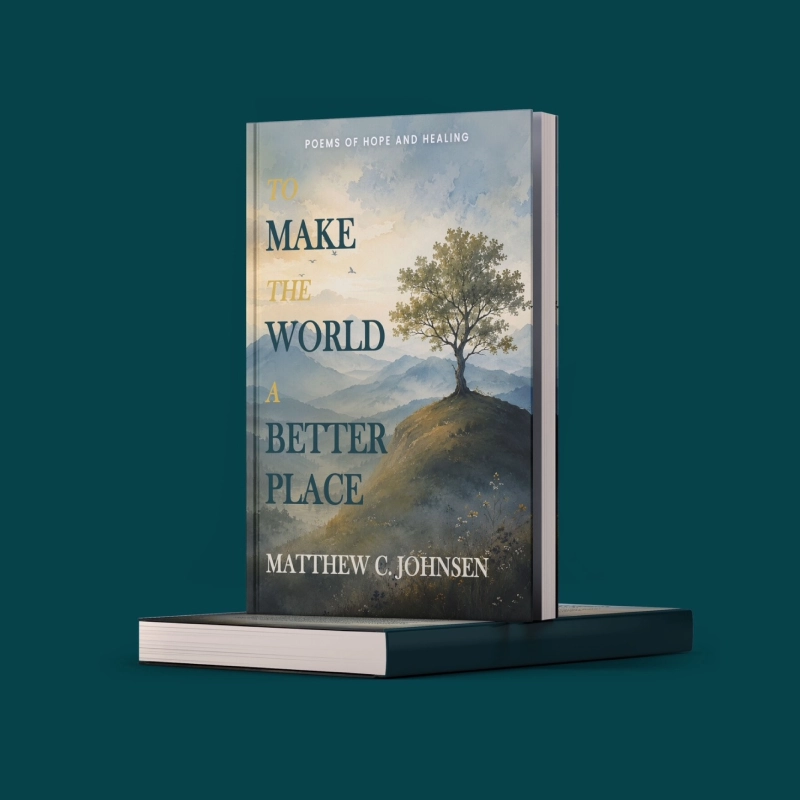
To Make the World a Better Place: Poems of Hope and Healing brings Johnsen’s sociological awareness and creative expression into a single collection. Categorized within Contemporary Poetry, Social Science, and Sociology, the book addresses issues of social consequence through a form designed to be reflective and accessible. Its purpose is not limited to describing problems. Johnsen uses poetry to encourage readers to consider how people might respond to difficult conditions with awareness, compassion, and thoughtful action. This emphasis connects the collection to his longer-standing interest in social change and public engagement. As the To Make the World a Better Place author, he moves beyond the structure of academic articles and journal writing while continuing to explore questions that matter to individuals and communities. Poetry gives those questions space to be experienced personally, allowing social thought to emerge through observations, emotions, images, and moments that readers can recognize in their own lives.

The collection is organized into seven sections: Prelude; Creativity and Awareness; Love, Community and Peace; Day’s Journey; Seasons; Purpose; and Epilogue. Together, they create an inward and outward movement, beginning with the discovery of an individual voice and expanding towards connection, responsibility, and participation in the wider world. This organization supports the book’s purpose without forcing every poem into a single interpretation. Some pieces concentrate on quiet experiences such as morning light, music, friendship, nature, and the changing seasons. Others turn towards broader questions involving justice, equality, peace, purpose, and humanity’s responsibility to one another and the planet. The movement between these subjects reflects how private awareness and public life continually influence each other. Johnsen’s academic scholarship and poetry meet within that relationship, transforming social observation into verse that encourages readers to think about how personal choices can contribute to shared change.

Hope in the collection is not presented merely as passive optimism. It develops through attention, gratitude, compassion, lovingkindness, and a willingness to act with greater awareness. The poems invite readers to find beauty amid uncertainty while still recognizing the social challenges surrounding them. Themes of diversity, equity and inclusion, peace, unity, human connection, and social change contribute to a vision of communities capable of living with greater responsibility towards one another. At the same time, the book leaves room for spiritual contemplation and enduring personal questions: how people discover purpose, find their path, live more deeply, and love more freely. These concerns make the work both intimate and socially conscious. As an author writing about social change, Johnsen does not separate the possibility of a better future from the conduct of ordinary life. The collection suggests that meaningful change can begin with awareness, continue through deliberate action, and grow through the connections people form with one another.

At its center, To Make the World a Better Place: Poems of Hope and Healing asks readers to become more attentive participants in their own lives and communities. The collection moves from observation towards engagement, encouraging people to slow down, listen more deeply, and recognize possibilities that can be overlooked within everyday routines. Its reflections on creativity, recovery, aging, faith, love, nature, and the passage of time broaden into questions about collective life and the future people help create through their choices. This movement gives the book its character as contemporary social poetry while preserving its contemplative tone. Rather than prescribing one response to every issue, Johnsen creates room for readers to reflect on what they value and what they can contribute. The result is an invitation to awaken, connect, and participate, grounded in the conviction that a more peaceful and compassionate world begins with how people see, treat, and respond to one another.

The growing reach of To Make the World a Better Place: Poems of Hope and Healing marks an important achievement in Dr. Matthew C. Johnsen’s creative journey. The collection reached #71 on Amazon’s Best Sellers list in Contemporary Poetry, reflecting its visibility among readers interested in reflective and socially conscious verse. This achievement should be understood as a recorded milestone rather than a claim about its current position. The book is also distributed through the IngramSpark network, extending its availability beyond a single retail platform. Together, its Amazon Contemporary Poetry ranking and wider distribution represent meaningful developments for a sociologist turned poet bringing decades of observation and public engagement into a new literary form. These Dr. Matthew C. Johnsen achievements also demonstrate how poetry concerned with awareness, hope, community, and social responsibility can connect with readers seeking both personal reflection and engagement with the world around them.

Johnsen’s work is also moving towards several planned creative milestones. To Make the World a Better Place: Poems of Hope and Healing is scheduled to appear in Studio of Books’ Book Gallery at the 2026 Frankfurt Book Fair, giving the collection an opportunity to be presented within an international literary environment. An audiobook edition, narrated by Ellen O’Neall-Waite, is planned for November 1, 2026. Through narration, the poems will enter a form especially suited to their musicality, rhythm, and reflective character. Johnsen’s music CD, Murmuration, is also planned for November 1, 2026, adding another dimension to a creative journey already connecting scholarship, poetry, music, and public participation. These forthcoming projects are not presented as completed releases. They represent the next planned stage of his work and the continuing development of the ideas, sounds, and social concerns that shape his creative expression.

America Publishers Welcomes Dr. Matthew C. Johnsen

America Publishers Author Spotlight Welcomes Dr. Matthew C. Johnsen and celebrates a journey extending across sociology, education, peacebuilding, music, and poetry. From his career as Professor Emeritus of Sociology at Worcester State University to his experience as a Rotary Peace Fellow Alumnus, his work has remained connected to questions of community, cooperation, and social change. His position as Music Director at the Unitarian Universalist Church of Worcester and his involvement in Peace Choir Worcester bring those concerns into a collective musical setting. His poetry carries them into a literary form that invites readers to pause and participate. Viewed together, these roles reveal a consistent commitment to public engagement. Whether expressed through scholarship, international study, music, or verse, his work encourages greater attention to human connection and to the possibilities people create when they listen, reflect, and act with purpose.

To Make the World a Better Place: Poems of Hope and Healing represents a new creative stage in that continuing public-engagement work. The collection translates Johnsen’s long-standing interest in people and society into poetry that moves between ordinary moments and larger questions about justice, equality, peace, purpose, and responsibility. It asks readers not simply to imagine a better future, but to consider how awareness, compassion, and individual choices might help bring one closer. Readers can discover Dr. Matthew C. Johnsen’s contemporary poetry through the book’s official Amazon listing and learn more about his work through his official website. His journey offers a reminder that scholarship and creativity do not have to occupy separate worlds. Together, they can deepen reflection, widen participation, and help people consider what it means to leave the world better than they found it.

Learn More About Dr. Matthew C. Johnsen

🔗 Worcester State University: Click here

🔗 Official Author Website: Click here

To Make the World a Better Place: Poems of Hope and Healing | Available Now

🔗 Amazon: Click here