
Dr. Edista Alex Abdallah

Dr. Edista Alex Abdallah | The Voice That Asks You to Slow Down

Some voices emerge to entertain. Others arrive to challenge. The voice of Dr. Edista Alex Abdallah author belongs firmly to the latter.

In a world that rewards speed, urgency, and constant motion, his perspective feels almost disruptive. Where modern thinking demands immediate results, his work turns toward something far less comfortable: waiting. Not as delay, not as absence but as a fundamental part of existence itself.

A closer look at the Dr. Edista Alex Abdallah biography does not present a conventional narrative built on events, milestones, or dramatic turning points. Instead, it reveals a thinker shaped by observation, someone who studies human behavior not from distance, but from within lived experience. His work does not attempt to simplify life. It seeks to question the assumptions we rarely pause to examine.
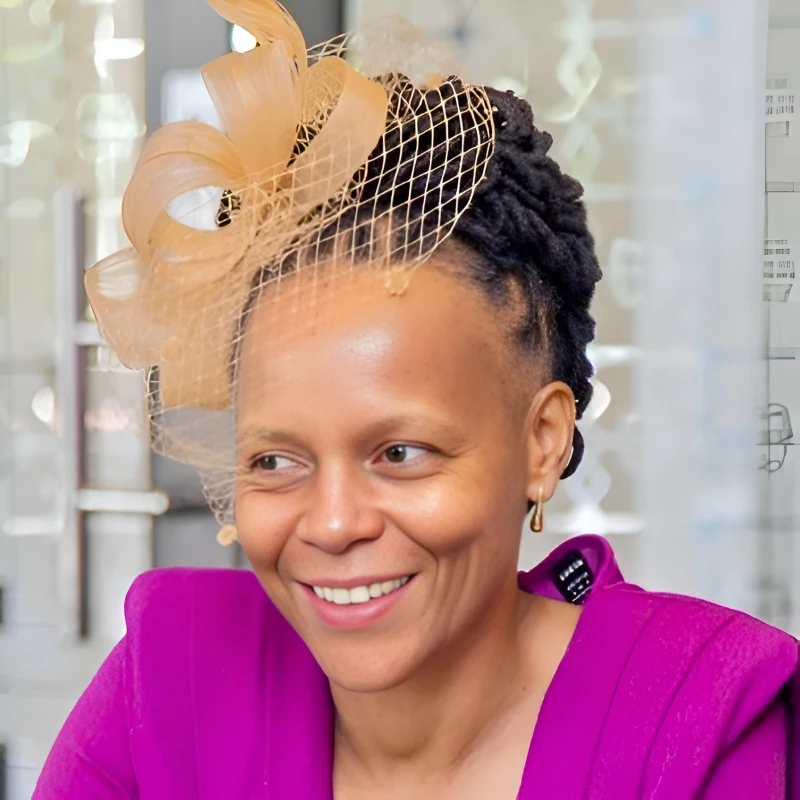
As a modern philosophy author 2026, his writing sits at the intersection of reflection and resistance. He challenges the rhythm of the digital age, where attention is fragmented and patience is treated as weakness. In doing so, he introduces a perspective that feels both unfamiliar and necessary.

This is not a voice that offers quick answers. It is one that asks better questions. And in a time defined by noise, that alone sets it apart.

Understanding the work requires understanding the thinker behind it. The Edista Abdallah writer profile is not defined by traditional labels or predictable categories. He does not position himself merely as a storyteller, nor as a conventional guide in self-development. Instead, his work reflects the depth of an Edista Abdallah philosophy writer, one who approaches life as something to be examined, not rushed through.

His perspective is built on noticing what others overlook. The quiet discomfort of waiting. The tension between control and uncertainty. The invisible emotional weight carried in moments that appear uneventful on the surface. These are not dramatic experiences, yet they define much of human life.

What distinguishes his thinking is its refusal to remain shallow. As a deep thinking author on life meaning, he moves beyond surface-level motivation and into territory that feels more honest, even when it is uncomfortable. His work does not promise immediate transformation. Instead, it invites reflection, slow, deliberate, and often challenging.

There is also a sense of restraint in his approach. He does not attempt to overwhelm with complexity, nor does he dilute ideas for the sake of simplicity. The balance he maintains allows his writing to remain accessible while still carrying intellectual weight.

In many ways, his work reflects the very idea he explores: growth that is not rushed, understanding that unfolds over time, and meaning that cannot be forced.

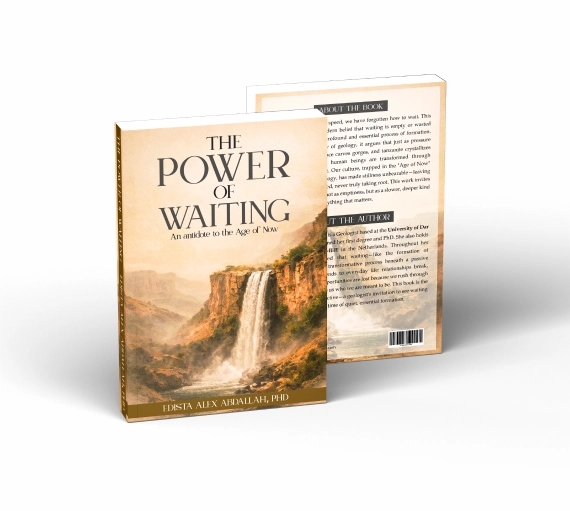
At the center of his work lies a concept that feels almost radical in today’s world: the idea that waiting is not wasted time. It is lived time. This idea takes full form in Dr. Edista Abdallah The Power of Waiting, where the author explores what it truly means to exist in moments we are conditioned to escape.

As the author of The Power of Waiting, he does not present a quick-fix guide or a collection of surface-level affirmations. Instead, the book unfolds as a layered exploration of time, emotion, and human behavior. It questions the instinct to rush, the discomfort of stillness, and the constant urge to control outcomes before they are ready to unfold.

Positioned through his newly released work, Edista Abdallah’s entry into the literary space carries a distinct tone, one that resists the polished, fast-consumption style often seen in modern self-growth writing.

With growing attention around Edista Abdallah’s newly available book, readers are not waiting for a future release. They are now able to engage with a perspective that feels increasingly relevant in a culture defined by immediacy. The book does not attempt to remove uncertainty. Instead, it reframes it, suggesting that uncertainty itself holds meaning when we stop trying to outrun it.

In that sense, this work is not just about waiting. It is about understanding why we resist it, and what becomes possible when we no longer do.

Now available on Amazon

🔗 Amazon: Click here

To understand the power of waiting, it is necessary to examine the environment that has made it so uncomfortable. Today’s world operates on a rhythm that leaves little room for pause. Notifications replace reflection. Speed replaces depth. And patience is quietly dismissed as inefficiency.

This is where the voice of a writer on modern life anxiety becomes essential. The constant pressure to respond, achieve, and move forward creates an underlying tension that many experience but rarely articulate. Waiting, in this context, begins to feel like failure rather than a natural part of life.

From an author perspective on fast paced world, this shift is not accidental. It is reinforced daily through systems designed to reward immediacy. Social platforms, digital communication, and instant access to information reshape expectations, making delay feel unnatural, even threatening.

As an author on social media distraction, Edista Abdallah highlights how attention itself has become fragmented. The ability to sit with uncertainty, to remain present in unfinished moments, is gradually eroding. Instead, distraction becomes a coping mechanism, a way to avoid confronting the discomfort of not knowing what comes next.

This leads directly into the work of a writer on digital age impatience, someone who recognizes that impatience today is not just a personal trait, but a conditioned response. We are taught to expect speed, and when life does not deliver it, we experience friction.

But that friction is not the problem. It is the signal. And understanding it is the first step toward redefining our relationship with time.

Waiting is often dismissed as an external situation, something imposed by time, circumstance, or delay. But in reality, its impact is deeply internal. The experience of waiting is shaped not by the clock, but by the mind.

Through the lens of Edista Abdallah psychology of waiting, this process becomes far more complex than it appears. Waiting introduces uncertainty, and uncertainty challenges our sense of control. It forces the mind into a space where outcomes are unknown, and for many, that space feels uncomfortable, even overwhelming.

As an author on human emotions and time, Abdallah explores how these moments are not empty at all. They are filled with thought, anticipation, doubt, and sometimes fear. The longer the wait, the louder these internal responses become. What appears still on the outside is often active and turbulent within.

This is where the work of a writer on uncertainty and control becomes especially relevant. Much of human discomfort does not come from waiting itself, but from the inability to predict what follows. Control offers reassurance. Waiting removes it. And in that gap, the mind begins to react.

Yet within that reaction lies transformation. As an author insights on patience mindset, Abdallah reframes this internal struggle as a necessary process. Waiting forces reflection. It reveals emotional patterns. It exposes how we respond when certainty is no longer available.

Rather than avoiding this state, his work suggests something more difficult: to remain within it long enough to understand it. Because in that understanding, the experience of waiting shifts from resistance to awareness.

Patience is often misunderstood as passivity, a quiet acceptance of delay without action. But this interpretation overlooks its true nature. Patience is not the absence of movement. It is the discipline to move without forcing outcomes before their time.

As an author talking about patience, Edista Abdallah challenges the idea that strength is always visible through action. Sometimes, strength is demonstrated through restraint, the ability to endure uncertainty without collapsing into frustration or impulsive decisions.

Among thinkers on patience and growth, there is a shared recognition that development rarely occurs in moments of speed. Growth unfolds gradually, often in ways that cannot be measured immediately. It requires time, and more importantly, the willingness to allow that time to pass without interference.

Positioned as an inspirational author on patience, Abdallah does not frame this idea as easy or comfortable. Instead, he acknowledges the tension that comes with it. To wait while remaining engaged, to trust a process that is not fully visible, demands a level of internal stability that is often underestimated.

This perspective also aligns with the role of an author teaching patience and growth, one who does not simply encourage endurance, but explains its purpose. Patience is not about standing still. It is about continuing forward, even when progress cannot yet be seen.

In that sense, patience becomes an active force. Not dramatic, not loud, but steady. And over time, it shapes outcomes in ways that urgency never could.

Some ideas are explained through emotion. Others through logic. What makes this work distinct is its ability to move between both, grounding abstract thought in the observable world. This is where Edista Abdallah’s perspective begins to stand apart.

As an author using nature to explain life, he turns to processes that exist far beyond human urgency. Mountains do not rise overnight. Rivers do not carve paths instantly. Diamonds do not form under comfort. These are not metaphors created for effect, they are reflections of reality.

This approach aligns closely with a geology inspired philosophy author, where time is not measured in days or years, but in layers, pressure, and transformation. Nature does not rush its outcomes, yet its results are undeniable. In that sense, it becomes a quiet argument against the impatience that defines modern life.

Through the lens of an author explaining deep time concept, Abdallah introduces a perspective that feels almost unfamiliar in daily thinking. Deep time stretches beyond immediate perception. It challenges the idea that progress must be visible to be real. What appears unchanged on the surface may, in fact, be undergoing profound development beneath it.

This connection between science and reflection positions him as an author connecting science and life lessons, someone who does not separate knowledge into rigid categories. Instead, he allows natural processes to mirror human experience, offering a way to understand growth that feels grounded rather than abstract.

In doing so, he shifts the conversation. Waiting is no longer just a personal struggle. It becomes part of a larger pattern, one that exists far beyond individual timelines.

There are aspects of waiting that cannot be explained through logic alone. Beyond psychology and observable patterns, there exists a quieter dimension, one that touches belief, meaning, and trust in what cannot yet be seen.

This is where the perspective of a spiritual author on waiting begins to emerge. Waiting, in this sense, is not only about time passing. It is about holding steady in moments where outcomes remain uncertain, and clarity has yet to arrive.

As an author on faith and patience, Abdallah explores the idea that not all progress is visible. Some of the most significant changes occur internally, shifts in perspective, resilience, and understanding that unfold without immediate evidence. These changes require trust, not in guaranteed results, but in the process itself.

From the viewpoint of an author exploring time and existence, waiting becomes more than a temporary phase. It becomes a condition of life. Every decision, every transition, every moment of uncertainty carries an element of waiting within it. To exist is, in many ways, to move through these spaces continuously.

This aligns closely with the work of a philosophy of waiting author, where the goal is not to escape these moments, but to understand them. Waiting is no longer framed as interruption. It is reframed as participation in a process that cannot be rushed or fully controlled.

In this space, becoming is quiet. It is not always visible, not always measurable, and not always understood in real time. But it is constant. And recognizing that changes the way waiting is experienced altogether.

In a space saturated with quick solutions and simplified advice, a different kind of voice naturally stands out. The work of self development author Edista Abdallah does not follow the expected formula of instant transformation or step-by-step success frameworks. Instead, it moves in a direction that feels slower, deeper, and far more reflective.

As a personal growth writer 2026, his approach reflects a shift in how growth itself is understood. Rather than focusing solely on outcomes, he emphasizes process. Rather than offering control, he explores acceptance. This distinction places his work in a category that feels increasingly relevant in a world where surface-level improvement often replaces genuine understanding.

Positioned as a life transformation author, Abdallah does not present transformation as a dramatic, overnight shift. It is gradual. It unfolds quietly, often without recognition in the moment. His writing reflects this reality, encouraging readers to look beyond visible progress and recognize the internal changes taking place during periods of uncertainty.

This perspective also aligns with the work of a psychology based self growth author, where emotional awareness and mental patterns are given as much importance as external achievement. Growth is not separated from struggle, it is built through it.

As an emerging self growth author Edista Abdallah, his voice represents a movement toward more honest, less performative self-development. One that does not promise ease, but offers clarity. One that does not rush the reader, but invites them to slow down and understand the process they are already living through.

Dr. Edista Alex Abdallah | The Philosophy That Continues

The work does not conclude with a single book, nor does the thinking settle into fixed conclusions. The perspective introduced by Dr. Edista Abdallah continues to evolve, shaped by the same principle it explores: time.

Through Edista Abdallah modern life views, it becomes clear that his work is not limited to observing the present moment. It is an ongoing response to it. As the pace of life accelerates, the relevance of his ideas grows stronger, offering a counterbalance to a culture that rarely pauses.

His positioning as a slow growth philosophy writer reflects more than style. It reflects intention. Growth, in his work, is not forced into visibility. It is allowed to unfold naturally, even when that process feels uncomfortable or incomplete.

What makes this philosophy resonate is its persistence. It does not rely on trends or temporary relevance. It is grounded in something more constant, the human experience of waiting, questioning, and becoming.

As readers continue to engage with his ideas, the impact extends beyond pages. It becomes a shift in perspective, a reconsideration of time, and a deeper awareness of the moments often overlooked.

The philosophy does not end here. It continues, quietly, steadily, and without urgency, much like the process it seeks to understand.