
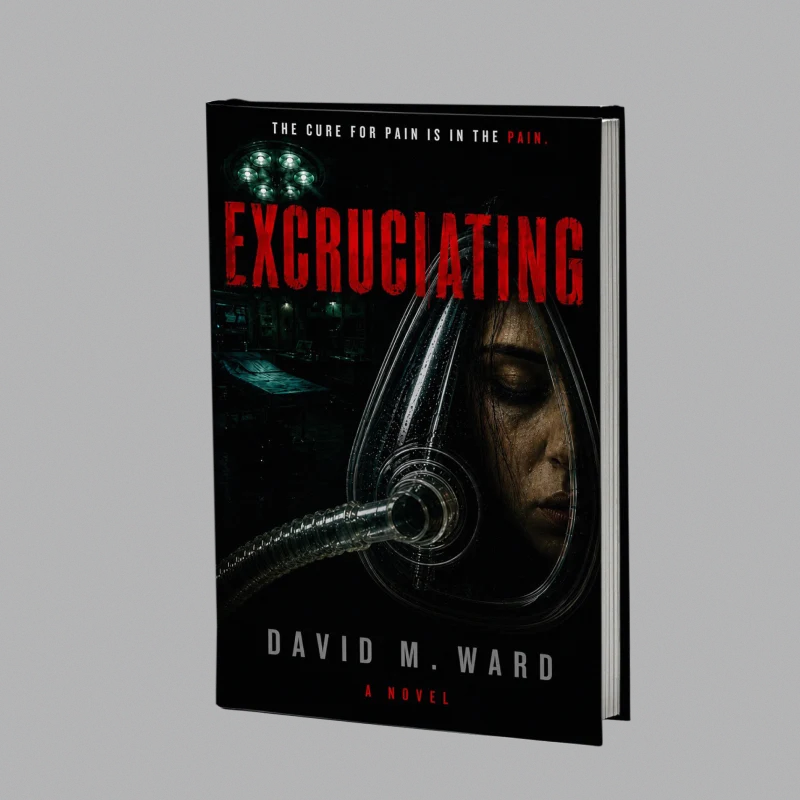
Excruciating

Excruciating: Where Relief Ends and the Horror Begins

In an operating room, relieving pain is part of the job. For the man administering the anesthesia in Excruciating, escaping his own suffering has become a dangerous obsession.

Excruciating by David M. Ward introduces Matt Rix, a nurse anesthetist whose professional knowledge offers little protection against the grief consuming his life. Since his son’s death, the distance between the man he was and the man he has become has continued to grow. Behind the routines of patient care, he conceals an opioid dependence that threatens his judgment, his relationships, and the career others still trust him to carry out.

Then something happens at work that his clinical training cannot explain.

Ward’s debut medical horror novel brings the procedures and pressures of hospital life into a story of personal unraveling and supernatural dread. Its unsettling premise begins with a familiar vulnerability: placing your life in someone else’s hands. From there, it asks what happens when that person is struggling to maintain control, and begins to suspect that something far more dangerous is close by.

Matt Rix understands how to keep a patient breathing through surgery. He knows the medications, the equipment, and the sequence of decisions that help a medical team navigate a vulnerable person’s care. His experience in the military and in anesthesia has taught him to work through pressure.

None of that prepared him to lose his son.

Grief follows Matt into the operating room, the hospital’s call rooms, and the quiet stretches of his day. Memories intrude where concentration should be. His marriage is strained, his anger surfaces quickly, and his sense of himself has narrowed around everything he believes he has lost or failed to protect.

Opioids offer temporary relief, followed by a growing need to repeat it. Access to medications through his work makes his dependence especially troubling. The same professional role that requires vigilance gives him opportunities to conceal behavior that puts that vigilance at risk.

As a nurse anesthetist protagonist, Matt occupies an uncomfortable position for the reader. His suffering is recognizable, but his decisions can be reckless, dishonest, and harmful. His relationships offer moments of companionship while becoming entangled with secrecy and drug use. Understanding his pain does not erase the consequences of how he manages it.

This is where Ward’s exploration of grief and addiction in fiction gains its force. Matt’s struggle takes place through ordinary actions: a conversation avoided, a dose concealed, another explanation offered to someone who notices something wrong. Alongside those choices are encounters that challenge his insistence that he remains in control. The possibility of seeking help becomes part of his struggle, even as his circumstances grow more threatening.

Benevolent Manor Hospital has the familiar rhythms of a workplace where lives depend on people doing their jobs correctly. Staff prepare surgical instruments, check equipment, administer medications, and transfer patients into recovery. Music plays in operating rooms. Colleagues exchange jokes, irritations, and gossip between tasks.

Ward builds unease within these recognizable routines.

Medication-dispensing systems, labeled syringes, breathing circuits, and the steady information on a monitor give the setting a concrete texture. Procedures unfold through the actions of people who know them well. Readers enter a working environment where technical competence is essential, even when fatigue, resentment, or private distractions intrude.

That detail gives the hospital horror novel a particular source of tension. A patient under anesthesia must depend on care they cannot observe or evaluate. A colleague may appear capable while concealing a serious problem. The systems surrounding both can record a medication or display a heartbeat without revealing everything that matters.

Staffing shortages and overnight calls add pressure, while longstanding friendships and workplace hierarchies complicate questions of trust. People know one another well enough to make assumptions. They also have reasons to keep certain things private.

Ward’s medical realism makes the proximity between routine care and concealed danger especially unsettling. Benevolent Manor remains busy with its ordinary responsibilities as Matt’s experiences become increasingly disturbing. The equipment continues to function. Conversations continue around him. That apparent normality makes his isolation sharper: something can feel profoundly wrong to one person while everyone else carries on working.

For someone trained to interpret changes in a patient’s condition, an inexplicable observation presents an immediate problem. Matt is accustomed to looking for causes. A reading on a monitor, a physical response, or an unexpected change should lead to an assessment and a decision.

What he begins to witness resists that process.

His first difficulty is deciding whether to trust himself. He knows about his drug use. He knows his sleep is troubled and his grief remains unresolved. When something disturbing appears before him, he has reasons to question his perception before questioning the world around him.

That uncertainty gives the psychological suspense a personal cost. Speaking openly could expose the behavior he has worked to conceal. Remaining silent leaves, him alone with an experience he cannot comfortably dismiss. His medical knowledge supplies possible explanations, but those explanations do not restore his confidence.

Ward places these moments against the continued order of the hospital. While Matt struggles with what he sees, equipment operates and colleagues attend to their tasks. Their composure offers him little reassurance. Instead, it deepens the gap between his private alarm and the environment around him.

As a supernatural medical thriller, Excruciating draws tension from that gap. Matt must confront the possibility that his compromised judgment has made him unreliable while also considering a more frightening possibility: that he has noticed something real. Every attempt to make sense of it becomes entangled with what admitting it might reveal about him.

The danger surrounding Matt develops through relationships as much as through the disturbing things he witnesses. Friendship, intimacy, and professional authority give people access to one another’s vulnerabilities. In Excruciating, that access becomes a powerful means of control.

Jonah Cromwell, the hospital’s CEO, has known Matt since their youth. Their shared history gives Matt reasons to trust him that extend beyond his position at Benevolent Manor. Yet longstanding familiarity can make someone harder to question. Memories of loyalty do not necessarily explain the person standing before you now.

Matt’s relationship with Marisol offers companionship amid the wreckage of his personal life. It also becomes entangled with substance use, secrecy, and expectations neither can easily separate from their feelings. Their connection reveals how people seeking comfort can participate in each other’s harm, even while believing they offer an escape.

Abigail, a travel nurse, brings another unsettling presence into this network. She pays attention to private tensions and recognizes the leverage concealed within a confidence. Conversations that appear casual can leave someone dangerously exposed.

These relationships give Ward’s dark character-driven fiction much of its momentum. Information moves between people with competing motives, and a disclosed weakness can become a threat. The hospital’s hierarchy adds another layer: professional authority carries consequences for anyone whose livelihood depends on remaining in good standing.

As the supernatural horror novel develops, its human conflicts remain essential. Shame, resentment, desire, and fear create opportunities for manipulation. The emerging darkness finds people already struggling with what they want, and what they are willing to conceal to keep it.

The title Excruciating reaches into nearly every part of Matt’s life. There is the physical pain his profession helps patients endure, the anguish of losing his son, and the bodily demands of dependence. There is also the suffering that moves between people through betrayal, humiliation, and cruelty.

Ward returns repeatedly to the relationship between pain and relief. In anesthesia, relief requires knowledge, attention, and responsibility. In Matt’s private life, the pursuit of relief becomes increasingly difficult to separate from avoidance. What briefly quiets his distress leaves the source of that distress unresolved.

The novel’s chapter epigraphs reinforce this concern, approaching suffering through different perspectives. They frame a story in which pain can provoke compassion, withdrawal, anger, or an urge to dominate someone else. Characters respond differently to their discomfort, and those responses shape the danger around them.

For Matt, acknowledging that he needs help carries its own difficulties. His professional identity rests partly on competence and control. Admitting dependence means confronting the distance between that identity and his behavior, along with the practical consequences of seeking treatment.

This treatment of grief and addiction in fiction gives the horror an emotional foundation. Readers encounter someone who wants his suffering to stop but cannot simply reason himself free of it. The possibility of change remains bound to difficult choices: telling the truth, accepting assistance, and facing feelings he has tried to suppress.

The question of redemption therefore emerges through responsibility. Whatever threatens Matt from outside, his own actions still matter.

Excruciating will appeal to adult readers interested in the intersection of medical detail, psychological suspense, and supernatural danger. Its hospital setting gives the fear a particular intimacy: patients surrender awareness, staff work under pressure, and essential trust can be compromised without immediately appearing broken.

Readers who prefer complicated protagonists will find that Matt offers little easy reassurance. His training and experience coexist with damaging behavior, making his predicament difficult to observe from a comfortable distance. Concern for him can sit alongside frustration with his choices.

The novel also moves into explicit territory. Graphic violence, sexual content, strong language, and substance use contribute to its intensity. Its emotional and physical brutality makes it better suited to readers comfortable with confrontational horror.

For those readers, this medical horror novel offers a setting where technical knowledge cannot account for every threat. The invitation is to follow Matt into that uncertainty, where the familiar sounds of patient care continue even as his understanding of what surrounds him begins to fail.

David M. Ward brings extensive military and clinical experience to his debut novel. A retired U.S. Army Reserve Colonel and Certified Registered Nurse Anesthetist, he has more than two decades of operating room and trauma care experience.

He began his 37-year military career as an enlisted combat medic in 1988. His service later included work as an Air National Guard Flight Nurse and an Army Reserve nurse anesthetist, alongside leadership and training responsibilities. He retired in December 2025.

That background informs the specificity of Excruciating: the preparation of an operating room, the discipline of a patient handoff, and the responsibility carried by someone administering anesthesia. It also provides a foundation for fiction concerned with loss, vulnerability, and the boundaries between suffering and redemption.

Ward writes about a world he knows professionally while taking its familiar routines into supernatural territory. The result places practical medical knowledge beside fears that resist a clinical explanation.

Originally from Philadelphia, he now resides in Bucks County, Pennsylvania. Excruciating introduces his work through a story in which the ability to relieve pain offers no simple protection against it.

Follow David M. Ward for Further Updates

🔗 Personal Instagram: Click here

🔗 Amazon Author Page: Click here

Excruciating | Available Now

🔗 For Amazon: Click here