
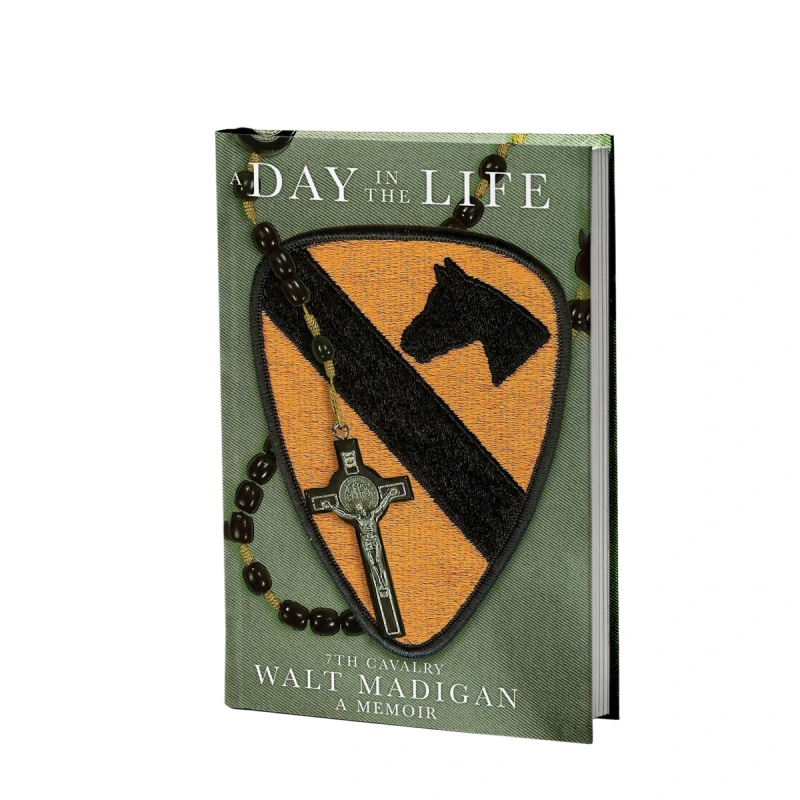
A Day in the Life

A Day in the Life: 7th Cavalry: A Memoir | Youth, Faith, and Survival in Vietnam

At nineteen, Walt Madigan’s life changed direction. The California surfer was drafted into the United States Army in 1966 and subsequently served as a combat infantryman in Vietnam. The distance between those experiences forms the starting point of A Day in the Life: 7th Cavalry: A Memoir, a personal account of growing up under circumstances few teenagers could imagine.

Written by Walt J. Madigan, this Vietnam War memoir brings together combat, recovery, and recollections of the life he carried with him into military service. Family humor, Los Angeles surf culture, and Catholic school antics share space with the daily struggle to survive. Faith and determination help guide Madigan through danger as he strives to make it home.

The memoir’s premise raises a compelling question: how does someone move from the familiar rhythms of youth into the immediate dangers of war? Madigan approaches that transition through his own experience, keeping the individual behind the uniform at the center of the story.

Before Vietnam, there was Los Angeles, a large family, and a childhood shaped by Catholic schooling. Born in May 1947, Walt Madigan was the sixth of eight children. These early surroundings supply part of the personal history woven through his memoir, giving readers a starting point beyond his military identity.

California surf culture adds another dimension to that background. The draft interrupts Madigan’s carefree surfing life, carrying him from California into military service. That detail makes the transition tangible. The ocean, school, and family belong to a familiar world; infantry service brings a different set of demands, with survival becoming an immediate concern.

This shift gives the book its coming-of-age memoir framework. Madigan enters the Army at an age when his adult life is still taking shape. His introduction to responsibility unfolds through military service and combat, placing the ordinary uncertainties of youth alongside extraordinary physical risks.

Family funnies and Catholic school antics preserve a sense of who Madigan was before entering the Army. They give the wartime account a personal background: a soldier has a childhood, relationships, and memories that accompany him wherever he goes.

For readers, that connection offers a way into the story. Following Madigan from California toward Vietnam means encountering the young person whose life the draft redirected, before considering the combat infantryman he became.

Madigan served in Vietnam with the 1st Cavalry Division (Airmobile). His account begins from the position of a young enlisted soldier facing the practical dangers of infantry life. Madigan recounts moving through the bush while trying to avoid being shot or caught in an explosion.

That perspective gives this military memoir a clear focus. Its subject is the war as Madigan experienced it, with attention to the immediate business of staying alive. For an infantryman, the larger conflict is encountered through the threats and demands directly in front of him. His personal account offers readers one view of those circumstances.

Madigan was wounded twice during his Vietnam service. Those injuries establish the physical stakes behind the memoir’s survival narrative. They underline how dramatically his circumstances changed, from surfing in California to facing the physical consequences of combat.

Recovery provides a setting for the memoir’s snapshot scenes, which bring wartime experiences together with recollections of his earlier life. Combat and its consequences therefore sit within a narrative that also contains family, school, and surfing.

A firsthand Vietnam War memoir offers a particular kind of historical encounter. Readers follow an individual’s memories and vantage point, learning how military service entered and altered one life. Madigan’s account invites that attention through a young infantryman whose efforts to survive coexist with humor, hope, and belief in God. These elements keep his personality visible alongside the serious circumstances of his service.

A Day in the Life unfolds through snapshot scenes during Madigan’s recovery. Memories of family life, Catholic schooling, and surfing are interspersed with his account of wartime survival. This gives the book a framework that reaches across different periods of his youth.

These snapshots bring memories of home into the account of Vietnam, placing different periods of Madigan’s life alongside one another. A family memory or school antic belongs to the same person who later faces danger as a soldier. Bringing these experiences together provides a broader understanding of the life being recalled.

This structure also connects with the book’s coming-of-age premise. The nineteen-year-old entering military service already has attachments, beliefs, and a sense of the world. War becomes part of his passage into adulthood, while earlier memories preserve the background against which that change takes place.

Humor brings moments of levity into the account of danger and survival. Alongside physical danger are recollections associated with mischief, familiarity, and home. Their presence makes room for the personality of the storyteller and the experiences that preceded his service.

For readers approaching Madigan’s wartime memories, this combination establishes the memoir’s central invitation: to follow a young soldier’s struggle for survival while keeping sight of the life, faith, and sense of humor he brought with him.

Faith holds an explicit place in A Day in the Life: 7th Cavalry: A Memoir. Madigan credits his belief in God and his own grit with guiding him through his perilous journey. Faith and determination form a personal foundation for his struggle to survive.

His Catholic schooling provides background for this aspect of the story. Faith belongs to the life he knew before military service and remains part of the way he describes facing wartime danger. Its presence connects the young Californian’s upbringing with the soldier’s efforts to endure circumstances far removed from home.

That relationship gives readers something to consider beyond the physical demands of infantry service. A survival narrative also raises questions about what a person holds onto when familiar routines disappear. In Madigan’s account, belief in God is one of the resources he identifies as helping him through.

Personal grit accompanies that faith as Madigan faces the daily struggle to stay alive. Endurance takes shape through the immediate demands and dangers of infantry service. His experience of being wounded twice makes the stakes of that struggle clear.

For readers interested in faith and survival, this Vietnam veteran memoir offers an individual testimony rooted in military experience. Madigan’s beliefs form part of his understanding of the journey, allowing readers to consider how faith, upbringing, and determination intersect within the life he recounts.

Madigan weaves humorous family stories and Catholic school antics into his recollections, alongside his account of bringing laughter and hope to his comrades. Those details introduce a personality that remains visible amid the dangers of service.

Memories of home give that humor a background. A large family, school experiences, and California surf culture supply material from a world beyond the Army. Their inclusion broadens the memoir’s emotional range, bringing familiar human experiences into an account shaped by combat and recovery.

Madigan’s efforts to lift his fellow soldiers’ spirits bring companionship into the account. His humor becomes a way of connecting with the men sharing the dangers of military service. Readers encounter a young soldier whose response to difficult circumstances includes making room for laughter.

Humor in wartime keeps Madigan’s personality visible amid the demands of survival. The infantryman trying to survive also has a sense of mischief, memories of family, and ways of connecting with other people. In this military memoir, those qualities help establish the person telling the story and the outlook he brought to the men serving beside him.

Readers drawn to personal accounts of military service may find a clear point of interest in Madigan’s infantry perspective. His Vietnam War memoir centers on the experience of a young soldier, offering an individual account that can be read alongside broader histories and other veteran stories.

The coming-of-age element gives the book another potential audience. Madigan is nineteen when the draft redirects his life, making youth central to its premise. Readers interested in how people encounter responsibility, danger, and abrupt change may be drawn to the distance between his California surfing life and his service in Vietnam.

The memoir’s combination of family recollections, humor, and belief in God may also appeal to readers who seek personal history with several emotional dimensions. Memories of family, school, and surfing bring ordinary life into an account of extraordinary circumstances.

A Day in the Life follows one man’s transition into military service, tracing a journey shaped by memories of home, personal faith, and the determination to survive.

Walt J. Madigan’s life extends across military service, higher education, skilled work, and business ownership. Born in Los Angeles in May 1947, he grew up as the sixth of eight children and attended Catholic schools through grade twelve before entering the Army in 1966.

After serving as a combat infantryman in Vietnam and being wounded twice, Madigan completed his second year in the Army as a drill sergeant at Fort Ord in Monterey, California. He received an honorable discharge in August 1968.

He subsequently earned a degree in Behavioral Sciences from San Jose State University in 1972. A move to Alaska introduced him to the flooring trade, and he later established North Shore Flooring, first in North Lake Tahoe and then in Kings Beach, California. His work included antique, vintage, and reclaimed hardwoods, fine carpeting, and luxury vinyl plank.

Following his retirement in 2019, writing became one of the activities filling his days. He lives in Arroyo Grande on California’s Central Coast and enjoys pickleball, ocean kayaking, and day hikes in Big Sur.

That wider life provides context for the Vietnam veteran sharing his memories. Through A Day in the Life: 7th Cavalry: A Memoir, Walt Madigan brings readers back to a formative period, preserving the experience of a young surfer whose path led through combat, injury, and the effort to return home.

Find the Book

🔗 For Amazon: Click here

🔗 For Apple Books: Click here

Connect with Walt Madigan

🔗 For Facebook: Click here