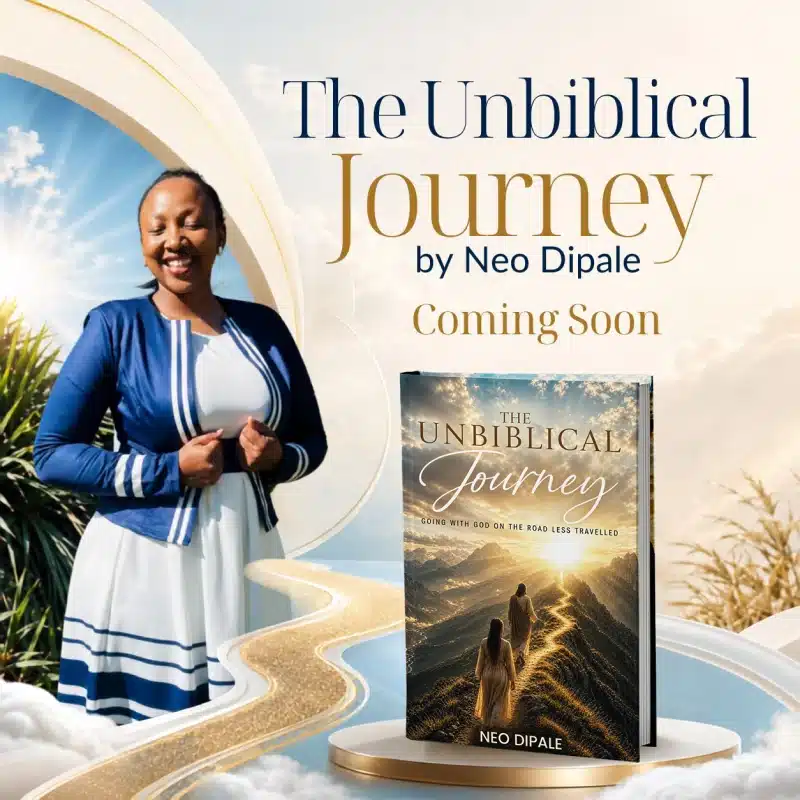
The title does not suggest a journey without God. Instead, The Unbiblical Journey book explores a life that did not resemble the safe, orderly, or predictable Christian path people often expect. It reveals how God’s presence can remain constant even when circumstances appear broken, prayers seem unanswered, and faith is tested beyond what a person believes they can endure.
With The Unbiblical Journey coming soon, readers can prepare to encounter an upcoming Christian memoir that does not hide from difficult questions. It offers an unfiltered testimony of how God’s love can enter places of deep pain and gradually transform fear, anger, rejection, and hopelessness into faith, freedom, and renewed purpose.
Neo Dipale’s relationship with the spiritual world began long before she fully understood what faith meant. As a child, she experienced a powerful encounter that remained vivid in her memory, even as those around her interpreted it through the cultural and ancestral beliefs familiar to her family. Frightened and uncertain, she tried to distance herself from spiritual matters, although God’s pursuit of her had already begun.
Raised in a household that identified as Christian while also embracing ancestral traditions, Neo knew about God before she truly knew Him. Her early life was shaped by conflicting beliefs, inherited understandings, family stories of faith, and questions about who God was. These experiences would eventually become part of the foundation of her spiritual transformation memoir.
The Neo Dipale author journey emerges from lived experience rather than abstract teaching. She writes as someone who has wrestled with belief, fear, disappointment, disobedience, forgiveness, and surrender. Her testimony does not present spiritual growth as an effortless rise from struggle to victory. Instead, it shows how transformation can take place slowly, painfully, and sometimes through circumstances that initially make little sense.
As a Neo Dipale Christian author, she is preparing to share a story for readers who have wondered whether their history, mistakes, suffering, or unanswered questions have disqualified them from God’s love. The Neo Dipale new book speaks to people who have experienced brokenness but still long to believe that healing and restoration are possible.
This upcoming faith based book is also an invitation to look beyond appearances. A person’s journey may seem chaotic from the outside while God is performing a much deeper work within them. As anticipation grows around the Neo Dipale upcoming book, readers can expect a Christian memoir coming soon that approaches faith with vulnerability, conviction, and emotional honesty.
Neo’s childhood contained love, but it was also shaped by fear, instability, alcohol misuse, financial pressure, and violence within the family home. She witnessed the pain of a turbulent marriage and learned from an early age to anticipate conflict. Experiences that once seemed normal later revealed the depth of the emotional wounds she had carried into adulthood.
These early realities make The Unbiblical Journey more than a recollection of hardship. As a faith journey memoir, it examines how childhood experiences can influence identity, relationships, expectations, and a person’s understanding of love. It also considers how unresolved wounds may follow someone into adulthood, even when they are determined to build a different life.
For readers searching for books about rejection and healing, Neo’s testimony offers an honest exploration of what it means to feel overlooked, unsafe, misunderstood, or unwanted. However, the story does not leave her in those experiences. It traces the continuing presence of a God who saw her before she understood His character and pursued her when she attempted to remain distant from spiritual life.
That pursuit forms the emotional foundation of this Christian inspirational memoir. It is not based on the idea that faith prevents suffering. Instead, it asks what can happen when God enters a wounded life and begins revealing His nature through correction, protection, mercy, and love.
Among books about God’s love, Neo’s forthcoming memoir promises a particularly personal perspective. God’s love is presented not merely as comfort, but as a force that searches, confronts, disciplines, protects, and restores. Her experiences gradually challenged what she believed about herself, other people, and the Lord she was learning to follow.
In this sense, the book also speaks to readers seeking books about God’s purpose in pain. It does not claim that abuse, trauma, or loss are good. Rather, it explores how God can meet a person within suffering, prevent that suffering from defining their final identity, and transform what was meant to destroy them into a testimony of endurance and spiritual growth.
As Neo’s life unfolds, the challenges become increasingly complex. Her story moves through emotional and domestic abuse, devastating loss, manipulation, spiritual deception, fear, family division, and prolonged battles for safety and freedom. These experiences establish the memoir as a deeply personal Christian book about domestic abuse recovery.
However, Neo’s testimony is not shared to sensationalize suffering. Its purpose is to reveal the reality of surviving circumstances that affected her body, mind, relationships, faith, and sense of identity. As a domestic violence survivor faith story, it acknowledges the confusion that can arise when pain exists alongside prayer, and when someone struggles to understand why God has allowed a particular path to continue.
The memoir’s role as a faith based trauma healing book comes from this willingness to confront difficult emotions. Neo writes about disappointment, distrust, anger, grief, emotional withdrawal, and the struggle to forgive. Her journey demonstrates that Christian healing does not require survivors to deny what happened or pretend that their wounds do not matter.
As a Christian healing journey, the book shows that recovery is rarely immediate or uncomplicated. It may involve recognizing danger, seeking safety, grieving what was lost, confronting harmful beliefs, establishing boundaries, accepting support, and gradually rebuilding trust. Faith does not erase the need for these steps; it can provide the strength and clarity required to take them.
The manuscript also develops as a spiritual warfare memoir, exploring discernment, deception, fear, temptation, disobedience, and the struggle between spiritual conviction and human reasoning. Neo recounts moments when she followed God’s guidance and others when fear, pressure, or the desire to please people influenced her decisions. These experiences become lessons about listening, surrendering control, and learning to recognize the still, small voice of God.
Readers looking for books about overcoming trauma with God may recognize the tension between believing in His goodness and questioning Him during suffering. Neo does not conceal that tension. She reveals how pain affected her prayers and trust, while also showing how God continued working even when she felt emotionally distant from Him.
This honesty can make the memoir meaningful among Christian books about emotional healing and Christian books about survival and healing. It acknowledges that surviving is only one part of recovery. Healing also requires a person to face buried grief, anger, fear, and the beliefs formed through trauma.
For those seeking Christian books for women healing from abuse, rejection, loss, or broken relationships, Neo’s story offers companionship rather than easy answers. It reminds readers that their wounds are real, their safety matters, and their painful experiences do not place them outside God’s care.
One of the most challenging transformations in The Unbiblical Journey concerns surrender. Neo had to confront not only what others had done to her but also the fear, people-pleasing, pride, anger, and self-protection affecting her spiritual life. Her story gives deeply personal meaning to books about surrendering to God because surrender is presented as an ongoing act of trust rather than a single emotional decision.
As a Christian book about forgiveness, the memoir does not treat forgiveness as denial or permission for abuse to continue. Forgiveness does not make harmful conduct acceptable, remove accountability, or require survivors to remain in unsafe circumstances. Instead, Neo’s journey explores how holding on to anger and offence began to imprison her, even when the pain behind those emotions was understandable.
Her account contributes to books about forgiveness and freedom by showing how forgiveness can release a survivor from remaining emotionally controlled by the person who caused the harm. This release did not happen immediately. It developed through prayer, honest confrontation, spiritual conviction, counselling, compassion, and the gradual softening of a heart that had learned to protect itself by shutting down.
Among books about healing through faith, the memoir stands out for its willingness to show the difficult middle of recovery. Neo experienced moments of progress as well as moments when grief and resentment resurfaced. Her faith and restoration book does not present healing as a straight line; it presents it as a continuing relationship with God.
Readers interested in Christian books about surrender and Christian books about inner healing will encounter a testimony of being rebuilt from within. Neo’s surrender involved allowing God to challenge her understanding, reshape her responses, and teach her to forgive from love rather than fear or religious obligation.
Although pain forms a substantial part of the narrative, it is not the final message of The Unbiblical Journey. At its core, this is a Christian testimony book about the redemptive hand of God. The story moves from spiritual confusion toward discernment, from hopelessness toward expectation, and from an identity formed by suffering toward an identity rooted in Christ.
Neo’s Christian testimony of transformation includes the restoration of important family relationships, a deepening understanding of God’s character, and a renewed ability to see herself through faith rather than rejection. Some restorations occurred slowly, after years of conflict, separation, misunderstanding, and emotional injury. Their gradual nature makes them feel honest rather than idealized.
For readers exploring books about spiritual growth, the memoir demonstrates that maturity is often developed through correction, perseverance, and difficult obedience. Neo’s faith was not strengthened because every prayer produced an immediate result. It grew as she learned to trust God while outcomes remained uncertain.
This places the book among inspirational books about faith and resilience while preserving the complexity of Neo’s experience. Her resilience is not portrayed as the strength to endure mistreatment indefinitely. It is the strength to seek freedom, survive loss, rebuild her life, and continue believing that God could bring meaning and restoration out of circumstances intended to destroy her.
For those searching for books about finding hope in God, Neo’s testimony offers a reminder that despair does not have to become a permanent home. Her story moves through darkness without allowing darkness to claim the ending. What appeared lost, dead, or irreparably broken became the very place where she encountered God’s faithfulness.
The forthcoming memoir may therefore find a meaningful place among powerful Christian testimony books. Its message is not that believers will avoid hardship, but that hardship cannot prevent God from pursuing, shaping, rescuing, and restoring a life surrendered to Him.
The Unbiblical Journey by Neo Dipale is for readers carrying questions about faith, suffering, forgiveness, identity, spiritual warfare, and recovery. It is for survivors learning that healing does not require silence, and for believers trying to recognize God’s presence in a journey that looks very different from what they expected.
As anticipation grows around this new Christian book release, readers can prepare for a memoir that is courageous in its honesty and unwavering in its central conviction: God’s love remained present through every unexpected turn.
The Unbiblical Journey is coming soon. Stay ready for further announcements about the book and the next chapter in Neo Dipale’s journey as an author, survivor, believer, and powerful witness to the restorative love of God.
🔗 For Facebook: Click here