
The Golden Age of Spanish Theatre

The Golden Age of Spanish Theatre: A Canon That Shaped Europe

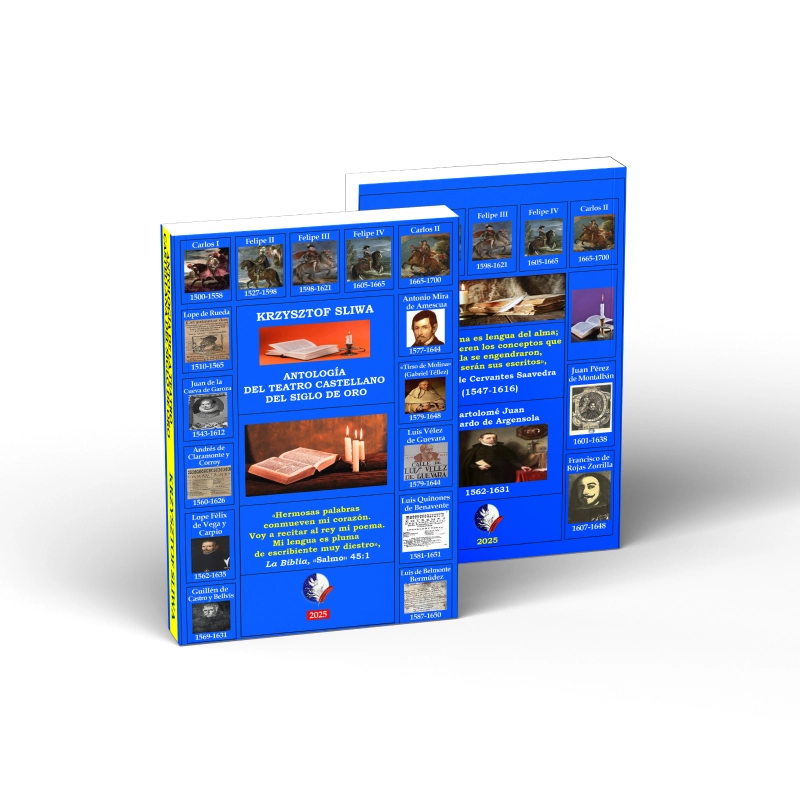
The Antología del Teatro Castellano del Siglo de Oro stands as a definitive Spanish Golden Age theatre anthology, offering readers direct access to one of the most influential dramatic traditions in Western literary history. The Spanish Golden Age, spanning from the late fifteenth century to the end of the seventeenth century, produced a theatrical culture unmatched in both scope and innovation. During this period, drama became a central vehicle for cultural expression, reflecting Spain’s political power, religious identity, and evolving social structures.

What distinguishes Golden Age Spanish drama is its ability to merge intellectual rigor with popular appeal. Plays were written in verse, performed in public corrales de comedias, and consumed by audiences across social classes. This theatre rejected rigid classical conventions and instead embraced flexibility, emotional depth, and narrative vitality. As a result, it formed a living dialogue between stage and society, addressing themes such as honor, faith, authority, love, and moral conflict.

This anthology presents the theatre of the Spanish Golden Age not as a static historical artifact, but as a dynamic literary canon that shaped European dramaturgy for generations. By bringing together foundational and lesser-known works, the volume invites readers to engage with a theatrical tradition that remains essential to understanding the evolution of dramatic literature.

The development of Spanish theatre during the Siglo de Oro is inseparable from the broader artistic movements that defined early modern Europe. Beginning with Spanish Renaissance theatre, dramatic works were deeply influenced by Humanist ideals, emphasizing classical learning, moral reflection, and the exploration of human nature. Early theatrical forms drew from religious drama, pastoral dialogue, and classical models, laying the groundwork for a uniquely Spanish stage tradition.

As the sixteenth century progressed, these foundations gave way to increasingly complex forms. The transition toward a Spanish theatre Renaissance Baroque aesthetic introduced heightened emotional intensity, elaborate poetic language, and more intricate dramatic structures. This evolution culminated in the Baroque period, where theatrical expression reached its peak through innovation, thematic depth, and formal experimentation.

Within this trajectory, the Baroque Spanish theatre anthology tradition emerges as a vital record of artistic transformation. Playwrights adapted theatrical conventions to reflect shifting political realities, religious tensions, and cultural expansion. The stage became a space where spectacle and intellect coexisted, offering audiences works that were both entertaining and philosophically resonant.

This anthology traces that evolution with precision, allowing readers to follow the stylistic and ideological progression of Spanish theatre from its Renaissance origins to its Baroque maturity.

One of the defining strengths of this anthology lies in its careful presentation of Spanish theatrical form and innovation. As a Spanish dramatic literature book, it reveals how playwrights of the Siglo de Oro developed a dramatic architecture that balanced poetic sophistication with accessibility. Unlike classical models bound by rigid rules, Spanish dramatists embraced flexibility, allowing tragedy and comedy to coexist within a single work.

This creative freedom contributed to the formation of a distinct Spanish dramatic canon, characterized by three-act structures, verse-based dialogue, and language adapted to the social status of each character. Themes such as honor, loyalty, deception, divine justice, and personal freedom recur throughout the plays, offering insight into the moral and philosophical concerns of early modern Spain. The theatre became both a mirror of society and a space for intellectual exploration.

Through close attention to structure and content, the anthology enables meaningful Golden Age theatre analysis, guiding readers through the artistic decisions that defined this dramatic tradition. The selected works demonstrate how innovation emerged not from abandoning tradition, but from reshaping it. As a result, the plays included here continue to inform modern interpretations of drama, literary theory, and performance studies.

The origins of Spanish Golden Age theatre are rooted in the rise of performance as a popular, public art form. Central to this transformation was Lope de Rueda, whose work established the foundations of a classical Spanish stage tradition that would later flourish throughout the seventeenth century. His pasos and short dramatic pieces introduced everyday characters, humor, and social realism to the stage, bringing theatre closer to the lived experience of the audience.

This anthology situates Lope de Rueda within the broader context of Siglo de Oro stage literature, emphasizing his role as a bridge between early theatrical experimentation and the fully developed comedia. The inclusion of his works highlights how performance practices evolved alongside literary form, creating a theatre that was both immediate and enduring.

By presenting these foundational texts within a Spanish classical theatre collection, the volume underscores the importance of early dramatists in shaping the language, structure, and themes of later masterpieces. These beginnings reveal that the brilliance of the Golden Age did not emerge suddenly, but was built through gradual refinement, experimentation, and deep engagement with popular culture.

The maturity of Spanish Golden Age theatre is defined by the emergence of extraordinary dramatists whose works shaped the literary identity of an era. This anthology brings together the most influential Spanish Golden Age playwrights, presenting their works as part of a coherent and evolving tradition. Figures such as Lope Félix de Vega y Carpio, Tirso de Molina, and Pedro Calderón de la Barca transformed the stage into a space of artistic mastery and philosophical depth.

The Golden Age Spanish plays included in this volume reveal how dramatic writing achieved an unparalleled balance between poetic brilliance and structural discipline. Lope de Vega’s reformulation of dramatic norms gave rise to a flexible theatrical model capable of portraying complex human emotions, while Tirso de Molina introduced psychological nuance and moral ambiguity. Calderón de la Barca, in turn, refined the dramatic form with symbolic intensity and intellectual rigor.

By framing these works within a single Spanish theatre heritage book, the anthology allows readers to trace the refinement of dramatic language and thematic complexity across generations. Together, these playwrights established a theatrical canon whose influence extended beyond Spain, shaping European drama and securing the Siglo de Oro as a defining moment in world literary history.

Beyond the celebrated masters, the Spanish Golden Age produced a rich array of dramatists whose contributions were gradually marginalized or overlooked. This historical Spanish theatre anthology restores visibility to those voices, offering a broader and more accurate representation of the period’s theatrical landscape. By including playwrights often excluded from traditional curricula, the volume challenges narrow interpretations of the canon.

The anthology highlights the diversity of Spanish theatre literary movements, demonstrating that the vitality of Golden Age drama extended well beyond a handful of dominant figures. Authors such as Ana Caro Mallén de Soto exemplify the depth and originality present in works long neglected due to social, political, or gender-based bias. Their inclusion enriches our understanding of the era’s creative complexity.

As a scholarly Spanish theatre collection, this work serves not only as a repository of texts but also as a corrective scholarly intervention. It encourages renewed research, comparative analysis, and critical engagement with dramatic works that shaped the cultural imagination of their time. In doing so, the anthology affirms that the legacy of the Siglo de Oro is best understood through both its celebrated achievements and its rediscovered voices.

Spanish Golden Age theatre cannot be separated from the historical and cultural forces that shaped it. As this anthology demonstrates, the stage functioned as a powerful lens through which audiences engaged with politics, religion, and social order. The plays gathered here form an essential part of Spanish drama literary history, revealing how theatrical works reflected the realities of imperial expansion, religious authority, and moral tension.

Within the broader scope of Spanish theatre history book traditions, these dramas explore enduring conflicts such as honor versus desire, authority versus conscience, and divine justice versus human action. Playwrights used familiar narrative structures to address complex ideological concerns, often embedding social critique within dramatic spectacle. This dual function allowed theatre to educate, question, and entertain simultaneously.

Through its careful selection, the anthology enables refined Golden Age theatre analysis, showing how drama became a forum for negotiating faith, loyalty, power, and identity. Whether portraying royal courts, domestic spaces, or allegorical worlds, the plays reflect the anxieties and aspirations of early modern Spain. In this way, the theatre of the Siglo de Oro emerges not merely as artistic expression, but as a vital record of collective experience and cultural transformation.

Designed with scholarly precision, this anthology serves as a rigorous academic Spanish theatre book, suited to both formal study and independent research. Its structure supports systematic engagement with Spanish Golden Age drama, making it accessible to advanced readers while maintaining academic depth. Each selection is contextualized to facilitate critical interpretation and historical understanding.

As a Spanish drama academic reference, the volume offers students and researchers a reliable foundation for analyzing theatrical form, literary movements, and authorial development. The chronological organization allows readers to trace stylistic evolution across generations, while the editorial framework encourages comparative study and thematic exploration.

In the field of Spanish theatre studies book literature, this anthology occupies a distinct place by combining authoritative scholarship with comprehensive coverage. It is particularly valuable for university courses, postgraduate research, and interdisciplinary studies that intersect literature, history, and cultural analysis. By uniting canonical works with lesser-known texts, the volume fosters a more inclusive and nuanced understanding of the Spanish theatrical tradition, reinforcing its relevance within modern academic discourse.

This anthology is conceived not as a static compilation, but as a living academic instrument designed to support ongoing study and interpretation. As a university Spanish theatre textbook, it responds directly to the needs of students, educators, and researchers seeking reliable access to primary dramatic texts within a clear scholarly framework. Its organization allows readers to engage with the material progressively, from historical context to textual analysis.

The volume is particularly suited to Spanish drama for literature students, offering carefully selected works that illustrate stylistic development, thematic variation, and formal innovation across the Siglo de Oro. Each section encourages close reading and comparative analysis, fostering critical engagement rather than passive consumption. The editorial approach balances accessibility with academic integrity, making the anthology adaptable to multiple levels of instruction.

By presenting a wide-ranging classical Spanish plays anthology, the book reinforces the continuity of theatrical tradition while remaining open to new interpretive perspectives. It supports interdisciplinary inquiry and invites readers to reconsider established narratives within Spanish literary history. In doing so, the anthology affirms its role as an essential educational resource and a foundation for future research in early modern drama.

Now available on all major platforms.

🔗 For Amazon: Click here

🔗 For Amazon Author Profile: Click here

The scholarly authority of this anthology is inseparable from the academic stature of its editor and compiler. Krzysztof Sliwa is internationally recognized for his expertise in Spanish theatre Siglo de Oro, having dedicated decades to the study of early modern Spanish literature, history, and textual transmission. His academic training across leading universities in the United States and Europe has shaped a rigorously comparative and archival approach to literary scholarship.

As the editor of a major Spanish Golden Age drama anthology, Sliwa brings together deep philological knowledge, historical insight, and editorial precision. His work as a biographer, historian, paleographer, and translator informs every aspect of the volume, from selection criteria to contextual framing. This multidisciplinary perspective ensures that the anthology is both intellectually robust and methodologically sound.

Recognized through numerous international honors and literary awards, Sliwa’s contribution to Spanish theatre history book scholarship extends well beyond this volume. His research has influenced generations of scholars and continues to shape contemporary understanding of the Siglo de Oro. This anthology stands as a culmination of that lifelong dedication, offering readers a work grounded in authority, clarity, and enduring academic value.