To Make the World a Better Place

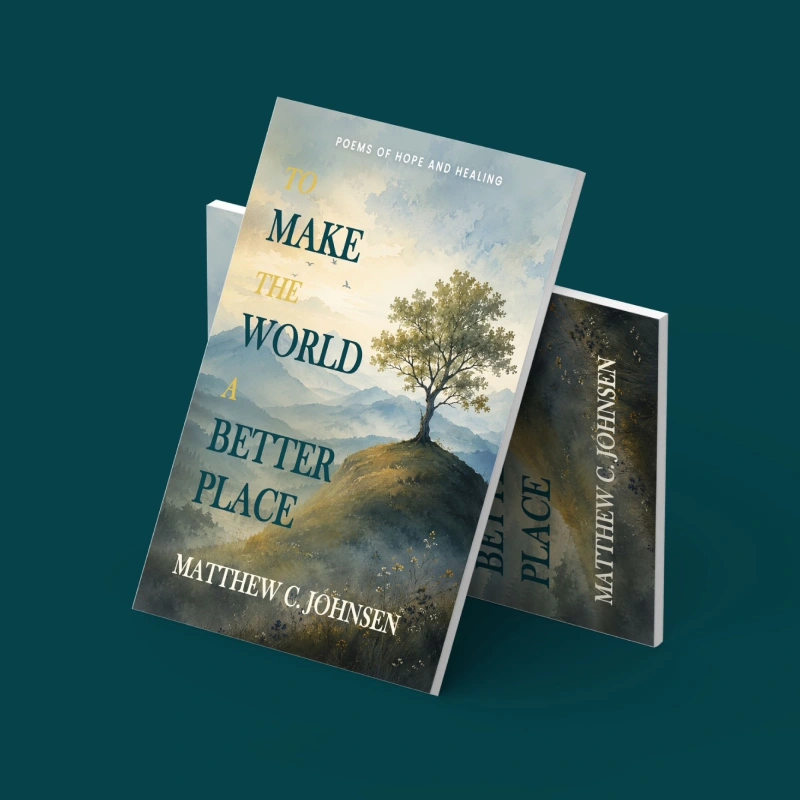
To Make the World a Better Place: Poetry, Hope and Social Change

There are books that ask readers to escape the world for a while, and there are books that encourage readers to look at the world around them more carefully. Dr. Matthew C. Johnsen’s work belongs to the latter category. With a background in sociology, peacebuilding, music direction, and public engagement, Johnsen brings together interests that cross the boundaries between individual experience and wider society. His work reflects an ongoing interest in how people understand one another, participate in their communities, and respond to the world they share. This combination of social awareness, creative expression, and public engagement provides important context for understanding To Make the World a Better Place: Poems of Hope and Healing, a collection that approaches questions of hope, connection, responsibility, and change through poetry.

Dr. Matthew C. Johnsen, Ph.D., wrote To Make the World a Better Place: Poems of Hope and Healing from a perspective shaped by sociology, peacebuilding, music, and public engagement. He is Professor Emeritus of Sociology at Worcester State University, a Rotary Peace Fellow Alumnus who studied peace and conflict resolution at Chulalongkorn University in Bangkok, Thailand, and music director of the Unitarian Universalist Church of Worcester. He also co-founded Peace Choir Worcester, which sings at gatherings to promote peace and solidarity. This background helps explain the collection’s central purpose: to address issues of social consequence through an accessible creative form. Rather than keeping questions about peace, unity, equality, responsibility, and social change within academic writing alone, Johnsen uses poetry to bring them into public reflection and everyday conversation.

At its heart, To Make the World a Better Place is a contemporary poetry collection that brings together poetry, social observation, sociology, and social science. The book places ordinary experiences alongside larger concerns, moving from reflections on morning light, music, seasons, friendship, nature, faith, ageing, recovery, and everyday life toward questions of purpose, equality, justice, peace, and responsibility. The book is not limited to one subject or emotional register. Its scope allows intimate and contemplative moments to exist alongside poems concerned with society and the ways people relate to one another. The result is a social science poetry book that makes broad social ideas approachable through personal and imaginative expression instead of academic terminology.

That accessibility matters because many of the issues addressed by the collection are issues people encounter beyond classrooms, journals, and formal discussions. Questions surrounding community, inclusion, peace, equality, human connection, and responsibility can feel abstract when considered only as social concepts. Poetry can bring those questions closer to lived experience.

Through its reflections on ordinary moments and larger social concerns, the collection explores how awareness can begin with paying attention to ourselves, other people, nature, and the circumstances we share. This makes poetry addressing societal challenges a useful way to describe the collection’s broader direction without suggesting that it provides research findings or formal policy recommendations. Instead, Johnsen’s poetry creates an accessible space in which readers can consider how social realities connect with everyday choices.

The book’s underlying question is especially clear in its invitation to think about what individuals can contribute to a better future. Poetry about social change does not necessarily need to prescribe a particular solution. It can also ask readers to reconsider how they see their responsibilities and relationships.

Johnsen’s collection repeatedly returns to awareness, compassion, connection, and thoughtful action, linking personal reflection with collective life. Its engagement with current events and wider societal challenges works less as a catalogue of controversies and more as an invitation to remain attentive to the world.

In this way, poetry about current events can become poetry about the human response to a changing world: how people reflect, how they relate to one another, and how individual choices can contribute to broader conditions.

Academic articles and sociological studies have an important role in explaining patterns, institutions, relationships, and social conditions. Poetry reaches readers differently. Rather than beginning with data, terminology, or an argument that must be followed step by step, a poem can begin with an image, emotion, moment, or question.

That difference is central to the idea of public sociology poetry. The form can create an entry point for readers who may not approach social questions through academic literature but who are nevertheless familiar with the experiences behind those questions.

In Johnsen’s case, observations about people, relationships, community, responsibility, and social life are expressed through imaginative language and reflection. This allows the collection to engage readers on both personal and intellectual levels.

This is where sociology through poetry becomes particularly interesting. The collection does not present itself as a substitute for sociological research, nor should its poems be treated as academic research findings. Instead, poetry offers another way of opening a conversation about social life.

A poem can slow a reader down and create room for a thought that might otherwise pass unnoticed. It can place an individual experience beside a wider social question and allow the reader to consider both at once.

For readers interested in the relationship between creativity and society, this approach makes Johnsen’s work an example of accessible poetry for public sociology. It does not claim to conduct sociology through formal research. Instead, it makes social reflection available through a creative form.

The emotional dimension is equally important. Social questions are rarely experienced as ideas alone. Peace, inclusion, belonging, division, community, equality, and responsibility can affect how people feel about themselves and the people around them.

Imaginative verse can create space for those emotional responses while still encouraging intellectual reflection. That balance gives the collection room to explore personal awareness and collective circumstances.

Its poems can be considered imaginative poetry about social issues precisely because they approach those issues through reflection instead of instruction. The emphasis remains on awareness and engagement: noticing what is happening, considering one’s place within it, and asking what responsible participation might look like.

In that sense, the collection connects individual choices with collective conditions without claiming to offer a single answer for either.

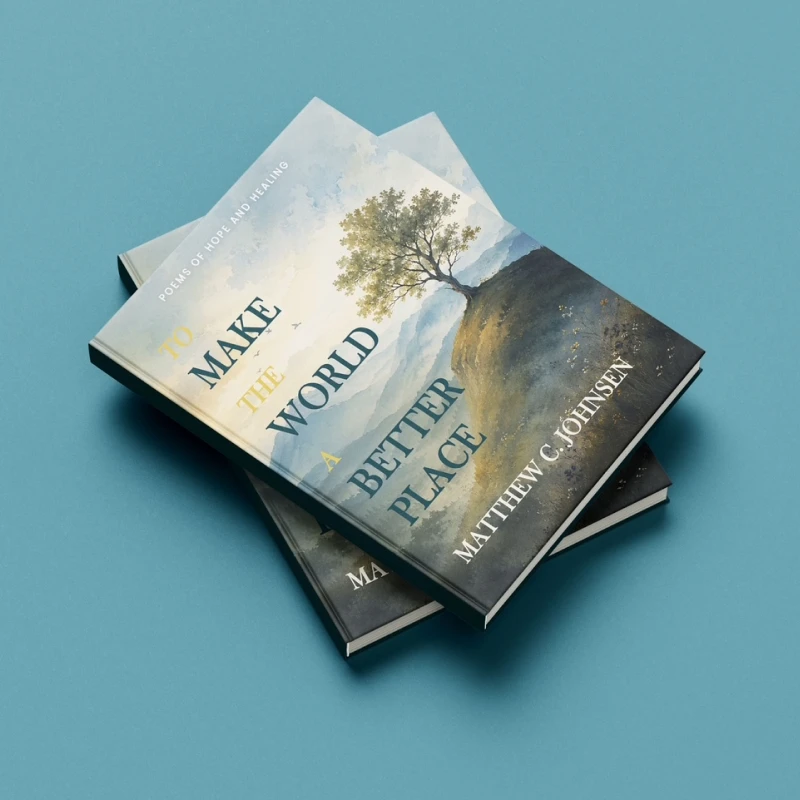
One of the clearest threads running through To Make the World a Better Place is its belief in the possibility of hope, even when life feels uncertain. The title points toward an outward-looking perspective, while the subtitle, Poems of Hope and Healing, establishes an emotional foundation for the collection.

These are not simply poems about optimism in isolation. They consider hope alongside healing, compassion, awareness, and the relationships that help people move through difficult experiences.

As poetry about hope and healing, the collection gives readers space to pause and consider the ways beauty, gratitude, connection, and reflection can coexist with uncertainty. Its approach suggests that hope does not require ignoring the challenges of the world. Instead, hope can begin with recognising those challenges while remaining open to the possibility of renewal.

Peace and unity form another important part of the collection’s wider social perspective. Johnsen’s reflections on community and human connection lead naturally toward questions about how people live alongside one another and what makes stronger communities possible.

Poetry about peace and unity can speak to these questions without becoming a political argument or prescribing a single solution. Here, the emphasis is on relationships, compassion, shared responsibility, and the possibility of greater understanding.

This makes the collection relevant to readers who value poetry as a place to consider how individual attitudes can influence surrounding communities. For peace advocates, educators, community-minded readers, and anyone interested in the possibility of a more connected society, these themes offer an accessible starting point for reflection.

Love and community also give the collection a deeply human dimension. The book moves between intimate observations and broader questions about society, allowing personal experiences to sit alongside ideas about collective life.

Poetry about love and community can mean more than romantic love. It can encompass friendship, compassion, belonging, loving-kindness, and the connections people form with one another.

Alongside these ideas is an emphasis on creativity and awareness. Creativity and awareness poetry encourages readers to notice the ordinary world more closely while considering how attention can shape understanding. Morning light, music, seasons, nature, and everyday experiences become opportunities for reflection rather than background details.

Through this combination, Johnsen presents awareness as something that can begin in small moments and gradually expand into a broader consciousness of other people and the world.

The collection also engages with questions of equality, inclusion, social change, and responsible participation. Its social dimension makes DEI poetry one useful lens through which readers can consider its interest in diversity, equity, inclusion, and the ways people relate across differences.

At the same time, the collection does not reduce its message to one social category or issue. Its broader concern is how awareness can influence the way people respond to one another and to the world they share.

This gives poetry about unity and inclusion a place within the book’s larger conversation about community and human dignity. Instead of presenting a policy framework, the poems encourage readers to consider their own role in creating more compassionate relationships and thoughtful communities.

Purpose provides another bridge between personal reflection and collective action. Asking what gives life meaning can appear to be a deeply individual question, yet the answer can also shape how a person participates in the world.

Johnsen’s collection considers purpose alongside responsibility, awareness, and action, suggesting that meaningful living involves more than identifying personal goals. Poetry about purpose can invite readers to examine what they value and how those values influence their choices.

In this context, poetry about public engagement becomes less about telling readers what they must do and more about encouraging them to remain present and responsive. The collection’s recurring movement from awareness toward thoughtful action gives its social message a practical emotional quality while leaving room for readers to determine how that message connects with their own lives.

The structure of the book reinforces this movement between inner reflection and outward awareness. To Make the World a Better Place is organised as a seven-part poetry collection, with each section contributing to a broader journey.

The Prelude establishes the beginning of that journey, creating an opening space for the ideas and experiences that follow. Creativity and Awareness then turns attention toward perception, expression, and the act of noticing. From there, Love, Community and Peace expands the focus toward relationships and shared human experience.

The progression is significant because the collection does not treat awareness as an isolated intellectual exercise. Instead, noticing the world and oneself can lead naturally toward recognising connections with others. The organisation gives the book an inward-and-outward rhythm that complements its larger interest in personal reflection and social participation.

The journey continues through Day’s Journey and Seasons, sections that return attention to everyday life, time, change, and the experiences through which people understand the passage of life.

These parts allow the collection to retain its contemplative side, including its interest in nature, ordinary moments, spirituality, and changing circumstances. From there, Purpose brings the reader back toward questions of responsibility and meaningful action before the Epilogue gathers the collection’s ideas into a final stage of reflection.

The structure makes room for intimate and socially conscious poetry without requiring every poem to address social change directly. Instead, the sections work together to create a broader journey from awareness and experience toward connection, purpose, and participation.

This progression is one reason To Make the World a Better Place can appeal beyond readers who normally seek explicitly social poetry. Someone may enter the collection through its reflections on nature, music, seasons, faith, ageing, recovery, or ordinary life and then encounter its wider questions about society and responsibility.

Likewise, readers initially drawn to its social themes can find quieter moments that return the discussion to personal experience. That balance helps explain the collection’s range as contemporary sociology poetry while preserving its identity as poetry first.

The book does not ask every poem to carry the same message. Instead, its seven sections create room for different forms of attention, allowing everyday experience, spiritual contemplation, social awareness, and questions of purpose to exist within the same larger work.

The collection’s accessibility gives it a potentially broad readership. Contemporary poetry readers are an obvious audience, particularly those who enjoy reflective verse that moves between personal experience and larger questions about life.

Readers interested in sociology and social science may also appreciate the collection’s attention to community, equality, responsibility, and collective conditions, especially when approached as a creative complement to more conventional forms of social discussion.

Educators and students can likewise find points of entry for conversations about poetry, social awareness, human connection, and the relationship between individual experience and society. For readers seeking poetry for social awareness, the collection offers a form that encourages consideration rather than demanding a predetermined conclusion.

The audience can extend further to peace advocates, community leaders, and readers interested in DEI, unity, and social change. People who follow current events may recognise the broader questions behind many public conversations: how societies respond to division, how communities maintain connection, and how individuals decide whether to remain observers or become participants.

The collection’s emphasis on hope makes it relevant to readers looking for thoughtful rather than purely confrontational approaches to difficult subjects.

In this sense, poetry responding to current events does not have to name every headline or controversy to remain timely. It can address the human questions that continue beneath changing events.

For readers searching for poetry that stimulates hope, Johnsen’s collection offers an opportunity to step back from the noise and consider what constructive participation might mean.

The questions at the heart of To Make the World a Better Place feel particularly relevant at a time when social division can make meaningful public dialogue difficult. Conversations about peace, dignity, equality, inclusion, and community often unfold against a backdrop of competing perspectives and uncertainty. A collection such as this can offer something different: a space to slow down and consider the human dimensions beneath those larger conversations. Poetry about social change can encourage reflection without requiring readers to approach every issue from the same position. Johnsen’s emphasis on awareness, compassion, connection, and thoughtful participation creates room for readers to consider how they relate to other people and the communities they inhabit.

The collection’s message is not about providing a single answer to complex social conditions. It is about encouraging the kind of attention that can make responsible participation possible.

That emphasis on participation is closely connected to the book’s recurring ideas about peace and human dignity. In a divided environment, calls for unity can sometimes sound distant or abstract.

Poetry can bring those ideas back to the level of individual experience, asking readers to consider how compassion, listening, awareness, and everyday choices affect the people around them.

Poetry encouraging responsible action does not necessarily have to issue instructions. It can create a moment in which readers reconsider what they value and how those values might shape their behaviour.

Johnsen’s collection approaches hope in a similar way. Rather than treating hope as passive optimism, it connects hope with awareness, relationships, purpose, and the possibility of action.

The result is a book about building a better future that encourages readers to think about improvement as something that can begin with individual choices and grow through collective connection.

The collection’s journey has extended beyond its pages. To Make the World a Better Place reached number 71 in Amazon’s Contemporary Poetry category, giving the book a notable point of visibility within its genre.

It is available through Amazon, while distribution through the IngramSpark network provides another avenue through which the collection can reach readers.

The book is also scheduled to appear as part of Studio of Books’ Book Gallery at the 2026 Frankfurt Book Fair in October 2026. These milestones introduce the collection to a wider literary audience while keeping attention on its core message of hope, awareness, human connection, and responsibility.

The book’s growing reach is especially relevant because its subject is public by nature. Johnsen’s poems invite readers to consider how private reflection can influence relationships, communities, and responses to social challenges.

The collection does not present a fixed programme for changing the world. Instead, it creates space for attention, empathy, imagination, and conversation.

In doing so, the written poem remains central: a form reader can revisit at their own pace as they think about life, community, peace, purpose, and the possibilities of constructive action.

To Make the World a Better Place brings intimate observation and socially conscious reflection into one poetic journey. Across its seven sections, the collection moves through creativity, awareness, love, community, peace, seasons, purpose, and everyday life. Its message is grounded in possibility: greater awareness can influence how people understand themselves, connect with others, and participate in the world around them. Poems of Hope and Healing is therefore more than a subtitle. It captures the direction of a book that acknowledges social difficulty while continuing to imagine renewal, unity, and a more compassionate future.

America Publishers congratulates Dr. Matthew C. Johnsen on To Make the World a Better Place: Poems of Hope and Healing, a collection that makes social reflection approachable through poetry. The book does not ask readers to arrive with every answer. It invites them to pause, listen, become more aware, and consider what meaningful participation might look like in their own lives. For contemporary poetry readers, educators and students, peace advocates, community leaders, and readers interested in sociology, social awareness, inclusion, unity, and hope, the collection offers a thoughtful space for reflection. Readers can discover the book through Amazon and learn more about Dr. Matthew C. Johnsen and his work through his official website.

Its enduring invitation is simple: imagine a more peaceful, compassionate, connected world, then consider how individual awareness and action can help move it closer to reality.

To Make the World a Better Place: Poems of Hope and Healing | Available Now

🔗 Amazon: Click here

Follow Dr. Dr. Matthew C. Johnsen for Further Updates

🔗 Official Website: Visit Dr. Matthew C. Johnsen’s website

🔗 Facebook: Click here