
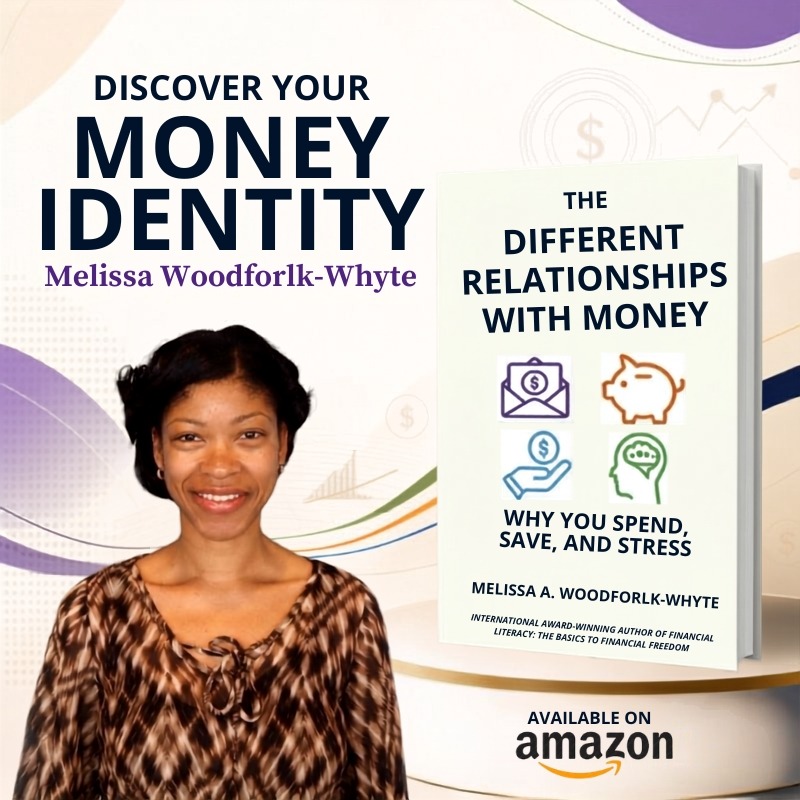
Why can one person spend freely and regret it later, while another saves carefully yet still feels anxious whenever money must be used? These reactions may look completely different, but both can be rooted in experiences, beliefs and emotions that extend far beyond a bank balance. Melissa Woodforlk-Whyte brings this deeply human question into focus with The Different Relationships With Money: Why You Spend, Save, and Stress. The Book is now available for readers, giving them an opportunity to explore the book and its insights. Rather than approaching financial literacy only through budgets, calculations and conventional rules, the book turns attention toward the personal forces that influence everyday financial choices. It invites readers to consider not simply what they do with money, but why they do it, what emotions appear during financial decisions and which past experiences may still be shaping their behavior. Through this perspective, Melissa’s new work introduces a timely conversation about spending, saving, stress and the different meanings people attach to money.
Melissa Woodforlk-Whyte Presents The Different Relationships With Money: Why You Spend, Save and Stress
Melissa Woodforlk-Whyte Introduces The Different Relationships With Money
A New Book About the Human Side of Money
The publication marks another important publishing milestone for Melissa Woodforlk-Whyte as she expands her work in financial education. This is Melissa’s seventh book, with six books already published, but the latest title is significant for more than its place in her growing body of work. Her latest title arrives at a time when many people understand basic financial advice yet continue to experience anxiety, uncertainty or frustration around money. Rising expenses and financial pressure can intensify those feelings, but external circumstances are not always the complete explanation. Personal history, identity and emotional responses can also affect how people interpret risk, security, success and financial responsibility. By examining the emotional relationship with money, the book enters a conversation that is often overlooked in traditional financial education. It recognizes that financial stress is not always resolved by giving someone another rule to follow. Sometimes, the more useful starting point is understanding the beliefs and behavioral patterns that make those rules difficult to apply.
Why Financial Behavior Is About More Than Numbers
Knowing what to do with money does not necessarily make doing it easy. Someone may understand the importance of saving and still spend impulsively whenever stress becomes overwhelming. Another person may maintain a healthy account balance but feel intense guilt after making an ordinary purchase. Others may delay opening bills, avoid checking their accounts or withdraw from financial conversations because the subject creates discomfort. These behaviors can be confusing, especially when they appear to conflict with a person’s knowledge or long-term goals. The Different Relationships With Money explores that gap between financial information and financial behavior. Its subject is not limited to why people overspend. It also considers fear of spending money, saving money anxiety, avoidance, guilt and the pressure that can surround even routine decisions. Understanding the psychology of spending and saving does not remove the need for practical financial skills. Instead, it adds another layer of awareness by asking readers to notice the triggers, assumptions and emotional responses operating alongside what they already know. This can help explain why information alone may not be enough to create lasting changes in money habits.
The beliefs influencing those habits often begin long before adulthood. Childhood experiences, cultural expectations, family conversations and periods of instability can all contribute to the way a person understands money. A child who repeatedly hears that there is never enough may carry a strong fear of scarcity into later life, even when circumstances improve. Someone raised in a household where money was never discussed may learn to avoid financial conversations altogether. In other families, spending may be associated with love, saving with safety or visible wealth with achievement and social acceptance. Experiences of loss, hardship or financial trauma can deepen these connections, but not every difficult money habit should automatically be attributed to trauma. The purpose of examining childhood money beliefs is not to assign blame or reduce every financial decision to the past. It is to recognize that people often inherit messages about money before they are old enough to question them. By identifying those hidden money scripts, readers may begin separating their present needs and values from beliefs formed through family patterns, cultural influences or earlier experiences.
The Money Identities Shaping Everyday Decisions
At the center of Melissa Woodforlk-Whyte’s money identity book is a framework built around nine core identities. Publicly named identities include the Spender, Saver, Avoider and Investor, each pointing toward a recognizable way of responding to financial choices. A Spender may associate purchases with freedom, reward or emotional relief, while a Saver may connect accumulated money with protection and control. An Avoider may distance themselves from financial information because it creates fear or discomfort, while an Investor may view money primarily as a resource for future growth. These descriptions are not intended to suggest that every reader will fit permanently or exclusively into one category. People may recognize elements of several identities, move between patterns under different circumstances or behave differently as their lives change. The value of the nine money identities framework lies in helping readers observe recurring tendencies and ask what may be driving them. Rather than treating a financial pattern as a fixed personal flaw, the framework creates space to examine how identity, emotion and experience can influence everyday decisions about earning, spending, saving and planning.
Who Should Read The Different Relationships With Money: Why You Spend, Save, and Stress
The Different Relationships With Money: Why You Spend, Save, and Stress is intended for readers who recognize that their financial decisions are not always guided by logic alone. This includes people who overspend despite making repeated plans to stop, as well as careful savers who continue to feel insecure regardless of how much they have set aside. It may also speak to those who avoid checking account balances, postpone dealing with bills or experience stress whenever an important financial decision must be made. Some readers may recognize patterns that have been repeated across generations, while others may simply want to understand why practical financial advice has not changed the way they respond to money. As a relationship with money book, it approaches these experiences without reducing readers to labels or presenting one financial personality as ideal. Instead, it encourages them to examine how their current habits may have developed and whether those habits continue to serve their needs. For anyone questioning how emotions affect financial decisions, the book offers a relevant starting point for deeper personal reflection.
The book’s central value lies in awareness rather than judgment. Financial habits can carry shame, particularly when people believe they should already know better or compare their progress with someone else’s. Melissa’s approach encourages readers to replace that immediate self-criticism with curiosity and compassion. Recognizing the emotion behind a purchase, the fear beneath excessive saving or the discomfort driving money avoidance habits can make a financial response easier to understand. That recognition does not remove personal responsibility, but it can create a stronger foundation for healthier and more intentional choices. Readers may begin identifying triggers, questioning inherited money beliefs and noticing when an old response is influencing a present decision. The aim is not to promise an instant financial transformation or a single formula that works for everyone. It is to help people develop greater financial self-awareness and reconsider the story they have learned to tell themselves about money. Understanding that story may become the first step toward making choices that reflect their current priorities rather than patterns they have never consciously examined.
Meet Award-Winning Author and Financial Literacy Educator Melissa Woodforlk-Whyte
Melissa Woodforlk-Whyte is an award-winning author, educator and financial-literacy advocate whose work brings practical learning into conversations about personal development and everyday life. Her experience in education informs an approach that seeks to make financial concepts understandable while acknowledging the individual circumstances behind them. With The Different Relationships With Money: Why You Spend, Save, and Stress, she shifts the discussion from financial rules alone to the identities, memories and emotions that can determine how those rules are received and applied. This focus allows the book to connect financial literacy with greater personal awareness without presenting emotional insight as a substitute for responsible financial action. As the best financial literacy book for 2026, the title builds upon Melissa’s wider commitment to helping readers think more carefully about their financial choices, recognize the experiences influencing those choices and approach money with greater intention.
Now Available: The Different Relationships With Money: Why You Spend, Save, and Stress
The Different Relationships With Money: Why You Spend, Save, and Stress is now available for readers. Readers interested in understanding the emotional and behavioral forces behind spending, saving and financial stress can explore the book through the verified Amazon page. The book gives overspenders, fearful savers, financial avoiders and anyone questioning their recurring money habits an opportunity to explore the personal story beneath those patterns. America Publishers – Author Spotlight congratulates Melissa Woodforlk-Whyte on this new publishing milestone and is pleased to announce and feature her latest book on The Latest Page. The Different Relationships With Money offers readers a timely invitation to look beyond balances and budgets and examine the beliefs they carry into every financial decision. Lasting financial understanding does not begin only with learning what to spend, save or invest. It also begins with recognizing the experiences, emotions and inherited messages that have shaped those choices and deciding what kind of money story should come next.
For additional book details and verified publication information, explore the official sources below:
🔗 Buy the Book on the Website: Click here
🔗 Barnes & Noble: Click here
🔗 Amazon: Click here
🔗 Indigo: Click here
🔗 Google Books: Click here
🔗 BookBaby: Click here