

Published October 14, 2026 · The Digital Desk, America Publishers
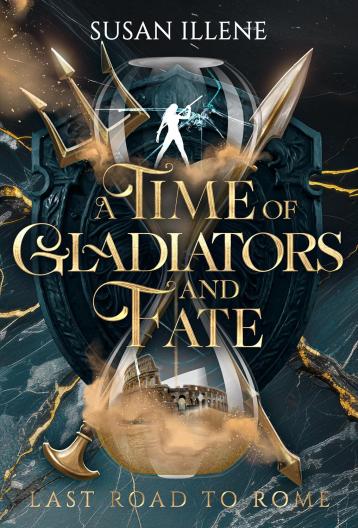
A vacation usually offers a temporary escape from everyday problems. In Susan Illene’s A Time of Gladiators and Fate (Last Road to Rome Book 1), it becomes a struggle to survive an unfamiliar century. Released on October 12, 2026, the novel introduces Grace King, a modern woman whose unexpected arrival in ancient Rome places her freedom and future beyond her control. Illene’s release announcement confirms that the book is available on Amazon and through Kindle Unlimited.
The premise brings together time travel historical fiction, gladiatorial action, and slow-burn romance. Its central tension, however, reaches beyond the spectacle of the arena: what happens when someone accustomed to making independent decisions enters a society that treats her as property?
This article draws on Illene’s published synopsis, research commentary, and preview chapters. It explores the questions these materials establish rather than offering a verdict on the complete novel.
A Time of Gladiators and Fate Book Summary: A Vacation Interrupted
Grace is twenty-eight, recently divorced, and visiting Rome after leaving behind a troubled marriage. Raised on a Kansas farm, she arrives with practical strength but no preparation for the circumstances awaiting her. A mysterious stone transports her and her rental car into the first-century Colosseum, turning an ordinary sightseeing trip into a dangerous confrontation.
The author’s synopsis establishes a stark choice: execution or gladiator school. Grace enters the Ludus Magnus, where learning to fight becomes essential to her survival. A demanding instructor and a wealthy sponsor complicate her situation, with the sponsor holding knowledge about her journey through time that he does not freely share.
This ancient Rome time travel novel therefore begins with overlapping problems. Grace needs to survive immediate danger, understand an unfamiliar social order, and discover whether returning home is possible. Physical ability may help with the first challenge, but it cannot automatically resolve the others.
Freedom Means More Than Staying Alive
Among the A Time of Gladiators and Fate themes established by its premise, personal autonomy deserves particular attention. Grace’s predicament separates survival from freedom. Remaining alive does not necessarily mean controlling her work, movement, relationships, or body.
That distinction gives the story an ethical focus. A person may receive protection while remaining dependent on whoever provides it. Assistance can reduce danger without removing the imbalance of power that created the danger.
For contemporary readers, this raises a difficult question: how freely can someone choose when refusing an offer may carry life-threatening consequences?
The novel’s setup invites readers to examine those constrained decisions carefully. Accepting an arrangement under pressure should not be confused with endorsing it. Nor should resourcefulness make the surrounding injustice appear reasonable. Grace’s struggle offers a way to consider human dignity in historical literature through the difference between possessing abilities and having the right to decide how they are used.
Grace King Character Analysis: Strength Within Limits
The published preview gives Grace a recognizable modern voice. She responds to frightening situations with skepticism, defensive humor, and attempts to understand what others know. During an early conversation with her sponsor, she recognizes his interest in her knowledge and tries to secure water and treatment for her injury before answering further questions.
This exchange provides a useful starting point for a Grace King character analysis. Her response combines observation with negotiation. She cannot overturn her circumstances, but she searches for whatever limited bargaining power remains.
Resilience in historical fantasy becomes more meaningful when it includes that kind of practical adaptation. Persistence matters, yet so do information, assistance, physical condition, and access to resources. Treating every obstacle as a test of attitude would overlook the institutions controlling Grace’s life.
Her situation also raises questions about identity and transformation in fiction. If familiar work, relationships, and legal protections disappear, what remains of a person’s understanding of herself? Grace’s challenge invites readers to distinguish adapting to survive from accepting the identity others impose on her.
Ancient Rome: Research and Creative Choices
The novel takes place in 97 CE. Illene has explained that her research included ancient writing and archaeological evidence, while acknowledging gaps and conflicting accounts. She also identifies a specific fictional alteration: including women as gladiator trainees at the Ludus Magnus despite finding no evidence that women trained there in that capacity.
That disclosure matters. Historical research in fantasy novels can inform a setting without making every scene a documented reconstruction. Here, the school’s female trainees belong to the author’s creative treatment of the period.
Female gladiators themselves are supported by surviving evidence. The British Museum’s collection documentation identifies a relief depicting two women fighters, Amazon and Achillia. Their representation supports the existence of women in the arena; it does not establish every detail of their training or everyday experiences.
Gladiators also did not share one uniform background. British Museum educational materials describe enslaved people, prisoners of war, convicted criminals, and free volunteers among them. Grace’s fictional experience should therefore be understood as a particular situation rather than a complete account of all gladiatorial lives.
These distinctions strengthen a responsible reading of gladiator historical fiction. Readers can engage with the atmosphere while asking which details come from evidence and which serve the narrative.
Power, Gender, and the Conditions of Choice
The book’s synopsis places Grace between people who influence her training, protection, and access to information. This arrangement makes social hierarchy in ancient Rome relevant to the story’s conflicts rather than merely part of its scenery.
A useful interpretation is that power operates through dependence as well as direct force. Whoever controls shelter, safety, or knowledge can shape another person’s options. The resulting imbalance remains significant even when an individual offers help.
Gender adds another question. Grace enters this world with modern expectations about independence, but her experience cannot stand for that of every woman in Roman society. Her circumstances are shaped by enslavement, her unusual arrival, and the fictional role assigned to her.
The romantic premise also deserves careful attention. Attraction and protection can coexist with unequal authority. Readers may find it productive to ask how trust develops under such conditions and whether a character has meaningful room to refuse.
Susan Illene’s Background and Approach
Readers exploring Susan Illene books may find her background relevant to this project. Her official biography states that she served eleven years in the U.S. Army, first as a human resources specialist and later as an Arabic linguist. She completed two deployments to Iraq and subsequently studied history at the University of Oklahoma.
Illene also explains that she drew on her military experience when imagining strength and endurance exercises where historical information was limited. That provides context for her approach to Roman gladiator training in fiction, while remaining distinct from evidence about actual ancient training practices.
Who May Want to Read Last Road to Rome Book 1?
A Time of Gladiators and Fate by Susan Illene may interest readers looking for a historical fantasy novel set in Rome that combines danger, humor, romantic tension, and questions about personal freedom. As the opening installment of the Susan Illene Last Road to Rome series, it establishes a setting where survival and the mystery of time travel are closely connected.
The book contains darker material alongside its humor and romantic tension. The author lists graphic violence, dehumanizing treatment under slavery, psychological trauma, confinement, sexual content, and threats of sexual exploitation among the book’s warnings. Readers can consult her complete content warnings before deciding whether it suits them.
What Grace’s Journey Invites Us to Consider
For readers of America Publishers Author Spotlight, this release offers an opportunity to explore freedom and survival in historical fiction without reducing either subject to a simple lesson about determination.
One possible takeaway is that strength and autonomy are different things. A person can remain resourceful and determined while living under rules that deny meaningful choice. Recognizing that distinction allows resilience to matter without excusing injustice.
Grace’s journey brings that tension into focus through a modern perspective confronting an unfamiliar past. How might our understanding of freedom change if we suddenly had to live under the rules of a completely different society?
Readers interested in that question can explore A Time of Gladiators and Fate on Amazon or begin with the author’s published preview chapters and form their own interpretation.
🔗 For Author’s Book Discussion: Click here
🔗 For Amazon: Click here
🔗 For Susan Illene’s Amazon Author Profile: Click here
Source: “Release Day- A Time of Gladiators and Fate, October 12, 2026.” Read more at SusanIllene.com.