
Published June 03, 2026
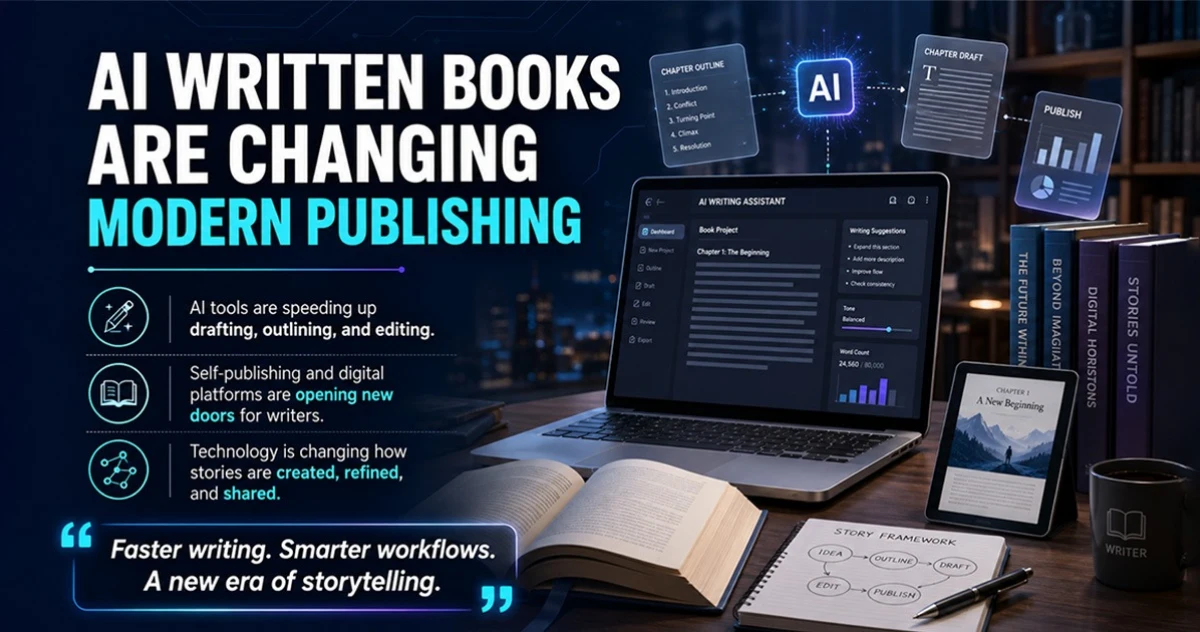
A few years ago, the idea of a machine writing an entire novel sounded unrealistic. Today, AI written books are appearing across online marketplaces, self-publishing platforms, and digital libraries faster than ever before. Some readers are impressed by the speed and structure these tools can offer, while others are asking a more emotional question: can a machine truly tell a story that feels human?
That debate has quickly become one of the most talked-about conversations in modern publishing. The rise of AI written books is not just changing how stories are created. It is changing how readers think about creativity, authenticity, and emotional connection. Many writers now use artificial intelligence to brainstorm ideas, organize chapters, and speed up drafting. At the same time, readers continue searching for stories that feel personal, honest, and emotionally real.
The discussion around AI vs human writing is becoming more complex because the technology itself is improving rapidly. Some AI-generated stories now sound polished enough that readers cannot immediately tell the difference. That has raised serious questions about AI storytelling quality and the future of creativity in publishing.
Still, storytelling has never been only about grammar or structure. Readers remember stories because of how they make them feel. A perfectly written sentence means very little if it carries no emotional weight behind it. That is why the conversation around AI written books has become much bigger than technology alone. It has become a conversation about human emotion, memory, vulnerability, and imagination.
Why AI Written Books Are Growing So Fast
The publishing industry has always evolved alongside technology. E-books changed reading habits, self-publishing opened new opportunities for independent writers, and social media transformed how books are marketed. Now, AI written books are becoming another major shift in that evolution.
One reason for this rapid growth is accessibility. Artificial intelligence tools now allow people with limited writing experience to organize ideas, create outlines, improve grammar, and draft chapters much faster than before. For many aspiring authors, that feels exciting rather than threatening. Someone who struggled to complete a manuscript in the past can now use AI assistance to speed up the process and stay motivated.
The increase in AI written books is also connected to the pressure of modern content creation. Writers today are expected to produce more material across multiple platforms while still remaining visible online. AI tools help reduce time spent on repetitive tasks, allowing creators to focus more on development and editing. In some cases, publishers and marketers are already experimenting with hybrid workflows where humans and AI collaborate during different stages of production.
Another reason this trend is growing is because AI storytelling quality has improved dramatically in a short period of time. Earlier versions of AI-generated content often sounded robotic, repetitive, or emotionally flat. Newer systems can now mimic tone, structure, pacing, and dialogue with far greater accuracy. Some readers may not even realize when parts of a story have been AI-assisted.
The future of AI in writing is also attracting attention because it lowers barriers for entry into publishing. Writers who speak English as a second language, individuals with limited technical writing skills, or creators with strong ideas but weaker structure can now develop content more confidently. For many people, AI feels less like a replacement for creativity and more like a creative assistant.
At the same time, the rise of AI written books has created concerns about originality and oversaturation. If thousands of people use similar tools and prompts, readers may eventually notice similarities between stories. That has intensified the conversation surrounding AI vs human writing because readers are beginning to ask whether efficiency is quietly replacing authenticity.
Even supporters of artificial intelligence often admit that technology still struggles with emotional depth. While AI can organize information and imitate style, emotional storytelling AI continues to face limitations when dealing with deeply personal experiences. A machine can describe heartbreak, grief, fear, or love using patterns from existing text, but many readers argue that true emotional storytelling comes from lived experience rather than prediction models.
That emotional gap may become one of the biggest factors shaping the future of AI in writing over the next few years.
What Human Storytelling Still Does Better Than AI
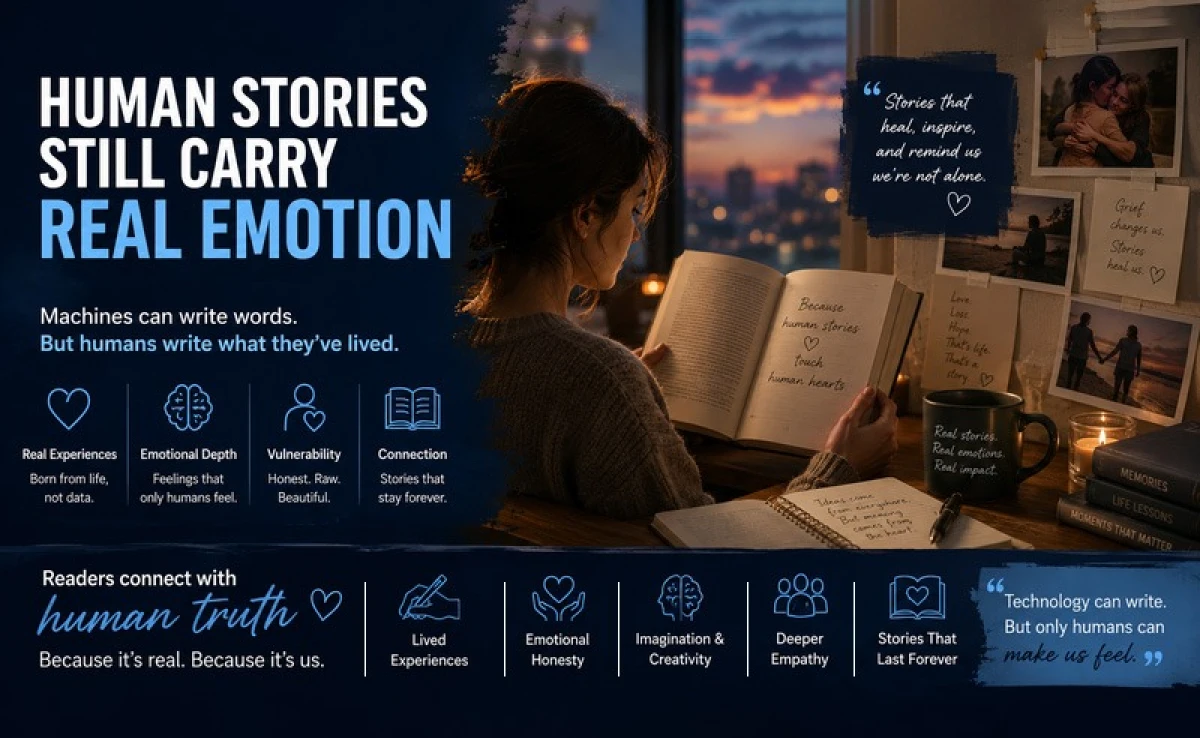
The biggest difference in the debate around AI vs human writing is not speed or productivity. It is emotional truth. Readers do not fall in love with stories because every sentence is technically perfect. They connect with stories because they recognize pain, joy, fear, humor, and vulnerability inside them.
Human writers bring personal experiences into their work in ways that AI still struggles to fully understand. A memoir about grief feels powerful because someone actually lived through that loss. A love story becomes memorable because the emotions behind it often come from real human memories and relationships. Even imperfect writing can feel deeply moving when it carries honesty behind it.
That is where emotional storytelling AI continues to face challenges. Artificial intelligence can analyze patterns from millions of books and imitate emotional language, but imitation is not always the same as lived experience. Readers can often sense when a story feels emotionally safe, predictable, or slightly disconnected from reality.
This does not mean AI written books have no value. Some readers enjoy them for entertainment, productivity, or idea generation. In many cases, AI tools can help writers overcome creative blocks or organize complex ideas more efficiently. The issue is not whether AI can write. The real question is whether readers will emotionally remember those stories years later.
Frequently Asked Question
-
Can AI write an entire book on its own?
Yes, AI can generate outlines, chapters, and complete manuscripts. However, many authors use AI as a writing assistant rather than a replacement, combining AI-generated content with human creativity, editing, and storytelling.
-
What is the difference between AI writing and human writing?
The main difference is emotional experience. While AI can analyze patterns and generate well-structured text, human writers draw from personal memories, emotions, and lived experiences that often create deeper emotional connections with readers.
-
Will AI replace human authors in the future?
Most experts believe AI will support rather than replace human authors. The future of AI in writing is likely to involve collaboration, where AI assists with brainstorming, research, and drafting while human writers provide originality, creativity, and emotional depth.
Conclusion: The Future of AI in Writing May Depend on Human Creativity
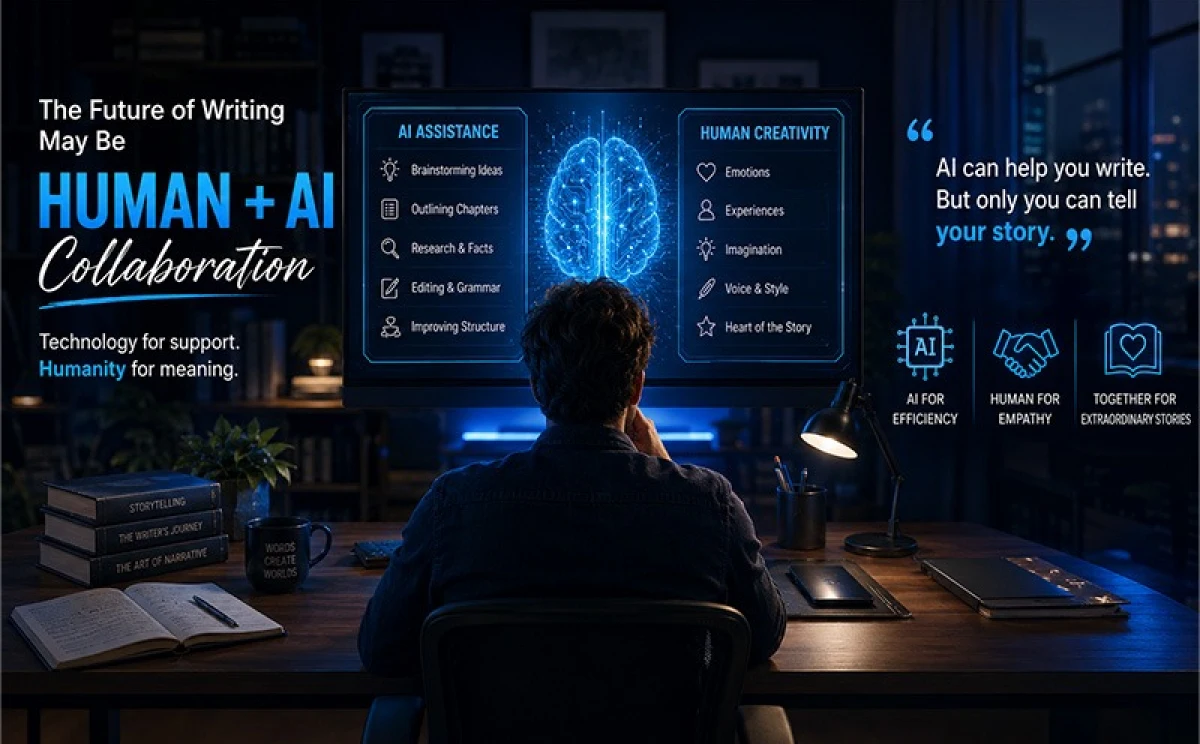
The future of AI in writing may not become a battle between humans and machines at all. Instead, it is likely to become a collaboration. Many authors already use AI tools for outlining, brainstorming, editing, or research while still keeping the emotional core of the story human.
As AI storytelling quality continues improving, readers may become less focused on whether technology was involved and more focused on whether the story feels authentic. Trust, originality, and emotional depth will likely become even more important in the publishing world.
AI written books will continue growing because the technology is fast, accessible, and constantly evolving. But human storytelling still holds something machines cannot fully replicate: lived emotion. Readers may admire efficiency, but they remember stories that genuinely make them feel understood.
