
Published June 03, 2026
Why readers stop reading books could be a concern for many authors when they feel their books are not getting desired reads. There was a time when finishing a book felt normal. People would spend entire weekends immersed in stories, carry novels during travel, and stay awake late at night just to read one more chapter. Today, many readers still buy books with excitement, yet struggle to finish even a few pages before reaching for their phones. That shift has created an important conversation across the publishing world: why readers stop reading books even when they still claim to love stories.
The answer is more complicated than simply blaming technology or social media. Reading itself is competing with a completely different type of world now. Entertainment has become faster, shorter, louder, and available every second of the day. Notifications interrupt focus constantly, while endless scrolling trains people to consume information in fragments rather than sit with long narratives. These changing modern reading habits are quietly reshaping the relationship people have with books.
At the same time, many readers are also becoming more selective. They no longer continue reading simply because they purchased a book. If a story feels emotionally flat, repetitive, or disconnected, readers abandon it quickly. That growing frustration is becoming one of the biggest reasons why readers stop reading books in today’s digital culture.
The Internet Changed How Our Brains Consume Stories
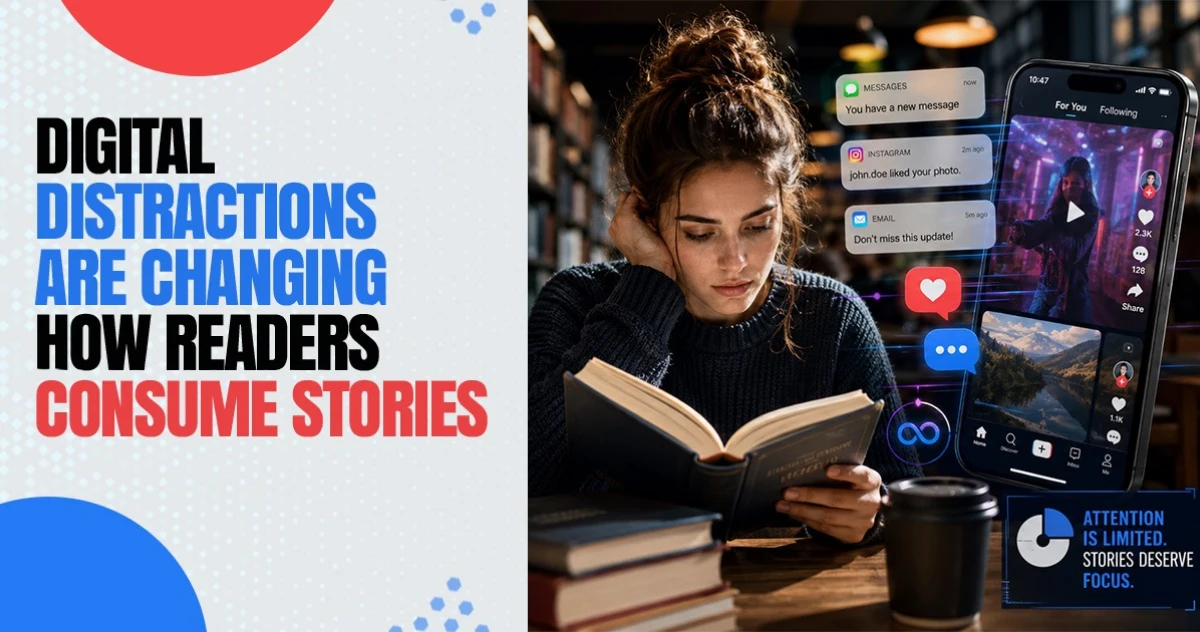
One of the biggest reasons why readers stop reading books today is the way digital platforms have completely transformed attention and entertainment. Most people now consume content through short videos, instant updates, quick captions, and fast-moving algorithms designed to hold attention for only a few seconds at a time. After spending hours inside that environment every day, slowing down for a 300-page novel can suddenly feel difficult.
This is where conversations around attention span reading have become impossible to ignore. Many readers genuinely want to focus, but their brains have adapted to constant stimulation. Reading requires patience, emotional investment, imagination, and uninterrupted concentration. Modern internet culture rewards the exact opposite.
People are now used to multitasking while consuming content. Someone might read two pages of a novel, pause to check messages, open TikTok for “just a minute,” and suddenly lose the emotional momentum of the story completely. Over time, this repeated pattern weakens deep reading habits. It becomes harder to stay emotionally connected to characters or situations long enough for a book to fully pull the reader inside its world.
These changing modern reading habits are not only affecting casual readers. Even lifelong book lovers admit they struggle with consistency now. Many readers start books enthusiastically but leave them unfinished halfway through because digital distractions constantly compete for attention. This growing reader engagement decline is not always about a lack of interest in stories themselves. Often, it is about the difficulty of maintaining focus in an environment designed around interruption.
Another reason why readers stop reading books is that modern entertainment offers immediate emotional rewards. Social media videos create instant reactions within seconds. Streaming platforms automatically play the next episode without effort. Games provide constant interaction and stimulation. Books, however, require readers to participate actively through imagination and patience before emotional payoff arrives. For many people, that slower process now feels unfamiliar.
The publishing industry is already responding to this shift. Some authors now shorten chapters dramatically, increase pacing immediately, and place emotional hooks earlier in stories because they understand modern audiences abandon books faster than before. The rise of BookTok and viral reading culture has also influenced storytelling styles, with publishers increasingly focusing on books that create quick emotional reactions online.
Still, while technology plays a major role, it is not the only reason why readers stop reading books. In many cases, readers are not simply distracted. They are disappointed.
Many Modern Books No Longer Feel Emotionally Rewarding
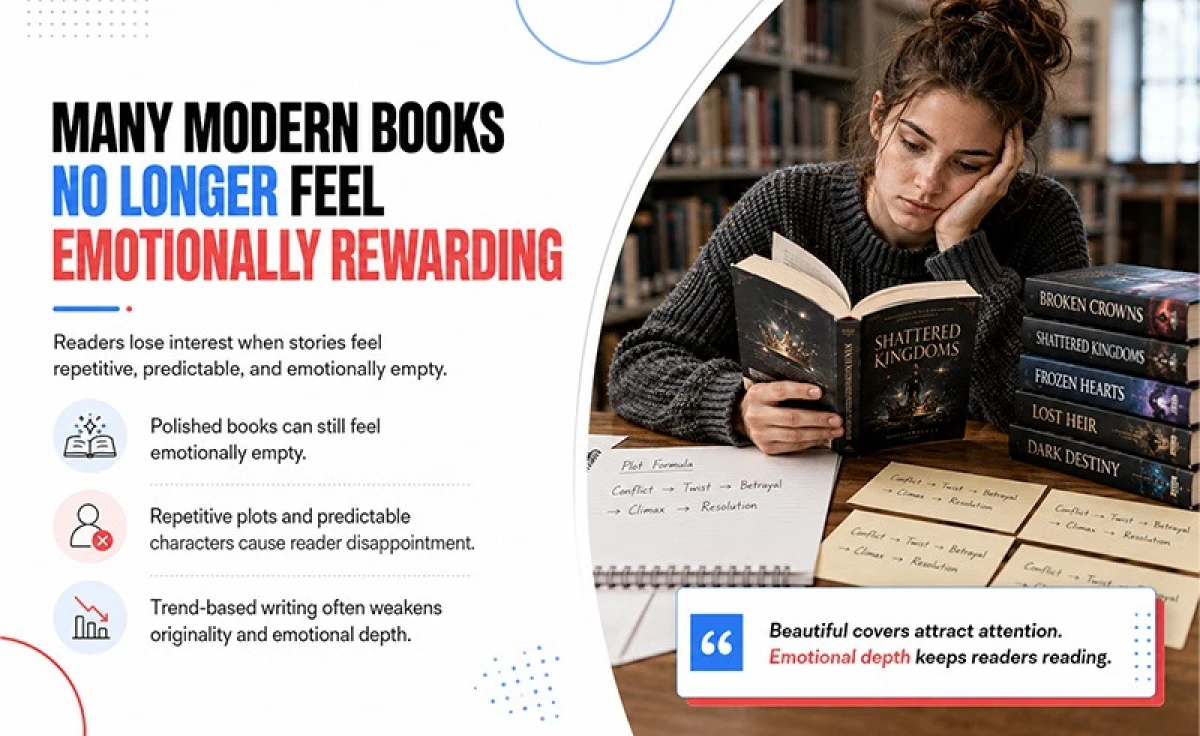
A growing number of readers are beginning to feel that many books today sound polished but emotionally empty. Beautiful covers, trending tropes, and aggressive marketing may attract attention initially, but readers often lose interest once they realize the emotional depth they expected is missing. This has created serious conversations around storytelling problems in books and how modern publishing trends may be contributing to reader fatigue.
One major complaint readers share online is that many stories now feel repetitive. Similar character types, identical romance formulas, predictable plot twists, and trend-driven writing styles are becoming easier for audiences to recognize. When readers feel like they have already experienced the same emotional journey multiple times before, they disconnect much faster. That emotional repetition is becoming another important reason why readers stop reading books after only a few chapters.
Some readers also feel modern publishing sometimes prioritizes speed over authenticity. The pressure to constantly release content, follow trends, and produce viral moments has changed how certain books are written and marketed. As a result, some stories feel more designed for online reaction than long-term emotional impact. These ongoing storytelling problems in books are contributing to frustration among readers who still crave originality, emotional realism, and meaningful storytelling experiences.
Frequently Asked Question
-
Why are people losing interest in reading books today?
Many people struggle to maintain reading habits because of digital distractions, shorter attention spans, busy lifestyles, and the growing availability of fast-paced entertainment such as social media, streaming platforms, and short-form videos.
-
How do modern reading habits affect book engagement?
Modern reading habits often involve multitasking and consuming content in short bursts. This can make it more difficult for readers to focus on long-form storytelling, leading to unfinished books and reduced engagement with reading.
-
Are readers giving up on books completely?
No. Most readers still enjoy stories and meaningful content. Many are simply changing how they consume books through audiobooks, eBooks, online reading communities, and more selective reading choices that offer stronger emotional connections.
Conclusion
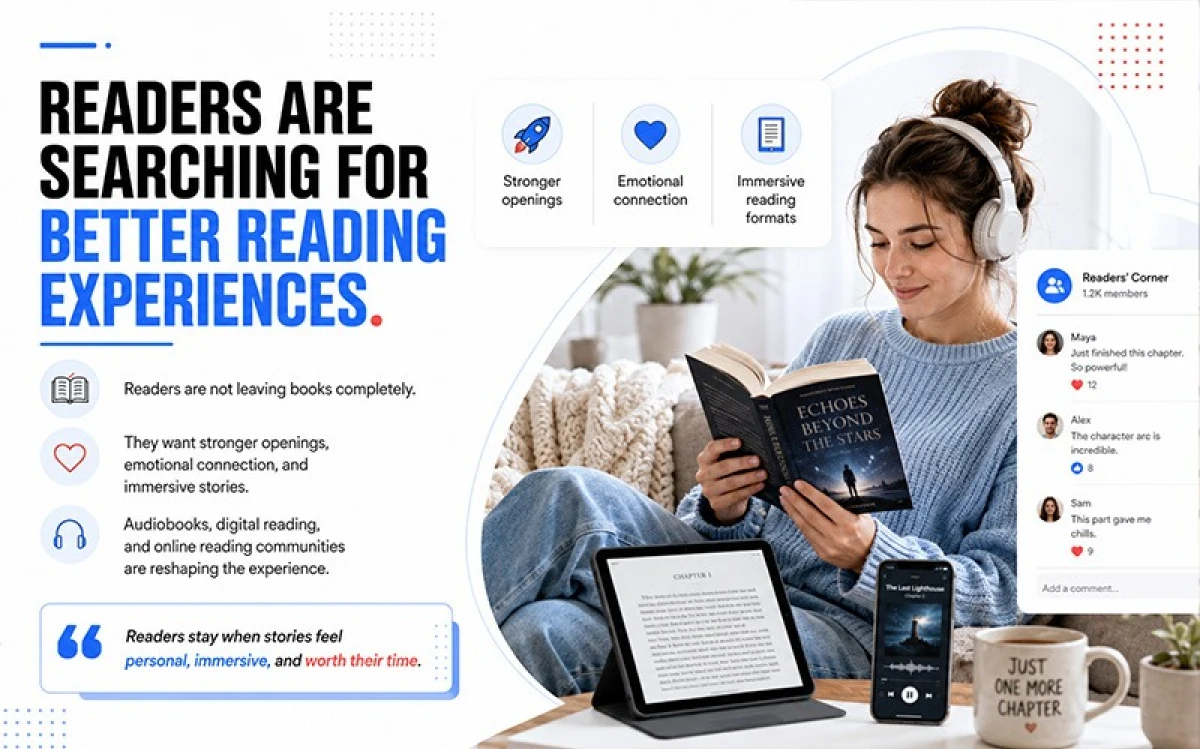
Despite the growing conversation around why readers stop reading books, people are not abandoning storytelling completely. In many ways, readers are simply becoming more emotionally selective. They want stories that feel personal, immersive, and worth their time. Books that create strong emotional connections still succeed because readers continue searching for experiences that genuinely move them.
This shift is also connected to evolving modern reading habits. Some readers now prefer audiobooks during travel, digital reading during work breaks, or online reading communities that make stories feel more interactive. The format may be changing, but the desire for meaningful storytelling still exists. This is another reason why readers stop reading books in the traditional way, not because stories have lost value, but because reading experiences are changing.
At the same time, conversations around attention span reading are forcing writers and publishers to rethink how stories are structured. Readers expect stronger openings, emotional pacing, and characters that immediately feel authentic. If those elements are missing, the growing reader engagement decline becomes much harder to ignore.
Many readers today are not rejecting books because they dislike reading. They are rejecting stories that fail to hold emotional weight. That is why discussions around storytelling problems in books continue growing across social media, review platforms, and reading communities. Understanding why readers stop reading books now means looking at both distraction and disappointment.
The future of publishing will likely belong to stories that make readers feel understood instead of simply entertained. In a world full of endless scrolling and digital noise, emotional connection may become the one thing capable of reminding people why books mattered in the first place.
