

Published October 19, 2026 · The Digital Desk, America Publishers
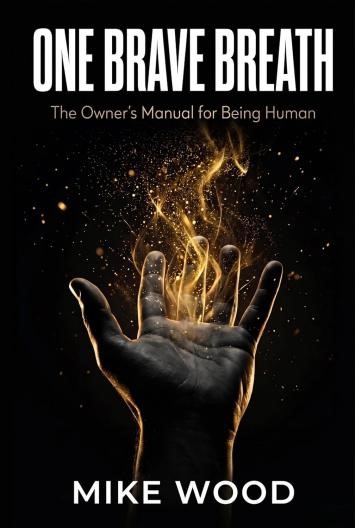
Professional success can be visible long before someone’s private difficulties become apparent. That gap between outward achievement and internal experience sits at the center of One Brave Breath: The Owner’s Manual for Being Human, a book by Mike Wood that combines personal experience with guidance on self-understanding.
An October 11, 2026, press release announced that the book had reached No. 1 in two Amazon bestseller categories. The reported milestone brings attention to a title addressing a familiar concern among readers interested in mindfulness and personal growth: what happens when reaching the next goal does not bring the peace someone expected?
Beyond its rankings, the One Brave Breath book offers a premise worth examining. Its description invites readers to reconsider how they relate to their thoughts, particularly when self-doubt continues beneath an apparently successful life.
What Is One Brave Breath About?
One Brave Breath by Mike Wood is described in its Amazon listing as part memoir and part practical guide. Its personal narrative follows Wood’s search for fulfillment through goals, professional recognition, and achievement, followed by his realization that these experiences had not settled his internal unease.
According to the description, Wood spent 35 years looking outward for answers. It recounts his involvement in helping a company through a period of crisis, then describes the personal questions that remained afterward. This background gives the book’s practical material a personal starting point.
The Owner’s Manual for Being Human introduces approaches to observing thoughts, recognizing underlying beliefs, and reflecting on habitual responses. Its description also identifies forgiveness and daily practice as parts of that process.
The central premise challenges the assumption that personal difficulty means a person is fundamentally defective. Instead, Wood presents self-understanding as something people can learn and practice.
Who Is Mike Wood?
Mike Wood is identified as a coach, speaker, and author in the announcement accompanying the book. His official program website confirms that he wrote One Brave Breath and founded LUV BEING U, a ten-week program grounded in his account of living with anxiety and recurring thoughts.
The Amazon description says the book draws on the same practices that became Wood’s ten-week LUV BEING U program, describing those practices as neuroscience-informed, trauma-aware, and quietly spiritual. These are descriptions of Wood’s approach; they do not, by themselves, establish the book’s clinical effectiveness.
His personal experience provides context for the writing. It also helps explain the audience addressed in the description: people who continue meeting responsibilities while privately feeling exhausted, uncertain, or unusually hard on themselves.
Understanding the Reported Amazon Rankings
The October 11 announcement reported that One Brave Breath reached No. 1 in Amazon’s Inner Child and Transpersonal Psychology bestseller categories, alongside No. 2 in Psychology Education. These are attributed category positions, rather than evidence that the book topped Amazon’s overall book chart.
The Amazon listing supplied for review displayed a “#1 New Release in Transpersonal Psychology” badge. This refers to a new-release list, separate from the bestseller categories cited in the October 11 announcement.
The available announcement does not specify how long the reported positions lasted. Consequently, the One Brave Breath Amazon ranking is best understood as a dated milestone, rather than a permanent status or a verified statement about its position today.
For prospective readers, rankings provide context about a book’s marketplace visibility. Assessing its suitability still requires attention to its subject, approach, and available sample.
One Brave Breath Key Themes: Thoughts, Awareness, and Self-Compassion
Observing Thoughts Without Automatically Believing Them
One of the clearest themes in the book’s description is learning to watch thoughts rather than allowing them to direct every response. The distinction matters because having a thought and establishing a fact are different activities.
As a hypothetical illustration, someone might leave a meeting thinking that a brief answer from a colleague signals disapproval. Observing that thought creates room to ask what evidence supports it. Automatically believing it could turn an uncertain interaction into a settled judgment.
Present-Moment Awareness and Familiar Reactions
The book’s description emphasizes noticing thoughts and internal reactions as they arise, including familiar responses and the beliefs beneath them.
The potential value lies in recognizing repetition. A person who repeatedly interprets small mistakes as proof of inadequacy may begin to distinguish the immediate event from the broader conclusion they attach to it.
a way to examine that process while it is happening. Within the book’s framework, reflection becomes part of daily life, rather than something reserved for major turning points.
Self-Compassion, Forgiveness, and Gratitude
The book’s premise supports a reading centered on self-compassion. If difficulty is approached as something to understand, a mistake need not become a judgment about someone’s entire character. That interpretation allows room for accountability while questioning constant self-condemnation.
The Amazon description identifies forgiveness as part of the book’s approach. Wood’s LUV BEING U website also emphasizes gratitude and presence, placing these ideas within his broader work on self-understanding.
Together, these ideas suggest an interest in how people treat themselves while confronting difficulty. They should not be read as requirements to feel positive about painful circumstances.
External Success Versus Inner Peace
The contrast between achievement and fulfillment gives the book its main narrative tension. According to its description, Wood reached goals he had expected to bring relief, only to discover that his internal experience remained unsettled.
The broader question is whether achievement has been given a responsibility it cannot necessarily fulfill. A promotion can change someone’s role; it does not automatically change the beliefs through which they interpret their worth.
For readers considering personal growth books for adults, this distinction may be a reason to explore Wood’s account. It directs attention toward the relationship between accomplishment and identity, particularly when another success keeps becoming the condition for feeling adequate.
Everyday Relevance and a Wider Conversation
The book’s stated concerns lend themselves to ordinary situations: replaying a conversation, anticipating criticism, or treating an imperfect result as a personal failure.
Consider another hypothetical example. After missing a deadline, someone might conclude that they are incapable. A more considered response would examine what happened, acknowledge its consequences, and decide what needs to change. Self-compassion, in this illustration, leaves room for responsibility without turning one mistake into a permanent identity.
There is also a wider social implication. Outward competence reveals only part of a person’s experience. Recognizing that limitation can encourage more thoughtful conversations about emotional well-being, especially in environments where achievement receives more attention than exhaustion.
These broader reflections do not establish that reading the book will produce specific psychological outcomes. It offers a personal-development perspective and is not a substitute for professional mental-health care.
Why Readers May Want to Explore One Brave Breath
Readers drawn to memoir alongside practical reflection may find the format relevant to their interests. The personal account offers context for the guidance, while the focus on familiar thoughts creates an accessible point of entry into self-awareness.
A potential takeaway is that personal growth can include examining the assumptions behind a reaction, not simply setting another goal. Wood’s premise invites readers to consider whether understanding themselves deserves the same attention they give to external responsibilities.
The reported category rankings provide the news milestone. The more enduring question raised by One Brave Breath: The Owner’s Manual for Being Human concerns how people live with themselves while pursuing the lives they want. Readers interested in its combination of personal narrative and reflection can explore the description and available preview on the book’s Amazon listing.
🔗 For Amazon: Click here
🔗 For Mike Wood’s Amazon Author Page: Click here
🔗 For Sweetwater Reporter: Click here
🔗 For Yahoo Finance: Click here
Source: “Mike Wood’s ‘One Brave Breath’ Hits No. 1 Best-Seller in Multiple Amazon Categories, October 11, 2026.” Read more at Newsfile.