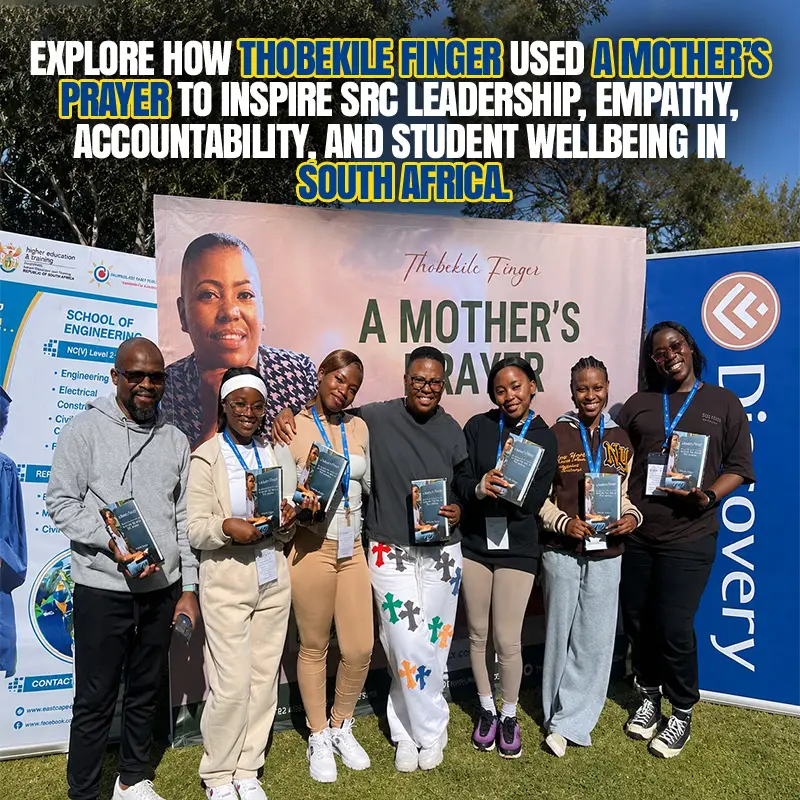
The workshop brought together members of the Student Representative Council (SRC) for an engaging day of learning, reflection, and collaboration. Rather than focusing solely on leadership theories, participants explored the human side of leadership, understanding the responsibilities that come with representing fellow students while building trust, encouraging inclusion, and creating healthier campus communities.
One of the defining strengths of this student leadership workshop was its ability to connect leadership principles with real-life experiences. Through honest conversations and interactive discussions, students examined the importance of making ethical decisions, communicating with compassion, and remaining accountable even during difficult situations. These lessons resonated because they reflected challenges many young leaders encounter every day rather than hypothetical scenarios found in textbooks.
As a respected Thobekile Finger speaker, she encouraged participants to recognize that leadership is not measured by authority or titles alone. Instead, meaningful leadership is built through consistency, empathy, and the willingness to understand the experiences of others before making decisions that affect an entire student community. This perspective reinforced the workshop’s broader goal of promoting ethical student leadership while empowering students to become positive influences within their institutions.
The session also explored several pressing issues that continue to impact higher education communities across South Africa. Discussions around student mental health awareness, campus safety awareness, and GBV awareness workshop initiatives emphasized that today’s student leaders must be equipped to respond to challenges that extend far beyond academic performance. Leaders are increasingly expected to create environments where students feel heard, respected, and supported throughout their educational journey.
Instead of treating these conversations as separate topics, the workshop demonstrated how they intersect with leadership itself. Building stronger Student Representative Councils requires understanding the emotional, social, and personal realities that shape student experiences. This approach transformed the event into much more than traditional student representative council training. It became an opportunity to prepare young leaders for the responsibilities that come with advocating for their peers while maintaining trust and accountability.
Throughout the programme, participants were encouraged to view leadership as a continuous process of learning rather than a position of status. This philosophy aligned perfectly with the workshop’s focus on youth leadership development, where growth begins with self-awareness before extending outward to serve others. Students reflected on how their own backgrounds, personal challenges, and life experiences influence the way they lead and communicate with fellow students.
A particularly memorable discussion centered on the idea that every student begins their journey from different circumstances. Using the powerful concept of the same race, different starting line, Thobekile challenged participants to consider how empathy changes the way leaders approach decision-making. While everyone may share similar goals, not everyone has experienced the same opportunities, support systems, or personal obstacles. Recognizing these differences encourages leaders to make more thoughtful, inclusive decisions that acknowledge the diverse realities within their student communities.
Another impactful illustration compared leadership to changing weather conditions. Just as weather constantly shifts, leaders must remain adaptable while maintaining their core values. This leadership weather metaphor encouraged students to prepare for uncertainty rather than fear it, reminding them that resilience and flexibility are essential qualities for anyone serving in leadership positions. Whether navigating conflict, responding to crises, or supporting struggling classmates, effective leaders remain steady while adapting to changing circumstances.
These storytelling techniques transformed complex leadership concepts into relatable experiences. Rather than delivering lectures filled with management terminology, Thobekile demonstrated the value of leadership through storytelling, allowing participants to connect emotionally with each lesson. This approach created an atmosphere where students felt comfortable sharing their own perspectives, asking meaningful questions, and reflecting honestly on their personal leadership journeys.
It was within these conversations that A Mother’s Prayer revealed its greatest strength. The book became more than inspirational reading, it served as the foundation for a book-based leadership workshop designed to help students understand that compassion and accountability are not separate from leadership but essential parts of it. By connecting personal stories with practical leadership principles, the workshop encouraged participants to develop stronger emotional awareness while building healthier relationships with those they represent.
One of the most valuable outcomes of the workshop was its emphasis on action rather than inspiration alone. Every discussion encouraged participants to think about how they could apply what they had learned within their own Student Representative Councils. From improving communication to resolving conflict more effectively, the focus remained on developing proactive student leadership that responds to challenges before they become larger issues. This shift from reactive thinking to prevention is essential for building stronger, more supportive educational communities.
A recurring message throughout the programme was that trust cannot be demanded, it must be earned through consistent actions. This perspective shaped many of the conversations around trust building in student leadership, encouraging participants to reflect on how honesty, transparency, and accountability influence the confidence students place in their elected representatives. When leaders actively listen, communicate openly, and follow through on their commitments, they create a culture where collaboration becomes possible.
The workshop also highlighted the importance of understanding emotions, both our own and those of others. Developing emotional awareness enables leaders to respond thoughtfully rather than impulsively, particularly when addressing sensitive situations involving fellow students. By promoting an emotional intelligence workshop approach, participants explored how empathy, patience, and active listening can strengthen relationships and improve decision-making across campus.
These conversations naturally extended into broader discussions about student support and wellbeing. Student leaders often become the first point of contact for peers experiencing personal or academic difficulties. Recognizing this responsibility means understanding that effective leadership involves guiding people toward appropriate support while helping create an environment where individuals feel comfortable asking for assistance.
Another meaningful theme addressed the reality of hidden student struggles. Academic success does not always reflect emotional wellbeing, financial pressures, family responsibilities, or personal challenges that students may quietly carry every day. By acknowledging these unseen realities, participants were encouraged to embrace student leadership and empathy, recognizing that compassion often begins with taking the time to understand someone’s story before offering solutions.
This human-centered perspective also reinforced the importance of responsive student leadership, where listening becomes just as valuable as leading. Rather than assuming every challenge has an immediate answer, effective leaders create opportunities for open dialogue and encourage students to contribute ideas that strengthen the entire campus community.
As the workshop concluded, it became clear that A Mother’s Prayer workshop initiatives are creating a lasting impact far beyond a single event. The principles explored throughout the day continue to support discussions around inclusion, resilience, dignity, and responsible leadership within educational institutions. These programmes reflect a growing commitment to transformational leadership workshop experiences that equip young people with practical skills they can carry into their academic journeys, professional careers, and communities.
The growing influence of A Mother’s Prayer has also been reflected in its remarkable reception among readers. During a recent author event, approximately 800–900 paperback copies were sold, an extraordinary milestone that demonstrates the book’s ability to resonate with diverse audiences. Beyond commercial success, its message has attracted support through government-funded initiatives, helping extend its reach into educational institutions and leadership development programmes across South Africa. The continued adoption of the book within educational and leadership programmes demonstrates how literature can become a practical resource for long-term student development.
For Thobekile Finger, this achievement represents more than strong book sales. It reflects the growing recognition of literature as a powerful tool for education, dialogue, and community development. By combining her expertise in health, higher education, and international development with authentic storytelling, she continues to bridge the gap between personal experience and practical leadership. Her work serves as an inspiring student leadership success story, illustrating how one book can influence meaningful conversations and empower future generations of leaders.
America Publishers is proud to recognize Thobekile Finger author, educator, and advocate, as Author of the Month – June 2026. This recognition celebrates not only her literary achievements but also her unwavering commitment to youth empowerment South Africa through education, leadership development, and community engagement. Her dedication continues to inspire students, educators, and readers who believe that positive change begins with compassion, courage, and purpose.
As A Mother’s Prayer by Thobekile Finger reaches more readers and supports additional leadership initiatives, its message continues to prove that books can extend well beyond the bookshelf. They can encourage difficult conversations, strengthen communities, and inspire individuals to lead with integrity in every aspect of life. The success of this initiative demonstrates that meaningful leadership is built not only through knowledge but through empathy, accountability, and a genuine commitment to serving others.
Through her workshops, advocacy, and writing, South African author Thobekile Finger continues to leave a lasting legacy, one that reminds us that true leadership begins by understanding people, embracing responsibility, and choosing every day to create a positive impact in the lives of others.
🔗 For Amazon: Click here
🔗 For Facebook: Click here
🔗 For LinkedIn: Click here
🔗 For Dreame: Click here