
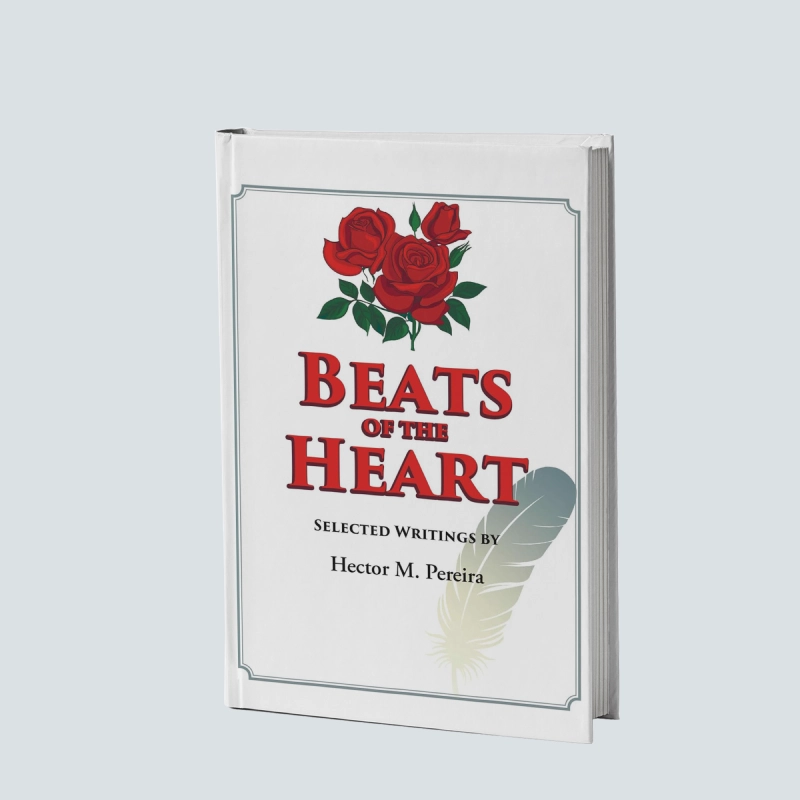
Beats of the Heart

Beats of the Heart: Selected Writings

Love, Loss, and the Courage to Hope Again

Love can leave behind more than memories. It can change how a person understands companionship, approaches another relationship, and imagines the years ahead. After a painful ending, even the wish to begin again can carry uncertainty. Yet the longing to share life with someone may remain, surviving disappointment in ways that are difficult to explain.

In Beats of the Heart: Selected Writings, Hector M. Pereira gives that longing a personal form. Written from experiences of love found, love lost, and rediscovery after divorce, the collection brings together poems of tenderness, desire, sorrow, and hope. Its emotional foundation rests in the willingness to acknowledge hurt while continuing to believe that meaningful connection is possible.

For readers drawn to love and loss poetry, the collection offers subjects that reach into familiar private territory: missing someone, wanting to be understood, remembering affection, and wondering whether another chance at love lies ahead. Alongside these romantic concerns are reflections on faith, family, and gratitude, widening the collection’s understanding of what sustains a heart through change.

Beats of the Heart invites readers into one man’s expressions of vulnerability and enduring affection. Its appeal begins with a recognizable human wish: to give love freely and find someone willing to receive it with equal care.

The desire for companionship involves more than finding someone to share a moment. It can mean wanting a person who welcomes your affection, understands your silences, and chooses to remain present through the ordinary demands of life. For Pereira, that longing includes finding someone with whom he can share his love and dedication.

That emphasis gives the book’s romantic longing a sense of intention. The hoped-for relationship carries the possibility of commitment, with tenderness extending beyond attraction into the desire to build something lasting. There is vulnerability in admitting such a wish, particularly after experiences that have made trust more difficult.

As poetry about love and longing, Beats of the Heart makes room for both desire and uncertainty. Wanting to love again does not erase the memory of disappointment. A person can imagine closeness while remaining aware of how much emotional openness may ask of them. The collection’s themes bring those feelings into the same conversation.

Readers who enjoy a romantic poetry collection rooted in personal emotion may recognize this tension. The wish to be loved often exists beside the equally powerful wish to give affection, attention, and loyalty. That desire to give and receive affection runs through the collection’s exploration of romantic longing.

The end of a relationship can unsettle the shape of everyday life. Familiar routines change, shared expectations disappear, and the future may require imagining again. For some people, the hardest questions concern their own identity: what they want now, what they have learned, and whether they feel ready to trust another person.

Written in the aftermath of divorce and rediscovery, Beats of the Heart emerges from this emotionally uncertain territory. Heartbreak forms part of its background, while the desire for renewed connection gives its reflections a forward-looking dimension. The collection allows pain and possibility to belong to the same personal journey.

For readers seeking poetry about heartbreak and healing, that combination may feel familiar. Healing can include days of confidence alongside moments when an old memory still hurts. Missing a relationship does not necessarily mean wishing to return to it, just as hoping for love again does not mean the past has lost its significance.

Pereira’s collection approaches these concerns through personal expression. Sorrow, vulnerability, and tenderness sit alongside the continuing belief that someone special may still be found. Together, they offer a way into the emotional questions that can follow a painful separation.

As poetry about personal rediscovery, the book also invites reflection on the self that remains after loss. The capacity to care, desire, and imagine companionship can become part of learning how to move forward, even when the next chapter has yet to take a definite shape.

Some feelings become easier to recognize when they are connected to something the senses can grasp. Wind can suggest movement or distance. Tears can make sorrow visible. The sweetness of life can call attention to pleasure, affection, and experiences a person wishes to hold close. Such images give abstract emotions a more immediate presence.

Images of mystic winds, nighttime tears, and life’s sweetness give the collection’s emotional themes a sensory dimension. These images introduce an emotional world shaped by longing, vulnerability, and the appetite for connection. They suggest ways of approaching feelings that may resist a straightforward explanation.

In love poetry, imagery can create space for a reader’s own associations. A nighttime image may recall solitude for one person and a treasured memory for another. Its significance can grow through what the reader brings to it, allowing an individual expression to meet an experience beyond the writer’s own.

This relationship between personal feeling and recognition is part of the appeal of emotionally honest poetry. A reader does not need to have lived the poet’s circumstances to understand the wish for closeness or the ache of absence.

The Beats of the Heart poetry collection offers those points of connection through its intimate subjects and sensory language. Its descriptions of desire and vulnerability invite readers to pause with emotions they may know well, including those they have struggled to express themselves.

Romantic love occupies an important place in Beats of the Heart, but the collection also turns toward relationships and beliefs that sustain life in other ways. Reflections on faith, family, and gratitude expand its emotional scope, bringing attention to sources of affection that can remain meaningful through personal change.

The tributes to a mother’s love introduce a different kind of tenderness. They make room for appreciation of the care, sacrifice, and reassurance associated with that relationship. Alongside romantic yearning, these expressions remind readers that a life contains many attachments, each carrying its own memories and significance.

For readers interested in poetry about faith and family, the collection offers an opportunity to consider how those connections accompany experiences of love and loss. Pereira’s prayers of thanks also give gratitude a place within a book shaped partly by painful events. Sorrow and appreciation can coexist; a difficult chapter does not necessarily diminish the value of every blessing around it.

These poems about gratitude broaden the conversation beyond the search for a partner. They invite attention to what already deserves recognition: a mother’s affection, the presence of family, and the beliefs through which a person understands life. Within the collection, such subjects stand alongside romantic desire as expressions of a heart with more than one reason to keep hoping.

A handful of Spanish-language poems adds another dimension to Beats of the Heart. Their presence introduces a second language into a collection grounded in personal emotion, giving readers another way to encounter Pereira’s writing.

Language carries associations that extend beyond literal meaning. A familiar word may recall a voice, a place, or an earlier period of life. For readers who know both English and Spanish, moving between the languages may bring different shades of recognition. Readers’ responses will depend on their own experiences and understanding of each language.

Pereira was born in Bayamón, Puerto Rico, and raised on New York City’s Upper West Side after his family moved when he was approximately two years old.

The Spanish-language poems add variety to the collection’s expression while keeping its central concerns in view: affection, vulnerability, longing, and hope. For readers discovering Hector M. Pereira’s poetry, this movement across languages is another aspect of a personal voice shaped by a life lived across different places and experiences. It gives the book an additional point of connection for those who encounter their own emotions in more than one language.

Beats of the Heart will appeal most directly to readers who value personal expressions of affection, heartbreak, and the wish to begin again. Its subjects may resonate with someone reflecting on a relationship’s end, remembering a meaningful connection, or wondering whether companionship still belongs in their future.

Readers seeking poetry about hope after heartbreak may find particular interest in the collection’s continuing desire for love. Pereira’s wish to share his affection and dedication gives that hope a personal focus. It concerns the possibility of sharing life again, with the emotional openness such a choice requires.

The collection also offers reasons to explore beyond romantic experience. Its family tributes, expressions of faith, and moments of gratitude may speak to readers whose strongest connections to poetry come through remembrance, belief, or appreciation.

Within love and loss poetry, Beats of the Heart brings these concerns together through one man’s personal writing. Readers are invited to discover which feelings meet their own experiences and which offer a different perspective. For those drawn to intimate verse, opening the collection offers a chance to spend time with the enduring questions of whom we love, what we carry after loss, and what we still hope to find.

Hector Manuel Pereira was born in Bayamón, Puerto Rico, on May 22, 1951. His family moved to New York City when he was approximately two, and he grew up on the Upper West Side. His background includes studies at Bronx Community College, Hostos Community College, and John Jay College of Criminal Justice.

Pereira retired in May 2021 after 40 years of service in the United States immigration system. Alongside his professional career, he has devoted time to community organizations and volunteer work. His involvement with the William F. Ryan Community Health Center began in 1983, when he became a board member.

His volunteer experience also includes service with New York City’s auxiliary police, where he retired as a Deputy Inspector, and the American Red Cross in disaster response, logistics, and emergency response vehicle driving. He has additionally volunteered with Sunrise Police, the Sunrise Civilian Emergency Response Team, and Vertical Church’s hospitality and event teams.

Creative interests have accompanied that record of service. His interest in photography began in high school, and his background includes freelance photography and independent cable television production. He also enjoys competitive sports, Latin music, jazz, and writing poetry.

In Beats of the Heart, Hector M. Pereira brings his personal emotions into a collection concerned with affection, loss, and possibility. His personal philosophy captures that determination to continue: “If you fall, then get yourself up and keep walking.” It is an outlook that leaves room for difficulty while keeping the next step within reach.

Follow Hector M. Pereira for Further Updates

🔗 For Instagram: Click here

🔗 For Facebook: Click here

🔗 For the Author Dedicated Website: Click here

Beats of the Heart | Available Now

🔗 For Readings: Click here

🔗 For Amazon: Click here