
Published October 20, 2026 · The Digital Desk, America Publishers
Some friendships begin before either person has the words to explain what holds them together. A familiar home nearby, a shared childhood, or an absence neither child fully understands can become the foundation of a bond that lasts for decades. But what happens when the people who once shared almost everything grow into lives marked by very different opportunities?
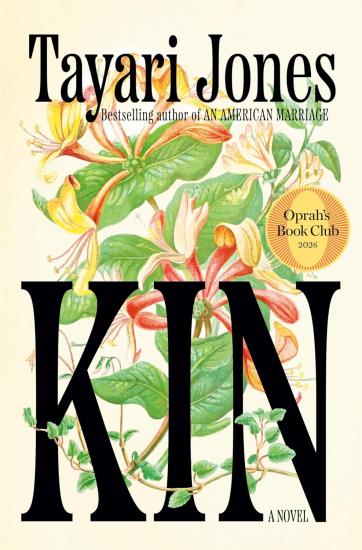
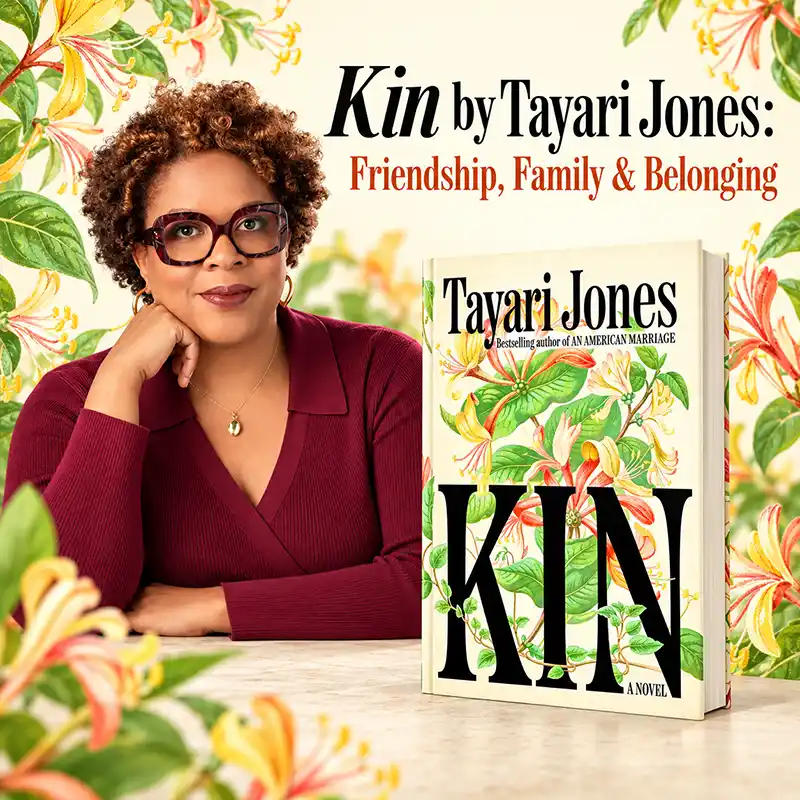
Published on February 24, 2026, Kin by Tayari Jones follows two childhood friends whose connection is tested by separation, ambition, and the continuing influence of their mothers’ absence. Selected for Oprah’s Book Club, the novel brings questions of family and belonging into a story rooted in the American South. Emory University describes its central friendship as one tested by time, geography, and changes in social class.
For readers drawn to stories about relationships that resist easy definitions, Kin offers a compelling starting point: two girls from the same community, connected by affection and loss, who come to seek very different things from the world.
An Oprah’s Book Club Selection with Literary Recognition
The Amazon description identifies Kin as a New York Times bestseller, an Oprah’s Book Club pick, and a winner of the Kirkus Prize. The Amazon listing displays a #1 Best Seller badge in Black & African American Literary Fiction; category rankings are subject to change.
These distinctions have brought further attention to Kin, an Oprah’s Book Club selection. Yet the story’s appeal extends beyond its recognition. Its premise places an intimate friendship against unequal circumstances, inviting readers to consider how personal choices develop within the opportunities and limitations surrounding them.
Rather than treating success or hardship as straightforward evidence of character, the novel’s contrasting paths create space for more difficult questions about care, aspiration, and access.
Kin Book Summary: Two Friends, Two Different Paths
At the center of the Kin novel by Tayari Jones are Vernice and Annie, best friends and neighbors raised in Honeysuckle, Louisiana. Both grow up without their mothers, but the circumstances of those absences differ.
Vernice’s mother has died. An aunt raises her with a fierce determination to provide stability, and at eighteen, Vernice leaves Honeysuckle to attend Spelman College. There, she encounters a network of Black women alongside unfamiliar expressions of wealth, social expectations, and ambition. Education opens possibilities while introducing new questions about inequality and where she belongs.
Annie’s mother abandoned her during childhood. For Annie, that absence becomes a persistent longing to find the person who left. Her search carries her into experiences involving danger, affection, and uncertainty. According to the publisher’s description supplied through Amazon, the friends’ lives eventually converge again amid a devastating tragedy.
This Kin book summary establishes the central tension without resolving it: Vernice moves toward a future shaped by education and new connections, while Annie pursues a missing relationship that remains deeply important to her understanding of herself.
Female Friendship and Sisterhood Across Changing Lives
Among the central Kin novel themes is the endurance of friendship when shared beginnings no longer produce shared experiences.
Childhood closeness can create the expectation that another person will always understand us. Adulthood complicates that expectation. New environments change what people know, what they want, and how they interpret the lives they left behind.
Vernice and Annie’s diverging circumstances give this question particular weight. Their friendship must exist across differences that childhood familiarity alone cannot erase. Readers may find themselves considering whether loyalty means preserving an old understanding of someone or making room for the person she becomes.
The novel also extends its exploration of sisterhood through Vernice’s experience at Spelman. The publisher’s description places her within a community of connected Black women, broadening the story’s interest in female relationships beyond its central pair.
For readers interested in female friendship in literature, Kin presents friendship as a relationship influenced by social mobility, distance, and competing needs—not simply by affection.
Motherhood, Absence, and Complicated Family Bonds
The connection between motherhood and family begins with a crucial distinction: losing a mother to death and living with a mother’s abandonment are different experiences.
Vernice and Annie share maternal absence, but they cannot automatically share its meaning. Their circumstances raise different questions about memory, rejection, care, and the possibility of reunion.
This gives the novel’s treatment of mother-daughter relationships in fiction complexity even where a mother is physically absent. A missing relationship may still influence a person’s hopes and decisions. Equally, the presence of another caregiver does not necessarily settle every question a child carries.
In Emory’s interview, Jones discusses the protagonists’ upbringing by an aunt and a grandmother, connecting the novel to questions about caregiving and children’s emotional needs. Her comments reinforce the importance of examining family through the quality and availability of care.
The resulting questions extend beyond biological ties: who provides security, who feels responsible, and what happens when the care someone needs differs from the care available?
Childhood Experiences and Adult Relationships
The relationship between childhood experiences and adulthood provides another useful lens for reading Kin.
Both protagonists begin in the same community, yet their responses to early circumstances lead them toward different pursuits. Vernice’s educational opportunities and Annie’s search for her mother suggest distinct ways of seeking a more complete life.
Their contrast invites reflection on how childhood shapes adult relationships. An early absence may influence what someone expects from others, which connections feel essential, or what she believes will finally bring reassurance.
However, childhood should not be treated as a complete explanation for every adult decision. The premise allows room to consider both lasting influence and individual agency. People carry their histories into new circumstances, where relationships, opportunities, and unexpected events can also change them.
A careful Kin novel analysis therefore asks how the past remains active without assuming that either woman’s future was entirely decided at the beginning.
Education, Aspiration, and Unequal Opportunities
Vernice’s arrival at Spelman introduces the relationship between aspiration and access.
Entering an institution can expand a person’s future while revealing social distinctions she has not previously encountered. The publisher’s description explicitly connects Vernice’s experience with affluence, manners, ambition, and inequality.
These details matter because opportunity involves more than personal determination. Networks, financial circumstances, education, and familiarity with social expectations can influence which possibilities become available.
Annie’s contrasting journey brings that imbalance into focus. The two women’s lives invite readers to resist measuring their experiences through achievement alone. Their priorities emerge from different needs, even when those needs originate in the same town.
Although its setting is historical, the novel raises questions relevant to discussions of social inequality in contemporary novels: how much freedom does a person have, and what conditions make a particular choice possible?
What Readers May Feel and Reflect On
Readers may respond to Kin with tenderness toward the childhood friendship, unease about Annie’s search, or recognition of the tensions that accompany changing circumstances. The premise may also evoke grief, frustration, and hope, particularly for those familiar with complicated family relationships.
The story invites several questions: Can friendship endure when two people no longer understand each other’s daily lives? Can a new community offer belonging without replacing an old one? What do people hope to recover when they search for an absent parent?
Rather than reducing the novel to a single moral, its central relationships support a more nuanced reflection. Friendship can remain significant across difference; family can provide both connection and unresolved longing; and early hardship can influence adulthood without explaining everything about it.
Tayari Jones and the Relationships That Shape a Life
Tayari Jones is the author of An American Marriage, which won the Women’s Prize for Fiction, as well as Leaving Atlanta, The Untelling, and Silver Sparrow. She serves as the Charles Howard Candler Professor of English and Creative Writing at Emory University.
With Kin, Jones places two women’s contrasting experiences at the center of questions about friendship, family, and belonging. Vernice and Annie share a beginning, but their lives challenge the assumption that closeness requires sameness.
That tension gives the novel its emotional stakes. The people who knew us first may remain essential even as distance and experience change what we can offer one another. Perhaps the question Kin leaves readers considering is this: when our lives take us in different directions, how do we continue to make room for those who helped us understand where we began?
🔗 For Amazon: Click here
🔗 For Oprah’s Book Club: Click here
🔗 For Google Books: Click here
🔗 For Wikipedia: Click here
Source: “Tayari Jones’ new novel, ‘Kin,’ explores the power of ties that bind,” February 24, 2026. Read more at Emory News.