

Published October 20, 2026 · The Digital Desk, America Publishers
What if the house you returned to for shelter became the place where you felt least safe?
At Pemberton, family history offers little reassurance. A clock stops at the same minute each night. A voice calls for help beyond a bedroom door. For Julia Barlow, returning to her family’s estate means confronting a past that may be far less settled than she imagined.
The Witch by Freida McFadden brings psychological suspense into a setting shaped by inherited secrets and the possibility of haunting. Its premise poses an unsettling question: when something inexplicable happens in an old family home, should you investigate the house-or the stories your family has told about it?
A New Thriller With an Old Mystery
Freida McFadden, author of The Housemaid, turns to a troubled family estate in The Witch. Her official website identifies the novel as a standalone psychological thriller, published on October 6, 2026, by Poisoned Pen Press, with ebook, hardcover, and audiobook formats listed.
This spoiler-free analysis of The Witch considers the official synopsis and publication information. It explores the questions raised by the premise rather than offering a verdict on the complete novel’s execution.
For readers exploring Freida McFadden books, the combination is distinctive: a present-day personal crisis, an ancestral home, and a historical mystery that threatens Julia’s understanding of her family.
The Witch Book Summary: A Return That Offers No Refuge
Julia Barlow has lost both her employment and her apartment. With her options narrowed, she arrives at Pemberton, her family’s seventeenth-century estate in rural Massachusetts. Checking on her elderly grandmother provides a reason for the visit, but Julia also wants somewhere to retreat from her own difficulties.
Her stay becomes disturbing. The grandfather clock repeatedly stops at 3:41 a.m.; lights behave erratically; an unexplained voice appeals for help outside her bedroom. Investigating the property’s history leads Julia to a woman executed for witchcraft in 1692 and to concealed parts of her family’s past.
That is the central premise of The Witch: someone seeking refuge encounters a mystery tied to the very place that should provide it. The premise leaves the source of the disturbances open, giving readers a reason to question each apparent clue.
Pemberton Estate: When Familiarity Becomes Unease
The setting gives the Pemberton estate mystery its emotional tension. Julia is entering a place connected to her own family, which makes its disturbing history personally consequential.
An unfamiliar building can conceal unknown dangers. A family home introduces a different discomfort: the possibility that belonging has never meant knowing the whole story. Read this way, Pemberton represents an inheritance that includes unanswered questions as well as shelter.
The clock is especially suggestive. Its precise stopping time gives an unexplained event a recognizable pattern. A single malfunction might be dismissed; recurrence encourages attention. Why this minute? What, if anything, connects it to the house?
As a possible symbol, the stopped clock invites reflection on a past that resists being left behind. That interpretation does not establish its actual significance within the plot.
The Historical Mystery Behind the Haunting
The woman executed in 1692 introduces a troubling question about how a person’s story survives. Who preserves it, who interprets it, and whose account becomes accepted?
In a historical mystery involving witchcraft, an accusation can become the defining detail attached to a woman’s identity. The premise invites readers to consider what that label might obscure about the individual beneath it.
It also creates room to examine the relationship between family memory and historical truth. A story repeated across generations may feel authoritative because it is familiar. Familiarity alone, however, cannot establish accuracy.
These are interpretive possibilities raised by the synopsis. It does not disclose enough to identify the executed woman’s full circumstances or determine exactly how her story connects to Julia. Preserving that gap is essential to the mystery.
Family Secrets and the Cost of Knowing
Books about family secrets often draw tension from competing needs: the desire to belong and the desire to understand. Julia’s circumstances make that tension particularly interesting. She needs a place to stay just as Pemberton begins giving her reasons to investigate it.
The premise suggests that discovering information could change more than her explanation for an unsettling noise. It could alter how she understands the family she has returned to.
Readers might ask why relatives conceal parts of their history. Is silence intended to protect someone, preserve a reputation, or avoid a painful reckoning? Those questions remain possibilities here, rather than confirmed explanations.
For a book club, another question follows: how much missing information can a person tolerate before every ordinary event begins to feel suspicious?
Is It Magic-or Something Else?
The apparent haunting creates a central uncertainty in The Witch. Julia encounters disturbances, but experiencing something frightening does not automatically reveal its cause.
Three stages matter: what happens, what Julia thinks it means, and what an investigation can establish. A sound may be real while its source remains unknown. A repeated pattern may be significant without supporting the first explanation that comes to mind.
That distinction helps explain the appeal of a haunted house psychological thriller. Readers can hold several possibilities in mind while waiting for evidence to strengthen or undermine them.
The title itself may encourage supernatural expectations. Yet a title is not proof of an explanation. Approaching Pemberton with that distinction intact preserves the tension between fear, suspicion, and discovery.
Women, Accusation, and the Right to Be Heard
Among the characters introduced in the official synopsis, Julia and her grandmother connect the present-day family setting, while the executed woman introduces a historical dimension. Their precise relationships to the larger mystery remain unrevealed.
One possible reading concerns who gets to define a woman’s experience. Julia must interpret what is happening around her; the historical woman reaches readers through the account of an accusation and execution.
The unexplained appeal for help adds another question: what responsibility comes with hearing a voice whose circumstances you do not understand?
This makes women’s testimony a useful discussion theme without assuming that the novel delivers a particular message. Readers can consider whose account they trust, what supports that trust, and what might change their judgment.
Why the Psychological Suspense May Appeal Today
The premise offers recognizable anxieties beneath its eerie surface. Losing work and housing can undermine a person’s sense of stability. Returning to family may promise support while also bringing uncomfortable dependencies.
That starting point gives readers of psychological suspense novels a concrete reason to care about Julia before the historical puzzle develops. Her uncertainty concerns both her surroundings and her place within them.
For readers seeking psychological thriller books with historical elements, the attraction lies in the connection between two investigations: what is happening now, and what happened before. Each could reshape the other.
Whether the complete novel sustains that tension is a question for a full reading. The synopsis nevertheless establishes a clear source of suspense: Julia needs answers in a place where inherited explanations may be incomplete.
The Witch Audiobook: Narrators and Publication Details
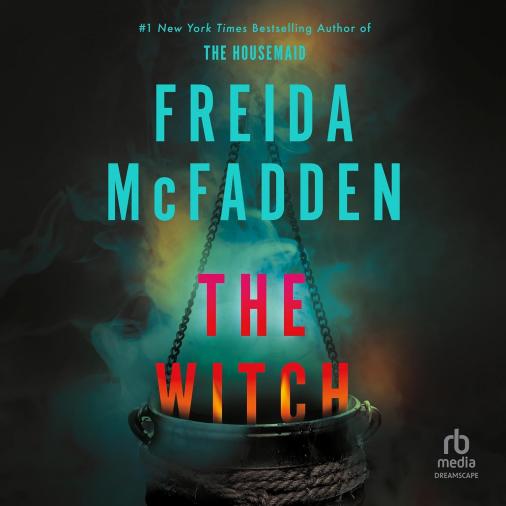
The Witch audiobook is published by Dreamscape Media. McFadden’s official website credits Saskia Maarleveld and Marin Ireland as narrators and lists the unabridged recording at nine hours and 31 minutes. Apple Books gives its release date as October 6, 2026.
For readers considering audio, the premise’s emphasis on an unexplained voice makes listening an intriguing option. However, the credits alone do not establish how roles are divided or how particular scenes are performed.
Readers can explore the audiobook listing before choosing their preferred format.
What Will Julia Find at Pemberton?
The most compelling question surrounding Pemberton may be how much of its history Julia can trust.
The Witch by Freida McFadden connects a woman’s search for refuge with a troubling family past. Its blend of psychological suspense, historical mystery, and apparent haunting leaves several questions waiting: what happened here, what has been concealed, and what explains the disturbances now?
For readers drawn to mystery novels about the past and books about secrets and deception, the official synopsis offers a starting point. Pemberton’s answers belong inside the book.
🔗 For Amazon: Click here
🔗 For Apple Books: Click here
🔗 For the Official Author Website: Click here
Source: “The Witch – A Psychological Thriller.” Read more at FreidaMcFadden.com.