
Published on July 14, 2026
Simile examples help transform simple sentences into vivid descriptions that capture a reader’s attention. Whether you’re writing a school essay, a poem, a story, or even a social media caption, similes make ideas easier to imagine by comparing one thing to another using “like” or “as.”
You’ve probably heard expressions like “as busy as a bee” or “as light as a feather” without realizing they’re similes. Understanding the simile meaning is an important step toward becoming a stronger writer. In this guide, you’ll learn how similes work, how they differ from metaphors, and explore practical examples you can confidently use in your own writing.
What Is a Simile? Understanding the Simile Meaning
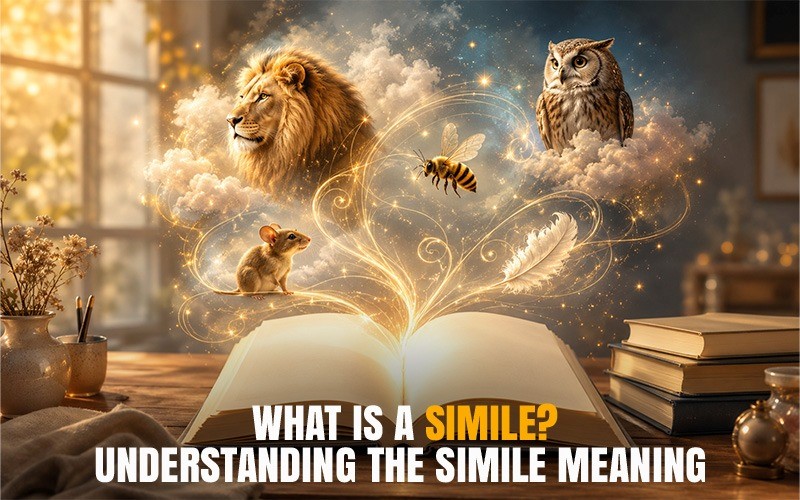
A simile is a figure of speech that compares two different things using the words “like” or “as.” Instead of saying two things are the same, a simile highlights a shared quality, making descriptions more vivid and easier to imagine.
For example:
- Her smile was as bright as the sun.
- The baby slept like a log.
- The water was as clear as glass.
These comparisons create clear mental images without requiring lengthy descriptions. Rather than saying someone was very fast, describing them as “as fast as lightning” instantly makes the idea more memorable.
The simile meaning goes beyond making comparisons. Similes add emotion, personality, and clarity to writing, which is why they’re commonly used in novels, poetry, speeches, advertisements, and everyday conversation. Whether you’re describing a person, place, emotion, or event, a well-chosen simile can make your writing more engaging and easier for readers to connect with.
Simile vs. Metaphor: What’s the Difference?
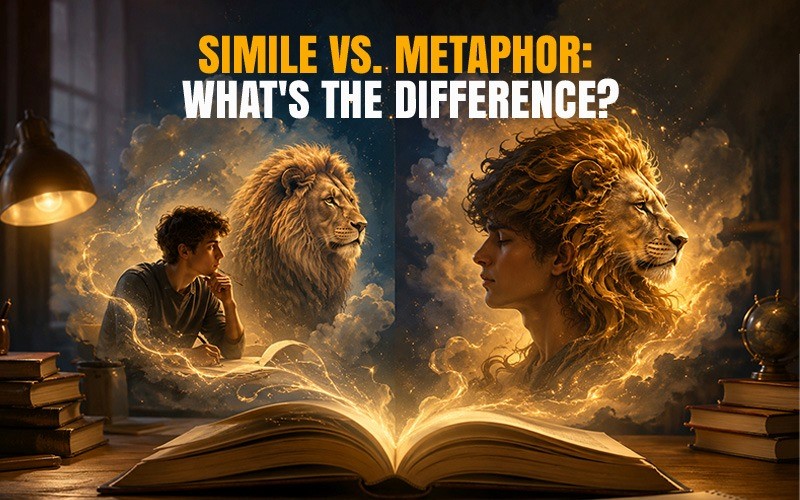
Many people confuse similes with metaphors because both compare two different things. The key difference lies in how the comparison is made.
| Simile | Metaphor |
| Uses like or as to compare two things. | Directly states that one thing is another. |
| “The clouds were like cotton.” | “The clouds were cotton.” |
| Makes an indirect comparison. | Makes a direct comparison. |
Both literary devices make writing more descriptive, but similes tend to be easier for beginners because the comparison is clearly signaled by the words “like” or “as.”
As you continue reading books, you’ll notice authors often combine similes and metaphors to create stronger imagery. Learning to recognize the difference can improve both your reading comprehension and your own writing skills.
40+ Simile Examples for Students and Everyday Writing
The best way to understand similes is by seeing them in action. Reading different examples of similes helps you recognize patterns, expand your vocabulary, and discover new ways to make your writing more expressive.
Whether you’re completing a classroom assignment, writing a short story, or simply practicing descriptive language, these simile examples for students are easy to understand and use in everyday writing.
Easy Simile Examples for Students
These beginner-friendly similes are commonly used in classrooms because they clearly illustrate how comparisons work.
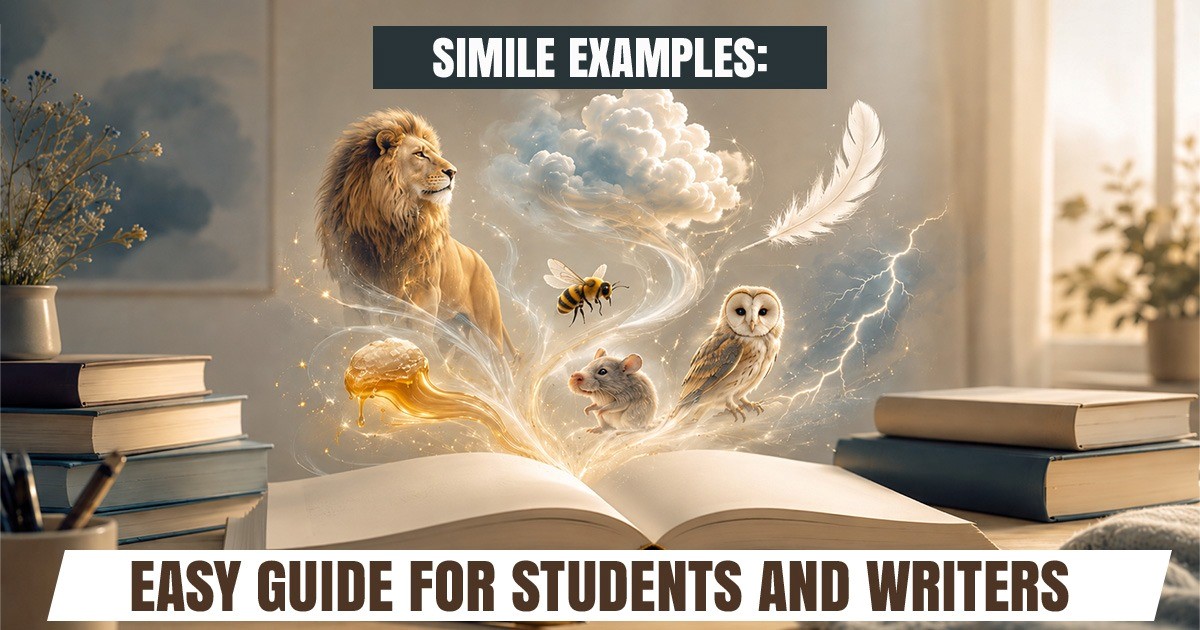
- As brave as a lion.
- As busy as a bee.
- As quiet as a mouse.
- As light as a feather.
- As cold as ice.
- As soft as cotton.
- As tall as a tree.
- As gentle as a lamb.
- As happy as a clam.
- As quick as lightning.
- Slept like a baby.
- Ran like the wind.
- Shined like a star.
- Cried like a baby.
- Floated like a feather.
These simple comparisons are useful for essays, creative writing exercises, speeches, and reading activities. They also encourage students to think beyond plain descriptions by connecting ideas to familiar objects or experiences.
Everyday Simile Examples
Many similes are so common that people use them in conversations without realizing they’re figures of speech. Here are some familiar examples of similes you may hear every day:
- As blind as a bat.
- As cool as a cucumber.
- As white as snow.
- As hungry as a wolf.
- As stubborn as a mule.
- As free as a bird.
- As fresh as a daisy.
- As smooth as silk.
- As slippery as an eel.
- As strong as an ox.
- Fit like a glove.
- Spread like wildfire.
- Sparkled like diamonds.
- Fell like rain.
- Sang like an angel.
These expressions have stood the test of time because they’re simple, memorable, and instantly understandable. Incorporating them thoughtfully can make your writing sound more natural while helping readers visualize exactly what you mean.
How to Write Strong Similes That Improve Your Writing
Learning the simile meaning is only the beginning. The real skill lies in creating comparisons that feel natural, support your message, and leave a lasting impression on the reader. While common similes are helpful for practice, developing your own comparisons can make your writing feel more original and engaging.
Here are a few practical tips for writing effective similes:
Choose Familiar Comparisons
A good simile compares something unfamiliar to something your readers already recognize. The easier it is to picture the comparison, the stronger the impact.
Instead of writing:
The room was nice.
Try:
The room was as peaceful as a quiet library.
The second sentence creates a clearer image without adding unnecessary complexity.
Avoid Overused Clichés
Classic similes like “as busy as a bee” or “as cold as ice” are widely recognized, but relying on them too often can make writing feel predictable. Once you’re comfortable using common examples of similes, challenge yourself to create fresh comparisons inspired by real-life experiences.
For instance:
- The leaves danced like tiny green boats on a stream.
- Her excitement bubbled like water in a boiling kettle.
- The city lights shimmered like scattered stars across the ground.
Original comparisons help your writing stand out while keeping readers interested.
Match the Tone of Your Writing
A simile should fit naturally within the mood of your piece. A humorous comparison may work well in a lighthearted story but feel out of place in a serious essay.
For example:
- The classroom was as silent as an empty theater. (Serious)
- My backpack felt as heavy as a mountain after school. (Casual and relatable)
Choosing the right comparison strengthens the overall flow of your writing.
Practice Creating Your Own Similes
One of the best ways to improve is through regular practice. Pick an object, emotion, or place and describe it using “like” or “as.”
For example, try completing these prompts:
The sunset was as __________ as __________.
My best friend laughs like __________.
The rain sounded like __________.
Simple exercises like these help you move beyond memorizing simile examples for students and begin using figurative language naturally in your own writing.
Before wrapping up, readers who enjoy exploring writing techniques and literary topics can also find helpful articles on America Publishers Author Spotlight, where subjects like storytelling, language, books, and the writing process are discussed in an informative and reader-focused way.
Frequently Asked Question
-
What is a simile in simple words?
A simile is a figure of speech that compares two different things using the words “like” or “as.” It helps readers visualize an idea by relating it to something familiar, making descriptions more vivid and easier to understand.
-
What are some simple simile examples for beginners?
Some easy simile examples for students include:
- As brave as a lion.
- As light as a feather.
- As busy as a bee.
- Slept like a baby.
- Ran like the wind.
These examples are commonly taught because they’re easy to remember and demonstrate how similes work.
-
Why do writers use similes?
Writers use similes to create stronger imagery, express emotions more clearly, and make descriptions easier for readers to imagine. Whether in stories, poems, essays, or speeches, similes help transform ordinary writing into something more engaging and memorable.
Conclusion
Similes are more than just a classroom lesson, they’re a simple yet effective way to make writing more descriptive, engaging, and memorable. By understanding how they work and practicing your own comparisons, you can add depth to everything from school assignments to creative stories and everyday communication.
Whether you’re learning figurative language for the first time or looking to strengthen your writing skills, using thoughtful similes can help readers picture your ideas more clearly. The more you read and write, the easier it becomes to recognize strong comparisons and create your own with confidence.
