

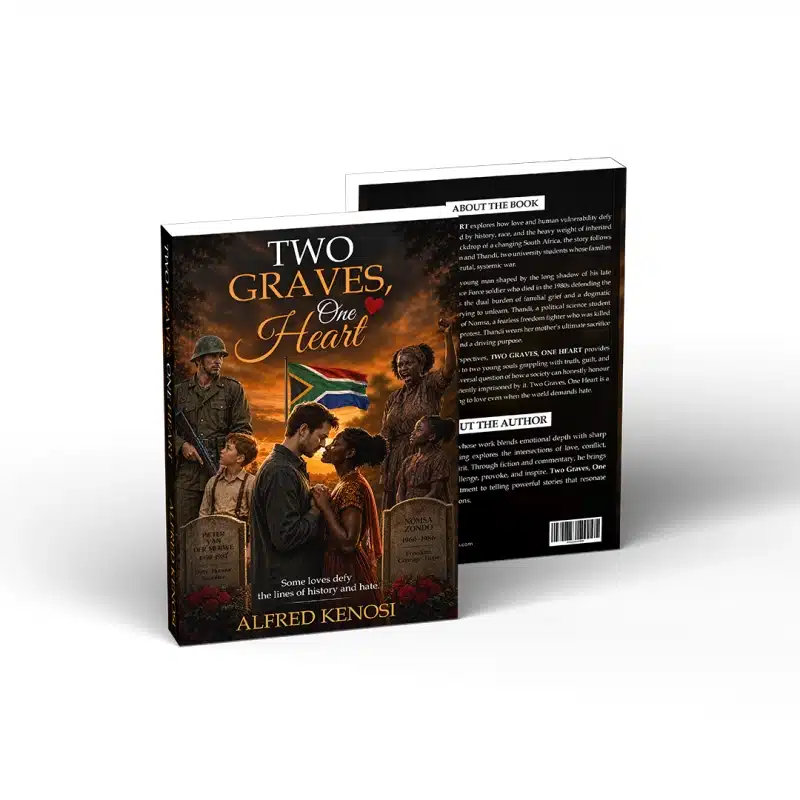
A love story shaped by family loss, racial division, and the lasting influence of history is now available to readers with the publication of Two Graves, One Heart: Some Loves Defy the Lines of History and Hate by Alfred Kenosi. Published on September 17, 2026, and available on Amazon, the novel follows Braam and Thandi, two young people whose relationship brings them face to face with the histories their families have passed down. With global availability coming soon, the book introduces a narrative concerned with how people remember the past, question inherited beliefs, and make room for connection across difficult divides.
The publication marks a milestone in sharing Kenosi’s work with readers. At the center of the novel is a relationship that develops under the pressure of experiences neither character can simply leave behind. Braam and Thandi must navigate their feelings for one another alongside grief, family expectations, and opposing accounts of South Africa’s past. Their story gives the release its defining focus: the possibility of building a shared future while acknowledging the painful circumstances that shaped each person’s life.
Alfred Kenosi’s author biography describes a writer interested in the intersections of love, conflict, identity, and the human spirit. His work brings emotional experiences into contact with social questions, exploring how private lives are influenced by the communities and histories around them. In Two Graves, One Heart: Some Loves Defy the Lines of History and Hate, that perspective takes shape through characters whose relationship asks them to reconsider assumptions they have carried into adulthood. The novel provides an introduction to his storytelling through its attention to both personal attachment and the wider forces that complicate it.
The book’s preface establishes South Africa’s apartheid history and its continuing consequences as central to the narrative. Braam carries the loss of a father who died defending apartheid, together with the difficult inheritance of the beliefs associated with that history. Thandi carries the memory of a mother who fought against oppression. These contrasting family legacies influence how the characters understand loyalty, sacrifice, and belonging. When their lives intersect, their attraction creates questions about what it means to honor a parent while examining the ideas and actions connected to that parent’s life.
For Braam, the relationship brings inherited beliefs into contact with experiences that challenge them. For Thandi, connection develops alongside the weight of loss and a family history rooted in resistance. Their experiences are distinct, and the novel places those differences within the unequal conditions created by apartheid. As they come to know one another, their relationship requires a willingness to listen, confront discomfort, and recognize how deeply the past can influence expectations in the present.
Readers of Two Graves, One Heart will encounter a story in which romance develops through conversations, uncertainty, and the gradual work of understanding. Braam and Thandi’s connection is tested by cultural differences, family responses, and the narratives each has inherited. The novel moves between their perspectives, allowing readers to follow the internal questions that accompany their outward decisions. This approach gives space to the fears, hopes, and conflicting loyalties that shape their relationship, making the process of growing closer an important part of the story.
Grief is woven into that process. The absence of their parents remains significant to how both characters understand themselves and their place in the world. Remembering becomes complicated when personal love for a family member exists alongside difficult questions about history. Through these tensions, the novel explores how loss can preserve certain beliefs, deepen emotional boundaries, and make change feel like a challenge to loyalty. Braam and Thandi’s developing relationship brings those feelings into the open, where they must begin deciding what to carry forward.
The influence of inherited prejudice also gives the book a broader social dimension. Political change can alter institutions while leaving assumptions embedded in families, relationships, and everyday encounters. Within the fictional world of the novel, these lingering divisions affect who feels welcome, whose experiences are understood, and which relationships meet resistance. Kenosi places those questions within the lives of two people trying to know one another, giving readers a personal way to engage with the distance between public transformation and private attitudes.
The title, Two Graves, One Heart, reflects the relationship between remembrance and connection that runs through the narrative. The characters’ family losses remain part of their lives even as they begin imagining a future together. Their journey raises questions about whether remembering must preserve division, and how people might acknowledge different histories without becoming confined by them. These questions develop through the characters’ experiences, keeping the novel’s emotional focus on the choices they face and the relationships those choices affect.
Alongside love and loss, the story explores identity and belonging. Braam and Thandi must consider how much of their understanding of themselves comes from inherited accounts and how much they are willing to examine independently. Their relationship creates situations in which familiar expectations become uncertain. As family and community pressures enter the narrative, belonging becomes something they must negotiate through decisions about loyalty, openness, and the kind of life they hope to build.
Reconciliation emerges as an ongoing process within that journey. The novel gives attention to the conversations and changes in understanding that make connection possible. Its characters must confront painful knowledge, reconsider familiar positions, and learn how to remain present when another person’s experience unsettles their own. Readers may find these moments relevant to broader questions about family conflict, cultural difference, and the effort required to build trust. The story’s South African context remains central, while its exploration of human relationships offers points of connection for readers from other backgrounds.
For readers interested in fiction about interracial relationships, family legacies, and the aftermath of apartheid, Two Graves, One Heart brings these subjects together through a sustained focus on Braam and Thandi. Its appeal also extends to those drawn to stories about grief, difficult conversations, and the possibility of changing inherited patterns. The novel invites reflection through its characters and their circumstances, allowing readers to consider the meaning of their choices without assuming that every reader will reach the same conclusions.
Published on September 17, 2026, Two Graves, One Heart is available on Amazon and will soon be available through booksellers around the world. The planned expansion will give more readers access to Alfred Kenosi’s novel.
America Publishers congratulates Alfred Kenosi on the publication of Two Graves, One Heart. Bringing this story into publication marks an occasion to recognize the work behind its portrayal of love, inherited history, and the challenges of reconciliation. Through Braam and Thandi, Kenosi introduces readers to a relationship shaped by personal loss and larger social divisions, while keeping attention on the decisions that can open a different path forward.
As the novel prepares to reach more readers around the world, its central questions remain rooted in the lives of its characters: how to remember honestly, how to examine beliefs formed before one’s own choices began, and how to build trust across painful differences. America Publishers welcomes this publication milestone and wishes Alfred Kenosi continued progress as Two Graves, One Heart reaches readers through new bookselling channels.
Where to Find the Book
Two Graves, One Heart by Alfred Kenosi | Available on Amazon.
🔗 For Amazon: Click here