
Dr. Mark Snyder

Featured Voice of the Week – Dr. Mark Snyder

Dr. Mark Snyder and the Faith Behind A Second Chance

Dr. Mark W. Snyder spent years teaching theology and guiding families through difficult moments before he sat down to write about a crisis in his own life. The story began during an ordinary workday, when symptoms he expected to pass became a life-threatening cardiac emergency. In the hours that followed, he and his wife faced a question neither could answer. Would he survive?

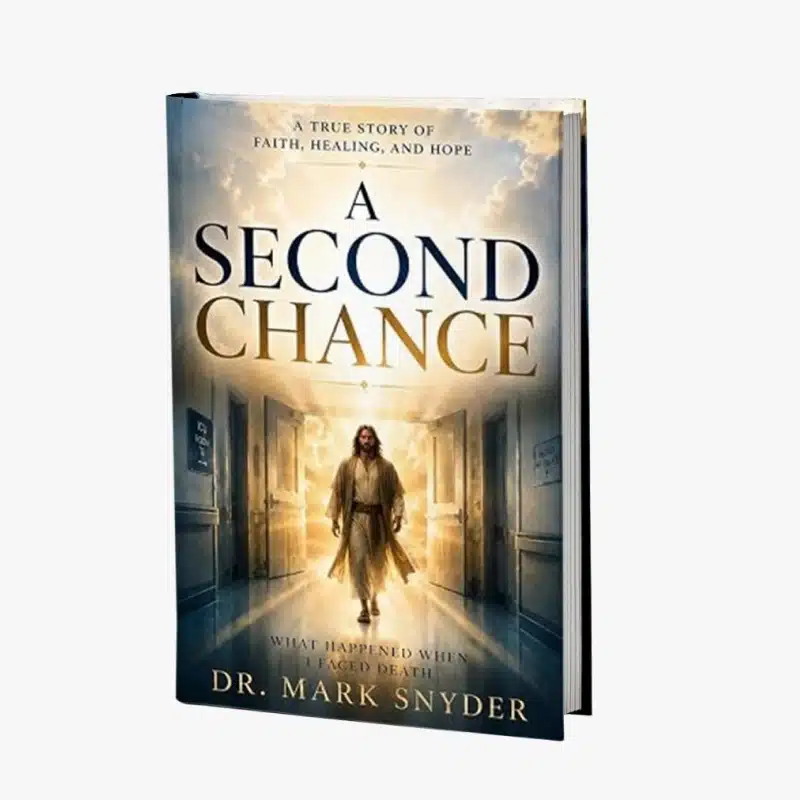
Dr. Mark Snyder’s book, A Second Chance, grew out of that experience. As an author, he takes readers back to the day as he remembers it, beginning with the headache and dizzy spells he tried to explain away. He also writes about the emergency treatment that followed, the prayers offered during those uncertain hours, and a spiritual encounter that changed how he understood the life ahead of him.

What makes this story personal to Snyder is the history he brought to it. A husband, father, speaker, and theologian, he had long considered what it means to trust God through circumstances a person cannot control. Writing about his own emergency required him to speak from a different position. He was the person receiving care, his wife was living through the uncertainty alongside him, and the outcome was still unknown.

The Theologian Before the Author

Snyder’s doctorate is in theology, a background that helps explain the questions he brings to his first book. His years of teaching and guiding families gave him experience talking about faith in circumstances that carried real consequences for the people in front of him. Those conversations are part of the background to A Second Chance. By the time he became a published author, he had spent much of his working life considering what Christian belief means when people are frightened or unsure what comes next.

The memoir puts Snyder on the other side of that conversation. As a teacher or speaker, he could consider how to explain an idea to someone else. As a patient, he had to wait while doctors attended to an emergency, he could neither resolve nor predict. As a husband, he knew the consequences of that uncertainty extended beyond him.

That shift gives the author’s background a purpose in the story. Theology supplies the language Snyder uses to interpret what happened, while his experience gives readers a concrete situation in which to understand that language. When he writes about trusting God, readers know what was at stake for him and how little he could do to change it.

The Workday That Changed His Life

Dr. Mark Snyder had a lingering headache, spells of dizziness, and a racing heart. At first, he thought heat, exhaustion, or dehydration might explain his symptoms and expected them to pass. Within hours, he needed emergency care.

By Snyder’s account, his heart rate climbed to nearly 300 beats per minute. Doctors intervened urgently, and his treatment included repeated defibrillation. The move from trying to make sense of symptoms at work to relying on an emergency team gives this part of his story its pace. Decisions that had seemed like his to make gave way to a situation in which he depended on the people treating him.

That sequence also helps explain the perspective Snyder brings to the page. The author knows he survived, while the man he is writing about still has to get through each uncertain moment. Returning to that earlier point of view gives readers room to understand his fear before they hear what he came to believe about the experience.

In A Second Chance: What Happened When I Faced Death, Dr. Mark Snyder recounts the emergency and reflects on how it changed the way he understood his life. The Christian memoir follows him from the early symptoms through urgent treatment and into his account of a deeply personal spiritual encounter. The subtitle identifies the moment that prompted the book, and the story that follows shows what Snyder made of the opportunity to keep living.

The medical events give the memoir its sequence. Snyder’s Christian faith shapes the meaning he draws from them. He describes the treatment he received and shares how he understood God’s presence during a period when he and his wife had little certainty about what would happen. Readers encounter both elements through Snyder’s perspective as the person who lived through the crisis and later chose to write about it.

The book also marks a change in how Snyder shares his faith. Teaching and speaking gave him ways to address an audience directly. Writing a personal testimony meant putting his own vulnerability on the page and allowing readers to spend time with it. His first book asks them to consider what survival meant to him, including why it changed how he thought about an ordinary day.

Prayer in the Midst of Uncertainty

Prayer is part of Snyder’s account of the emergency. He recalls the care he received and describes what it meant to trust God while he and his wife were still uncertain about what would happen.

Snyder describes God’s presence as something he and his wife relied on through the ordeal. That understanding belongs to his account of what happened. By sharing it in the first person, he shows readers how his faith shaped the way he faced those hours and how he later came to speak about them. The question of what would happen next remained open even as he drew comfort from what he believed.

For an author with a background in theology, this is where the memoir becomes particularly personal. Snyder has to tell readers what trust meant when he needed it himself. He reflects on what it meant to depend on others for care while drawing on his faith. It was also a night his wife lived through alongside him, and her place in the story gives the experience a dimension that extends beyond his account as a patient.

A Crisis He and His Wife Lived Through Together

In A Second Chance, Snyder also writes about what the emergency meant for him and his wife as a couple. He was the one receiving treatment, but both had to live through the uncertainty about whether he would survive. Snyder describes the night as something they endured together, even though what each faced was different. That distinction matters in a memoir told from a patient’s perspective. The events happen to him physically, and their consequences reach into a life he shares with someone else.

Snyder writes about God’s presence as something that carried them both through the ordeal. His wife’s place in the book helps readers understand why that part of his testimony is expressed in terms of what they went through together. The account is his to tell, and he can speak most directly about his own fear, faith, and experience of treatment. Including his wife makes room for the person whose future was also at stake that night.

For readers who have supported someone through a health crisis, that part of Snyder’s story may feel familiar. A diagnosis or an emergency can be described in terms of what happens to one person. The uncertainty reaches everyone whose daily life is bound up with theirs.

How Survival Changed His View of Everyday Life

The contrast between the beginning of Snyder’s story and the perspective he brings to it afterward is striking. The day started with familiar work and discomfort that he expected to pass. By the time he could look back on it, the fact that it had begun so ordinarily was part of what gave the experience its force. He had gone into the day assuming there would be another one. After the emergency, that assumption carried a different weight.

Snyder describes the time that followed as something to receive with gratitude and use with purpose. Those ideas are closely related in his Christian memoir. Gratitude concerns the opportunity to keep living. Purpose concerns what he might do with that opportunity. Writing the book became one concrete way for him to act on the change he describes.

This gives A Second Chance: What Happened When I Faced Death a subject beyond what happened in the emergency room. Snyder is also trying to explain how a brief period of his life changed his relationship to the days that followed. The book’s emphasis on ordinary life comes from that contrast. A workday was where the crisis began, and everyday life was also what he had the chance to return to.

Turning a Private Experience into a First Book

Snyder had experience teaching and speaking before he published his first book. Writing A Second Chance called for a different kind of communication. A speaker can respond to the people in front of him. A memoirist has to give readers enough context to understand a moment they enter only through the page. For Snyder, that meant bringing readers into the progression of the emergency and giving them time to understand what he made of it.

The decision to write a personal testimony also meant sharing details that made him vulnerable. He begins with symptoms he hoped would go away, then describes how urgently he needed help. That sequence allows readers to see his uncertainty as it developed. By the time he reflects on faith or purpose, those ideas have a specific event behind them and a person whose response the reader can follow.

The book’s first-person form suits the kind of story Snyder wanted to share. He can describe what he remembers, what he believed at the time, and how he came to interpret it afterward. His experience as a teacher gives readers context for the questions he takes up. His willingness to recount the experience as a patient is what makes those questions personal.

Who Might Find Hope in Dr. Mark Snyder’s Story

Readers drawn to Christian memoirs about faith and survival will find a first-person account of what it was like for Snyder to depend on others for care and draw on his beliefs at the same time. The book also gives those who know him as a speaker a way to see how he approaches faith when the subject is a difficult experience from his own life.

For someone supporting a loved one through a health crisis, the account may resonate for a different reason. Snyder’s inclusion of his wife acknowledges the uncertainty that belongs to the people close to a patient. Their experience has its own questions, especially when they have to wait for answers and have little influence over what happens next.

Some readers will come to the book through its Christian testimony. Others may be drawn to the question it raises about life after a frightening event. How does a person carry a new sense of gratitude into familiar routines once those routines resume? Snyder’s answer grows out of his belief that each day is a gift from God. The memoir gives that belief a specific context by showing readers what made it newly consequential to him.

Where to Find A Second Chance.

🔗 For Amazon Kindle: Click here

🔗 For Google Books: Click here

🔗 For eBay: Click here

🔗 For Hoopla: Click here

🔗 For Bookshop.org: Click here

🔗 For IBS: Click here

🔗 For Feltrinelli: Click here

🔗 For Goodreads: Click here

Dr. Mark Snyder and the Message He Carries Forward

Through A Second Chance: What Happened When I Faced Death, Dr. Mark Snyder gives readers a direct way to encounter the beliefs that inform his work as a teacher and speaker. His first book brings that part of his life together with a story that also involves him as a husband and patient. Those roles shape what he can tell us about the night. He writes from inside the emergency and with the perspective of someone who has had time to reflect on it.

The message Snyder carries forward is rooted in his conviction that God was present through the crisis. In his telling, that conviction reaches into life after the emergency. It informs the gratitude with which he approaches another day and the purpose he finds in sharing what happened. Publishing the memoir makes that account available to people who may never hear him speak in person.

Snyder starts his story with a man getting through a workday, unaware of how quickly it could change. When readers return to that opening in light of the rest of the book, the workday has a significance it could only acquire afterward. It helps explain why Snyder measures his second chance in something as familiar as having another day ahead of him.

Learn more about Dr. Mark Snyder and his memoir, A Second Chance: What Happened When I Faced Death.

🔗 For the Official Author Website: Click here