
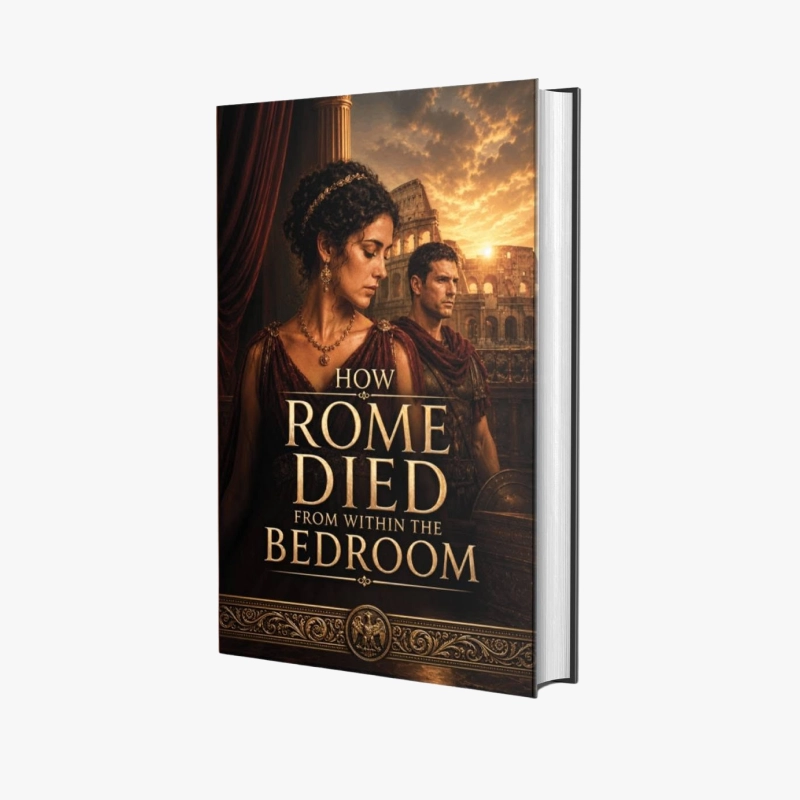
Featured Voice of the Week: Dr. Mark Ming

Beyond the Empire’s Glory: How Rome Died From Within the Bedroom Reveals a World of Power, Ambition, Desire, and Private Influence

Featured Voice of the Week | Author Spotlight by America Publishers

History remembers Rome for its extraordinary military conquests, powerful emperors, magnificent architecture, and political influence. But behind the empire’s celebrated achievements existed another world, shaped by personal relationships, competing ambitions, private desires, and the complicated decisions of influential individuals.

What if some of Rome’s greatest struggles unfolded far from the battlefield?

This week, Author Spotlight by America Publishers proudly recognizes Dr. Mark Ming as our Featured Voice of the Week, celebrating his publication, How Rome Died From Within the Bedroom.

Through an intriguing exploration of ancient Roman power, Dr. Ming invites readers to examine the personal influences and relationships that existed alongside the empire’s public authority.

His book encourages a closer examination of familiar historical figures while raising compelling questions about the connections between private lives and public decisions.

For readers fascinated by ancient civilizations, political ambition, and the human dimensions of history, Dr. Ming presents a perspective worth exploring.

Beyond Rome’s Monuments: The History Behind the Public Image

Ancient Rome’s historical legacy is often presented through its military achievements, political institutions, architectural landmarks, and influential rulers.

From the grandeur of the Colosseum to the authority exercised by emperors, Rome’s public achievements continue to define how many people understand the civilization.

Yet the personal lives of powerful individuals form another dimension of historical inquiry.

In How Rome Died From Within the Bedroom, Dr. Ming shifts attention toward the private relationships, rivalries, and ambitions surrounding Roman authority.

His book’s central premise encourages readers to consider how personal motivations could intersect with political decisions and the exercise of power.

The distinction matters because history involves individuals whose personal circumstances existed alongside their public responsibilities.

Behind official titles and political influence were people navigating loyalty, desire, competition, and complicated relationships.

Dr. Ming’s examination brings these human dimensions into focus.

Power, Desire, and Persuasion: The Private Forces Behind Authority

What happens when personal ambition becomes entangled with political power?

This question provides an important foundation for the themes explored throughout Dr. Ming’s book.

Power rarely operates without relationships. Individuals occupying influential positions encounter advisers, allies, rivals, and others whose interests may affect their decisions.

In ancient Rome, personal connections could carry considerable political significance.

Through the themes of ambition, desire, persuasion, and secrecy, the book invites readers to consider how private motivations might influence public authority.

Ambition can encourage individuals to pursue greater influence. Persuasion can affect alliances and decisions. Personal relationships can create connections, obligations, and rivalries that extend beyond private circumstances.

These possibilities raise questions about the relationship between personal conduct and political responsibility.

Rather than approaching Roman history exclusively through military victories or governmental institutions, Dr. Ming focuses on the complicated human experiences surrounding power.

His work invites readers to examine what may exist behind the formal image of authority.

Six Historical Figures, One Empire, and Complicated Human Relationships

Among the prominent historical figures associated with How Rome Died From Within the Bedroom are Julius Caesar, Cleopatra, Augustus, Claudius, Nero, and Caligula.

Their names are familiar to readers interested in Roman civilization, yet their historical circumstances and relationships remain subjects of continuing discussion.

Julius Caesar’s political ambitions and relationship with Cleopatra offer one recognizable example of how personal connections can intersect with questions of authority.

Augustus represents another significant chapter in Rome’s political development, while Claudius, Nero, and Caligula remain associated with different dimensions of imperial leadership.

Dr. Ming brings these figures together through a central interest in the private influences surrounding Roman power.

The book encourages readers to look beyond titles and reputations, considering the personal motivations, relationships, and rivalries connected with these historical individuals.

Knowing an emperor’s name is only the beginning of understanding the world in which that emperor lived.

This approach gives readers an opportunity to revisit familiar Roman figures through a different perspective.

Could Rome’s Greatest Threats Have Come From Within?

The title How Rome Died From Within the Bedroom introduces a provocative question about the relationship between an empire’s internal dynamics and its public strength.

Rome faced military threats, political conflicts, economic pressures, and institutional challenges throughout its long history.

Its decline cannot be explained by one influence alone.

However, Dr. Ming’s book explores the idea that personal ambition, indulgence, rivalry, and manipulation could become entangled with the responsibilities of those holding power.

The bedroom serves as a striking representation of private life, drawing attention to relationships and motivations that may remain less visible in accounts dominated by wars and political institutions.

The central question is compelling: How might an empire be affected when personal interests begin competing with public responsibilities?

Through this perspective, the book encourages discussion about the vulnerabilities that can exist within powerful institutions.

It also invites readers to consider the difference between an empire’s outward appearance of strength and the complicated human relationships operating within it.

Meet Dr. Mark Ming: The Author Behind the Perspective

Dr. Mark Ming brings a multidisciplinary personal and professional background to his writing career.

Based in San Antonio, Texas, he is a pastor, business owner, and published author whose work spans ministry, education, financial services, and community involvement.

According to his autobiography, Dr. Ming has accumulated 44 years of ministry experience and currently serves as Senior Pastor of The UpperRoom Pentecostal Powerhouse Church of God.

He also owns M&M Tax Law & Paralegal Services, where his professional responsibilities include tax preparation, accounting, financial documentation, and paralegal support.

His academic background encompasses multiple disciplines, reflecting a sustained commitment to learning.

Dr. Ming previously published When Pulling the Covers Off Is Not Enough.

His latest publication extends his authorship into an exploration of ancient Rome’s personal and political dynamics.

Readers can follow Dr. Mark Ming on Facebook and Instagram for updates about his work.

Why How Rome Died From Within the Bedroom Deserves a Closer Look

For readers interested in ancient Rome, Dr. Ming’s publication introduces an opportunity to examine historical power through the lens of personal influence.

Its themes extend beyond the familiar subjects of military conquests, imperial expansion, and political administration.

Instead, the book raises questions about relationships, competing interests, and the human motivations surrounding leadership.

Readers who enjoy historically themed books about influential figures, political rivalries, and the private dimensions of authority may find its central premise especially engaging.

The discussion also offers opportunities for reflection on how personal ambitions can complicate public responsibilities.

Ultimately, How Rome Died From Within the Bedroom invites readers to examine a familiar empire from a less familiar angle.

Rome’s public history is well known. Its private world offers another set of questions worth exploring.

Author Spotlight Celebrates Dr. Mark Ming as Featured Voice of the Week

Author Spotlight by America Publishers extends its congratulations to Dr. Mark Ming on his recognition as our Featured Voice of the Week.

His latest publication contributes a distinctive perspective to discussions of ancient Rome by bringing attention to the personal relationships, rivalries, and ambitions surrounding imperial power.

Through this editorial recognition, Author Spotlight by America Publishers celebrates Dr. Ming’s continuing journey as a published author and introduces his work to readers interested in history, literature, and the complicated nature of human influence.

His book offers a reminder that understanding historical power requires examining the individuals involved, the choices they confronted, and the relationships surrounding their authority.

Congratulations, Dr. Mark Ming, on your latest publication and your Featured Voice of the Week recognition!

Discover How Rome Died From Within the Bedroom

Interested in exploring the private world behind ancient Rome’s public image of power?

Discover How Rome Died From Within the Bedroom through its official book listings:

The Book is Available on Amazon

The Book is Available on Barnes & Noble

Visit the Book Listing on Google Books