
Featured Voice of the Week – Dr. Paul K Mears

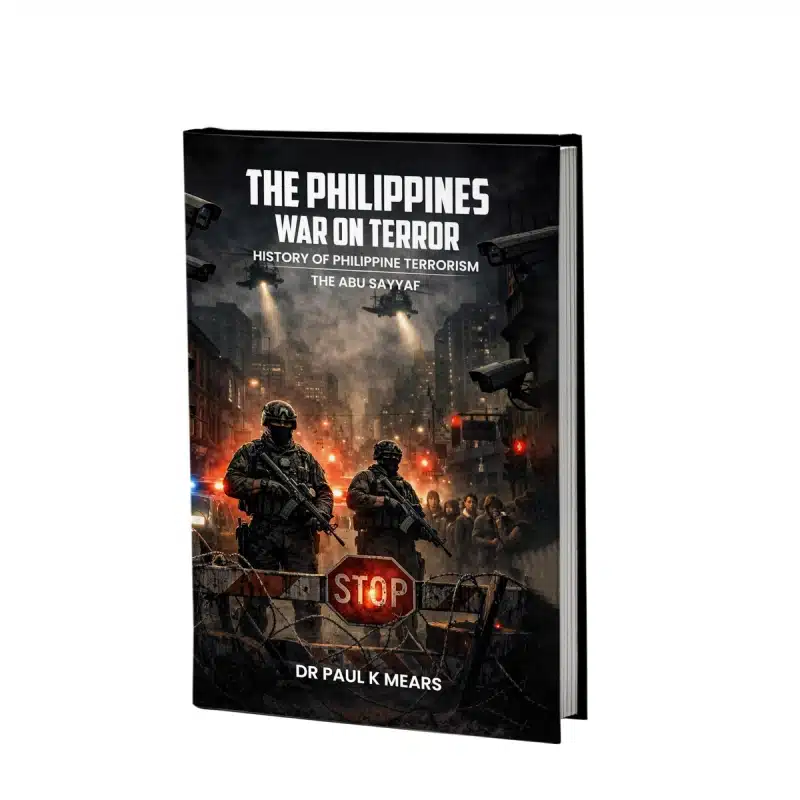
America Publishers Author Spotlight presents Dr. Paul K Mears as an October 2026 Featured Voice of the Week, recognizing an author whose work examines terrorism, security, and the historical forces that have shaped conflict in the southern Philippines. We congratulate him on this feature and welcome the opportunity to bring the perspective behind The Philippines War On Terror: History Of Philippine Terrorism to a wider readership.

At the center of this selection is a subject that demands patient attention. Understanding conflict involves examining its origins, the organizations involved, their changing relationships, and the consequences for communities caught within it. Dr. Mears’s book brings these interconnected questions into one historical discussion.

For America Publishers Author Spotlight, this week’s recognition highlights the value of nonfiction that encourages readers to look beyond the immediate event. His work offers an entry point into a complex subject, inviting attention to the developments preceding a crisis and the difficult questions that remain when military operations have ended.

Why This Voice, Why This Subject?

Terrorism often reaches public attention through a single incident. A city comes under attack, an organization claims responsibility, or a government announces an operation. Each development matters, but its immediate coverage can leave readers with an incomplete understanding of the conditions surrounding it.

The southern Philippines illustrates the need for a broader perspective. Questions of identity, political representation, armed resistance, extremist influence, and government response intersect across its history. Understanding terrorism in Mindanao requires attention to those relationships, alongside the differences between movements and the changes occurring within them.

Dr. Paul K Mears addresses this need through a chronological examination of Philippine terrorism and conflict. The scope of his work allows readers to consider how local struggles became connected with international extremist networks, how organizations adapted, and how criminal financing entered the security landscape.

These questions have relevance beyond specialists. They influence how readers interpret news, understand policy decisions, and assess the relationship between security and public life. Historical context can also help prevent an entire region or population from being understood only through its most violent episodes.

This is why America Publishers Author Spotlight is highlighting his voice. The subject calls for sustained discussion, and his book creates an opportunity to explore developments that isolated headlines cannot adequately explain.

Dr. Paul K Mears brings a background spanning military service, law enforcement, security training, and teaching to his writing. His professional experience includes service in the U.S. Army and Coast Guard, followed by work across corrections, investigative assignments, emergency response, and aviation security.

That range of experience provides a relevant foundation for his interest in how threats develop and how institutions respond. Security work involves decisions about preparation, coordination, risk, and the protection of people. These concerns connect with the questions explored in The Philippines War On Terror, where government responses form part of a wider historical account.

His career has also included training police and special operations personnel in the United Arab Emirates, alongside academic work in global security studies. Teaching brings another dimension to this background: the task of making complex security issues understandable to others.

As an author, Dr. Mears carries these professional interests into nonfiction. His focus on Philippine terrorism brings his engagement with security and counterterrorism into a public discussion shaped by history, institutional choices, and the experiences of affected communities.

The Philippines War On Terror: History Of Philippine Terrorism examines the development of terrorism and armed conflict in the southern Philippines. Its scope moves from the foundations of resistance in Mindanao through the emergence of Moro movements, including the Moro National Liberation Front and Moro Islamic Liberation Front, and the later rise of Abu Sayyaf.

The book follows connections between local conflict and international militant networks, including Al-Qaeda and Jemaah Islamiyah. It also examines organizational and ideological changes, alongside ransom operations, weapons acquisition, and other sources of financing. Together, these themes invite readers to consider how armed groups sustain themselves and how their priorities can change.

A major focus is ISIS-linked militancy, the Maute Group, and the 2017 Siege of Marawi. The discussion encompasses the military campaign, civilian consequences, and the wider effects on Mindanao. Government counterterrorism measures, including Martial Law, introduce further questions about the relationship between security responses, legal challenges, and the human costs of conflict.

The book’s scope extends to reconstruction, governance, economic recovery, inclusion, and peace. This gives the feature a broader purpose than drawing attention to a history of armed organizations. It opens a discussion about the societies in which conflict develops and the work involved in rebuilding them.

That breadth supports Dr. Mears’s selection as Featured Voice of the Week. His chosen subject connects historical developments with questions that remain significant for readers: how violence evolves, how governments respond, and how communities pursue stability.

A historical approach requires careful distinctions. Moro movements, separatist struggles, and extremist organizations cannot be treated as interchangeable. Their inclusion within the same account makes it necessary to examine differences in political objectives, organizational development, and relationships with other actors.

Those distinctions matter because broad labels can obscure more than they explain. Readers need room to understand how particular groups emerged, what changed over time, and where local concerns intersected with wider ideological influences. A chronological framework provides a way to follow those developments without reducing the history to a list of incidents.

Mindanao also needs to remain visible as a place where people live, work, and build communities. Studying its conflicts should deepen understanding of the region, including the civilian experiences and questions of governance that form part of the book’s scope.

Through its historical analysis of Philippine terrorism, Dr. Mears’s work invites readers to consider events in relation to what preceded them. That perspective provides a foundation for examining the changing security landscape and the difficult relationship between confronting violence and building lasting peace.

Security threats change over time. Organizations develop new alliances, adopt different tactics, seek sources of funding, and adjust their ideological positions. Following those changes is essential to understanding how a conflict evolves and why government responses must contend with more than one kind of threat.

In The Philippines War On Terror, Dr. Paul K Mears examines this changing landscape through the rise of Abu Sayyaf, connections with international extremist networks, and the emergence of ISIS-linked militancy. His attention to ransom operations, weapons acquisition, and financing adds another dimension to the discussion. An organization’s public identity is only part of the picture; the resources and relationships sustaining its activities also require examination.

The book’s focus on the Maute Group and the 2017 Siege of Marawi brings these questions into a specific historical setting. It allows readers to consider the relationship between local armed groups and wider extremist influences, alongside the challenges facing institutions responding to them.

Reading these developments chronologically encourages a more careful understanding of change. Connections between groups need to be examined without assuming that every organization followed an identical path or pursued the same objectives.

For readers of security and international affairs, this is a significant reason to engage with Dr. Mears’s subject. Understanding an evolving threat requires attention to its history, its practical operations, and the circumstances in which it takes shape.

The subject of Philippine terrorism reaches across several fields of interest. Dr. Mears’s book gives different readers a shared starting point while allowing them to approach its themes through their own questions.

For students, its chronological scope offers a framework for exploring terrorism and armed conflict in Mindanao. Following the emergence of movements, changing relationships, and government responses can help readers place individual events within a longer historical progression. It also creates opportunities for further study of the distinctions between separatism, extremism, and criminal activity.

Readers of international affairs may be drawn to the connections between domestic conflict and networks operating across borders. The book’s coverage of Al-Qaeda, Jemaah Islamiyah, and ISIS-linked groups raises questions about how international influences interact with local organizations and conditions.

For security and criminology readers, the discussion of financing, organizational change, and counterterrorism offers several avenues for consideration. How do armed groups acquire resources? How do their activities change? What challenges arise when governments attempt to disrupt them?

Readers interested in Philippine and Southeast Asian history can approach the book through its treatment of Mindanao and the developments surrounding Marawi. Those concerned with peace and conflict may find particular relevance in its attention to civilians, governance, and reconstruction.

These audiences do not need to arrive at identical conclusions. The value of the book’s broad scope lies in the questions it brings into conversation, encouraging readers to connect their interests with a fuller understanding of conflict and its consequences.

The end of a military operation leaves another set of questions to be addressed. What happens to displaced families? How are damaged communities rebuilt? What conditions allow people to return to work, education, and everyday life with confidence in their future?

These concerns are part of the scope of The Philippines War On Terror. Its attention to civilian consequences and reconstruction extends the discussion into the lives of people affected by prolonged conflict. Readers are invited to consider recovery as a process involving institutions, livelihoods, public services, and community relationships.

Governance becomes especially relevant here. Rebuilding physical structures is one component of recovery, while economic opportunity, social inclusion, and the relationship between communities and authorities introduce further challenges. Lasting stability requires consideration of how these elements interact.

The book’s inclusion of peace gives this week’s feature an essential human dimension. A discussion of terrorism needs space for those who experience its consequences without belonging to an armed organization or directing a government response.

By carrying the subject beyond military action, Dr. Mears creates room for a broader public conversation. Readers can consider both the measures taken to confront violence and the work required to support a viable future for affected communities.

America Publishers Author Spotlight’s selection of Dr. Paul K Mears recognizes the importance of giving demanding subjects a place in public discussion. Terrorism and armed conflict call for careful language, historical context, and attention to the people whose lives are affected.

The perspective behind his book connects an established interest in security with a subject that crosses political, social, and historical boundaries. His professional background helps explain that interest, while the book brings it into a form readers can explore at their own pace.

Our Featured Voice of the Week position provides an opportunity to introduce that work to audiences who may encounter Philippine security issues only occasionally. It invites them to spend more time with the history behind familiar names and events, and to consider questions that immediate coverage can leave unexplored.

The celebration centers on this contribution to the reading conversation. Dr. Mears has chosen to engage with a difficult subject whose significance extends across disciplines and beyond national borders. Highlighting his work encourages discovery, further inquiry, and thoughtful discussion of the relationship between security, civilian life, and peace.

Dr. Paul K Mears: Featured Voice of the Week, October 2026

America Publishers Author Spotlight congratulates Dr. Paul K Mears on his selection as an October 2026 Featured Voice of the Week. Through The Philippines War On Terror: History Of Philippine Terrorism, he brings his interests in security and counterterrorism to a historical discussion with relevance for a wide range of readers.

This feature invites attention to the full scope of that discussion: the development of armed movements, connections with international extremist networks, government responses, civilian consequences, and the continuing challenges of reconstruction and peace.

For readers discovering his work, the book offers an opportunity to explore how these subjects intersect within the history of the southern Philippines. We are pleased to highlight Dr. Mears’s voice and encourage engagement with the questions his work raises about conflict, recovery, and the pursuit of lasting stability.

Follow Dr. Paul K Mears for Further Updates

🔗 Personal Instagram: Click here

The Philippines War On Terror: History Of Philippine Terrorism | Available Now

🔗 Amazon: Click here