
Published November 17, 2026
What does an emperor do when the woman he wants to control is determined to destroy his empire? And what happens when survival demands cooperation with someone she has every reason to distrust?
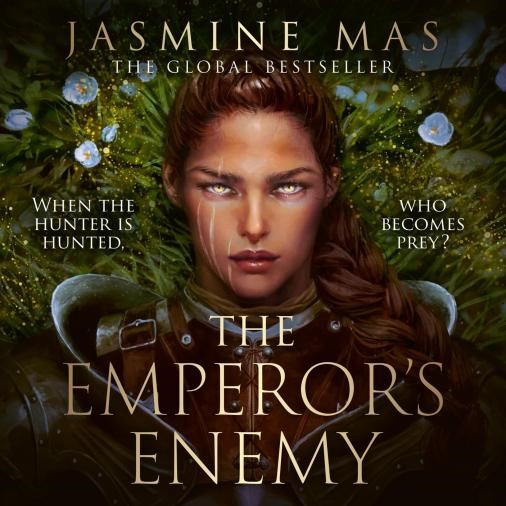
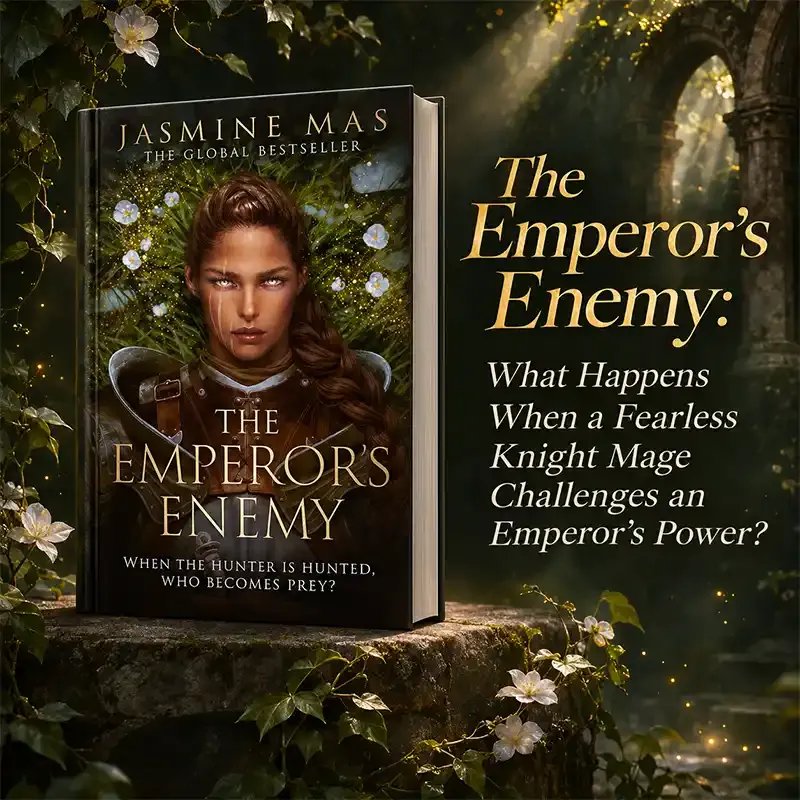
The Emperor’s Enemy by Jasmine Mas builds its dark romantasy premise around those questions. A hunter becomes a military defender, imperial ambition turns personal, and dangerous proximity complicates a conflict already shaped by war. The opening volume of the Unsurvivable Love Duet introduces a heroine whose resistance is central to the story’s appeal. Harlequin identifies the novel as an instant New York Times bestseller.
For readers drawn to dark romantasy novels, the premise raises a question that reaches beyond romantic attraction: how can a person protect her independence when powerful forces are determined to claim it?
What Is The Emperor’s Enemy About?
Zora Ravenal enters the Crimson Army with a clear purpose: to destroy the empire. A hunter shaped by loss, she becomes a Knight Mage defending the Commonwealth against imperial storm magic. Her position places her within a struggle whose consequences extend far beyond her own survival.
The UK publisher introduces her as the Bear of the North and names Aleksander the Sadistic as the emperor and Royal Mage intent on possessing her and crushing the rebellion. It also identifies Tarantula, an exceptionally dangerous assassin serving the empire, as part of the threat surrounding her.
Meanwhile, Harlequin’s description emphasizes Zora’s enforced partnership with a dangerous Royal Mage. Training together and depending on each other for survival place cooperation alongside hostility. The description deliberately leaves important identities and developments unexplained; a spoiler-free The Emperor’s Enemy book summary should preserve those uncertainties.
That combination gives the premise its tension. Working alongside an adversary demands practical decisions before emotional certainty becomes possible. Trust may be necessary in one moment while remaining deeply questionable in the next.
Zora Ravenal: What Does Strength Demand?
Zora’s appeal begins with having an objective of her own. Her struggle gives readers something to consider beyond whether a romantic connection will develop: what might that connection cost someone already committed to a larger cause?
Discussions of powerful female fantasy characters sometimes reduce strength to combat ability. Yet physical skill answers only part of the question. Independence also involves choosing a direction, recognizing manipulation and maintaining convictions under pressure.
Zora’s premise invites that broader reading. Her enemies have reasons to obstruct her, but her own commitments can create difficult demands too. Protecting other people may require decisions that offer little personal comfort.
For readers interested in strong female protagonists in fantasy, this distinction matters. A heroine can possess considerable power and still face circumstances she cannot easily control. The tension lies in how she responds when determination alone cannot remove every obstacle.
Power and Control: Can Authority Command Loyalty?
The opposition between an emperor and a rebel makes control an unavoidable subject. One position depends on maintaining an established order; the other challenges its right to endure.
Read through this lens, The Emperor’s Enemy offers a starting point for examining the difference between obedience and allegiance. A command can produce action without earning belief. Fear can discourage resistance while leaving its underlying causes untouched.
This is one reason fantasy novels about power and control can resonate beyond their invented settings. Their conflicts allow readers to consider familiar questions at an unfamiliar scale. Who gets to define peace? Whose security does a political order protect? What happens when refusing authority becomes a matter of conscience?
The premise cannot answer those questions on its own. It does, however, make them useful points of attention for readers approaching the novel.
Rebellion and Resistance: The Cost of Refusing to Surrender
Rebellion introduces responsibilities that personal rivalry cannot contain. When a character fights on behalf of a community, her decisions carry consequences for people outside the central relationship.
That wider pressure gives fantasy romance with political intrigue its particular appeal. Attraction may complicate a character’s priorities, but the surrounding conflict continues to make demands. A private choice can acquire public significance.
Rebellion and power in fantasy novels also raise an uncomfortable possibility: resisting domination does not guarantee an easy path towards freedom. Opposition requires purpose, but it may also require sacrifice, restraint and the ability to recognize competing obligations.
As an interpretive framework, this helps readers approach Zora’s struggle without assuming that every difficult choice has a clean answer. Her determination matters because the resistance she represents has stakes beyond personal victory.
Enemies to Lovers Fantasy Romance: When Cooperation Cannot Erase Mistrust
Harlequin highlights forced proximity, sarcastic exchanges and a slow-building sexual attraction among the novel’s advertised elements. These establish expectations for readers seeking enemies to lovers fantasy romance, while leaving the eventual direction of the relationship undisclosed.
Among enemies to lovers book tropes, forced cooperation creates a particularly difficult emotional situation. Characters must assess each other while still having reasons to conceal their own intentions. Competence can earn reluctant respect without establishing safety. A moment of vulnerability can invite sympathy without resolving opposing loyalties.
The interesting question is what would have to change for trust to become credible. Shared danger might reveal unexpected qualities, but it does not automatically settle the conflict that made two people enemies.
That distinction gives love and conflict in fantasy literature room to develop together. Emotional interest becomes another pressure on the characters’ decisions, with consequences that deserve scrutiny.
Obsession and Rivalry: Attention Is Not the Same as Trust
Obsession creates suspense because attention can be both compelling and threatening. Being closely observed may mean being understood, but it can also mean becoming easier to manipulate.
When exploring obsession and rivalry in romance, readers can ask whether intense fixation leaves room for another person’s independence. Does it leave room for refusal? Can it accommodate a goal that conflicts with its own? What happens when desire meets a boundary?
These questions are especially relevant to dark fantasy romance themes. Fiction can invite readers into disturbing emotional territory without requiring them to interpret every intense feeling as evidence of a healthy connection.
Here, the imperial pursuit of Zora makes autonomy a useful critical lens. Possession and partnership carry different implications. Any meaningful discussion should preserve that difference rather than allowing the language of romance to resolve it prematurely.
What Message Might Readers Take Away?
The publisher does not assign the novel a single moral. The following possibilities are literary interpretations of its premise, rather than an author-confirmed explanation.
One possible takeaway is that power cannot secure genuine loyalty by itself. Another is that independence requires more than a declaration: it can demand repeated decisions under circumstances designed to make surrender easier.
The premise also invites readers to consider how conflict exposes priorities. A character’s promises may matter less than what they choose when ambition, attachment and responsibility pull in different directions.
Perhaps the most productive question is whether strength can include refusing another person’s definition of your future. Through that reading, courage involves holding onto the capacity to choose, even when the alternatives become increasingly difficult.
Where This Book Fits Among Jasmine Mas Books
Jasmine Mas is a bestselling fantasy romance author whose background includes a Georgetown degree in ancient Greco-Roman classical studies and a previous legal career. Readers exploring Jasmine Mas books may also recognize the Villains of Lore and Cruel Shifterverse series, which appear on her official website.
For anyone considering The Emperor’s Enemy Book 1, the US edition went on sale through MIRA on 15 September 2026, followed by the HarperVoyager UK hardback on 24 September 2026. It begins the Unsurvivable Love Duet.
For readers exploring dark fantasy romance books, the central draw is the collision between a heroine’s determination, imperial ambition and a partnership complicated by mistrust.
Who Gets to Decide the Terms?
An emperor seeks control. A Knight Mage has a cause she refuses to abandon. Between those ambitions lies the possibility of a connection that could complicate every calculation.
The Emperor’s Enemy invites readers to follow that uncertainty into a world where cooperation offers no simple assurance of trust. When resistance becomes personal and attention becomes dangerous, how much freedom can either side afford to give the other?
Discover The Emperor’s Enemy by Jasmine Mas on Harlequin’s official book page and explore the opening volume of the Unsurvivable Love Duet.
🔗 For Jasmine Mas’s Official Website: Click here
🔗 For Harlequin’s Official Book Page: Click here
🔗 For Goodreads: Click here
Source: “The Emperor’s Enemy (Unsurvivable Love Duet, Book 1).” Read more at HarperReach.com.