
Published October 21, 2026 · The Digital Desk, America Publishers
A familiar room can look different after we encounter one like it in a novel. Its furniture acquires associations; a silence between two people becomes harder to overlook. Literature gives us imagined worlds, but it can also return us to our own surroundings with a more attentive eye. What we read may change the questions we ask about experiences we thought we understood.
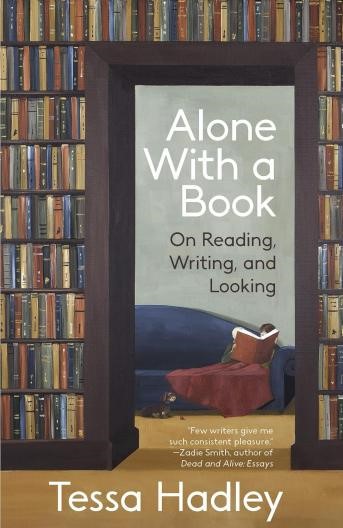
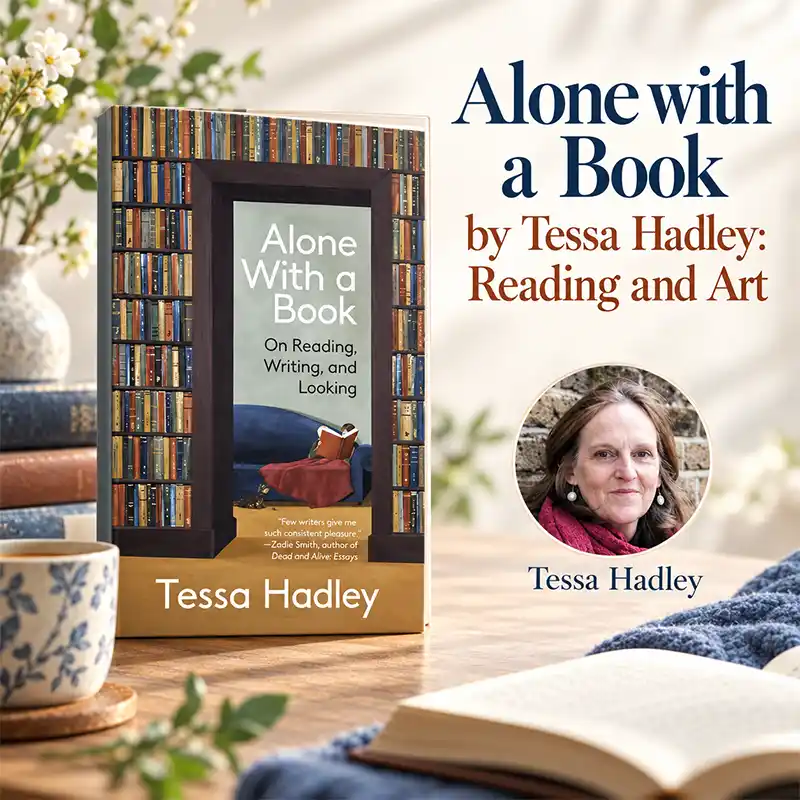
That relationship between books and perception provides the starting point for Alone with a Book: On Reading, Writing, and Looking. In this collection of literary essays, Tessa Hadley considers the books and art that have mattered to her, bringing together the pleasure of reading and the practice of observing ordinary life.
For readers discovering Alone with a Book by Tessa Hadley, the publication dates differ by market. Penguin lists the UK hardback from Jonathan Cape for November 5, 2026, while Penguin Random House lists the 336-page US paperback from Vintage for February 2, 2027. Both editions are forthcoming at the time of writing.
The Pleasure of Reading Begins with Particular Books
Why does one book stay with us while another fades? Sometimes the answer lies in a character, a setting, or a sentence whose effect we cannot immediately explain. Reading is personal in ways that resist a simple ranking of literary merit.
The publisher’s description traces Hadley’s early encounters with Ladybird books, Swallows and Amazons, and The Secret Garden. These childhood touchstones establish a connection between imaginative experience and the textures of everyday living: stories can make familiar surroundings more noticeable.
There is a useful distinction here between finishing a book and spending time with it. The pleasure of reading can involve curiosity about what happens next, but it can also emerge from lingering over a description or returning to an exchange whose implications have shifted.
Reading books deeply need not mean approaching every page as an examination. It can begin with noticing where attention gathers naturally. Which detail feels exact? Why does a seemingly minor scene remain in the mind? Such questions allow enjoyment and literary criticism and analysis to develop together.
Literature and Everyday Life
The connection between literature and everyday life is especially productive because ordinary experience contains so much that passes without explanation. A conversation may conceal competing expectations. A household routine may reveal affection, dependence, or resentment.
Fiction can give these experiences space. Where daily life moves on, a narrative can pause, change perspective, or reveal the distance between what someone says and what they understand.
Consider, as a general example, a character preparing a meal for a visitor. The action itself is unremarkable. Its significance depends on the choices around it: what the host remembers, what remains unsaid, and whether the guest notices the effort. Realistic fiction and storytelling can make such small differences carry emotional weight.
This offers a way into the collection’s stated interest in realism. The ordinary becomes a subject worth sustained attention, with human relationships supplying uncertainty and consequence even when events appear quiet.
Literary Influences and the Questions They Open
Penguin Random House’s description names writers including Jane Austen, Henry James, Elizabeth Bowen, Alice Munro, Colm Tóibín, and Daniyal Mueenuddin. Penguin’s UK description additionally names George Eliot, George Saunders, and Tolstoy, suggesting a broad range of literary influences and inspiration.
Those names offer prospective readers points of recognition. Someone might arrive through an established interest in Austen or Munro and encounter a writer they have yet to explore.
The value of a literary essay, however, extends beyond introducing an author. It can demonstrate how an attentive reader forms a judgment: which features attract notice, what questions arise, and how an interpretation takes shape.
For readers approaching Hadley’s literary essays, this creates an opportunity to consider criticism as an ongoing conversation. Agreement is only one possible response. A persuasive observation can also prompt a return to the original work, where readers may test it against their own experience.
Reading and Writing as Connected Practices
The relationship between reading and writing becomes especially interesting when attention shifts from what a story contains to how it works.
A scene may depend on the timing of a revelation. A character may become convincing through an inconsistency. A description may establish an emotional atmosphere before its significance becomes clear. Looking closely at these decisions connects literary appreciation with questions of craft.
For aspiring writers, close reading and creative writing can therefore inform one another. Reading provides occasions to examine possibilities: how much a scene needs to explain, where a change in perspective belongs, or when an image carries more force than a direct statement.
Together, these questions offer a practical starting point: read closely, notice how a scene works, and consider the choices behind its effects.
Creative writing and observation meet at this point. A writer must select from experience; a reader can investigate what that selection makes visible and what it leaves open.
Literature and Visual Art: Learning to Look Again
The subtitle’s final word, “Looking,” broadens the discussion beyond books. Penguin’s UK description confirms that Hadley also examines a small selection of paintings.
Literature and visual art invite different kinds of attention. Prose develops through sequence, while a painting presents relationships that the viewer explores across its surface. Yet both involve decisions about emphasis, framing, and perspective.
This connection raises a useful question: what directs our attention before we consciously decide what matters? In a narrative, it might be the opening sentence or the choice of narrator. In a painting, it might be a figure’s placement or a contrast in light.
The relationship between reading and imagination includes this active work of perception. Readers construct connections, revise impressions, and supply possibilities that a text does not fully resolve. Looking at art can encourage a comparable willingness to remain with uncertainty.
Why This Collection Matters to Readers
Hadley brings an established fiction-writing career to these questions. Penguin’s biography credits her with eight novels and four story collections, alongside the Windham-Campbell Prize for Fiction and the Hawthornden Prize.
For readers familiar with Tessa Hadley’s books, the collection offers a different entry into her literary interests. For newcomers, its subjects provide several routes in: beloved writers, the art of reading, the workings of fiction, and the relationship between books and paintings.
Its cultural relevance lies in making interpretation itself a subject of interest. A book discussion need not end with whether participants liked the work. It can continue into why a scene persuaded them, which perspective they trusted, or what they noticed differently on rereading.
The practical possibilities are modest but worthwhile. Readers can revisit a paragraph, compare impressions with someone else, or seek out an unfamiliar writer.
What Remains After the Book Is Closed?
Alone with a Book may appeal to readers of literary essays, aspiring writers, and anyone interested in how literature shapes perspective. Its announced subjects bring reading, writing, and looking into a shared conversation about attention.
Further edition and publication information is available on the official Penguin Random House page.
A book’s presence in our lives can continue through an observation we would previously have missed: a hesitation, a familiar landscape, a relationship seen from another angle. Which book has stayed with you in that way, and what did it teach you to notice?
🔗 For Amazon: Click here
🔗 For The Guardian Review: Click here
🔗 For Penguin UK: Click here
Source: “Alone with a Book: On Reading, Writing, and Looking, by Tessa Hadley.” Read more at PenguinRandomHouse.com.