

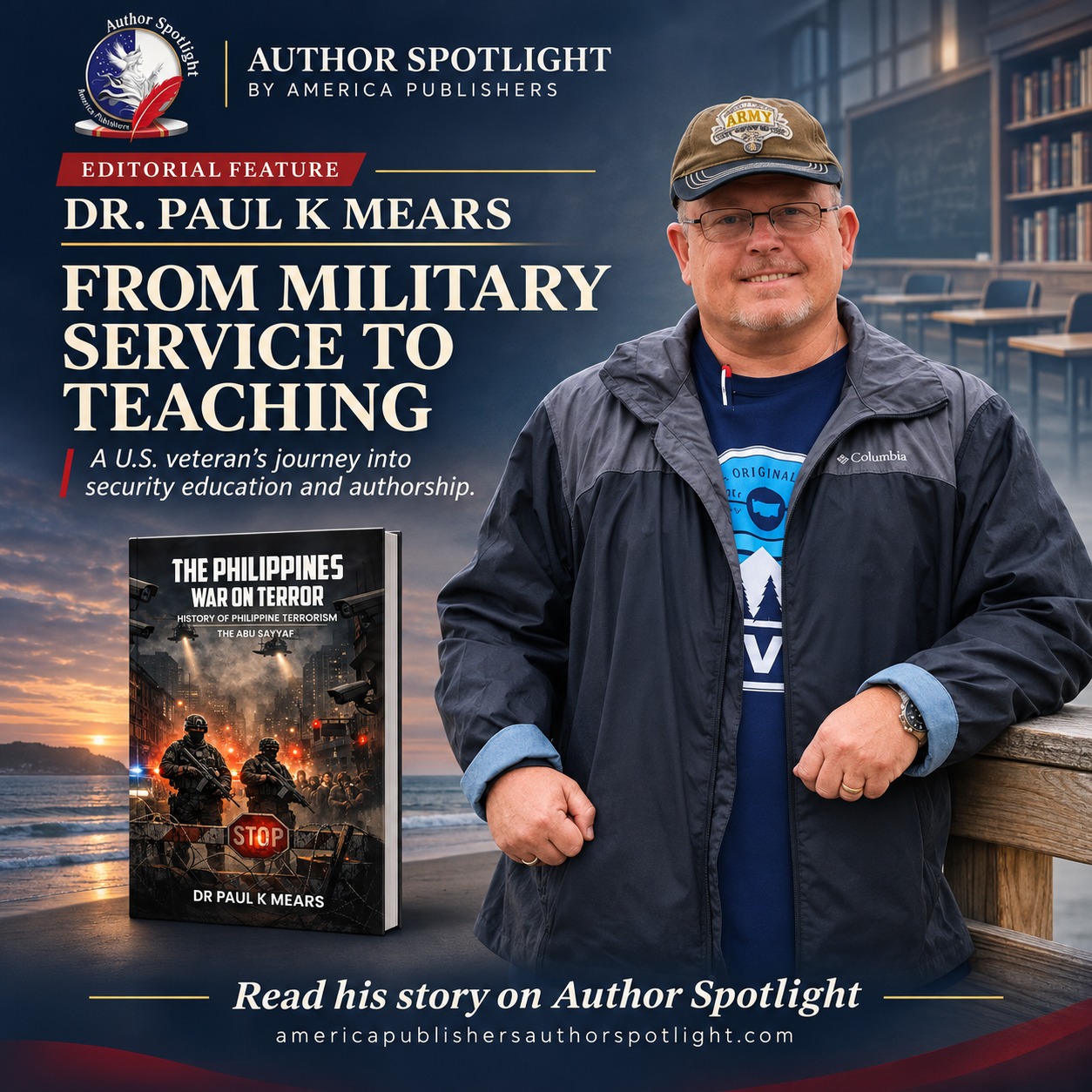
When Dr. Paul K Mears retired from federal service in 2013, he had already worked in two settings where preparation carries immediate consequences: military service and aviation security. He had served in the U.S. Army and Coast Guard, worked as a Federal Air Marshal, and served as an aviation emergency medical instructor. His next chapter took him to Abu Dhabi, where he trained police and special operations personnel.
The move brought teaching to the center of a career that had included command, investigations, and emergency response. As an instructor, Mears took on a responsibility that would outlast any individual training session. The people he taught would have to apply what they learned in situations he might never see.
That transition gives his journey as a U.S. veteran a clear thread. In the Army and Coast Guard, his work involved communicating and coordinating with others. In civilian public service, he worked in institutions with different responsibilities and people to protect. As an educator, he helped others prepare to make decisions of their own.
Where His Military Service Began
Dr. Paul K Mears’s military service included time in the U.S. Army’s Active and Reserve components during two periods, from 1981 to 1986 and from 1990 to 2013. His biography identifies him as a Command Sergeant Major and describes work in special operations and communications. Between those periods, from 1986 to 1990, he served in the U.S. Coast Guard as a drug interdiction boat commander.
Communications offers a way into the everyday responsibilities behind those titles. Information has to reach the people who need it in a form they can use. A message may be clear to the person sending it, yet leave someone elsewhere uncertain about what has changed or what they are expected to do. In work that depends on coordination, that gap can affect everyone who acts on the message.
The Coast Guard assignment brought responsibility for a crew into a maritime law enforcement setting. Command aboard a boat involves the people carrying out the work alongside the duty the crew has been assigned. Each person needs to understand their part and have enough information to carry it out alongside others.
The Army and Coast Guard roles offer two concrete examples of how responsibility travels through a team. It moves through the information people share and through the decisions leaders are accountable for. Both would remain relevant as Mears took on civilian roles with different procedures, authorities, and demands.
Protecting People in Civilian Public Service
Dr. Paul K Mears’ civilian public service career included corrections, investigations, and emergency response. He later moved into federal aviation security, where his work brought him into closer contact with the practical demands of protecting passengers and preparing for emergencies in flight.
Two of his federal roles show different sides of that work. As a Federal Air Marshal, Mears held a protective assignment. As an aviation emergency medical instructor, he helped prepare others to respond when someone needed care. The instructor role brings the traveler into focus in an immediate way. During a medical emergency, the people already present may have to recognize what is happening, communicate what they know, and respond within the limits of their training.
That is where the teaching role becomes especially relevant to his story. Someone can follow an explanation in a classroom and still struggle to recall it under pressure. The instructor has to make the material clear enough for learners to remember what matters and understand when to apply it. Preparation has value at the moment someone has to act on their own judgment.
Mears advanced to field supervisor before retiring from federal service in 2013. By then, instruction was already part of his professional experience. The move overseas gave him the opportunity to make it a larger part of his work.
Teaching People Who Will Make Their Own Decisions
In Abu Dhabi, Dr. Paul K Mears trained police and special operations personnel. His biography also records that he led Global Security Studies from 2014 to 2018 and held a professorial role in Dubai. The work extended his career into an international teaching environment, where the people in front of him had their own professional responsibilities and institutional settings.
Experience gives an instructor examples to draw on. Teaching requires deciding what those examples can show someone working in different circumstances. A learner may understand how a decision was made in one situation and still need help working through what they would do with different information, different responsibilities, or fewer resources. The discussion becomes useful when the reasoning is clear enough for the learner to apply it elsewhere.
Consider a familiar question in emergency planning: who needs to know when circumstances change? The answer depends on the organization, the people involved, and who can take responsibility for the next decision. A military communications role and a civilian emergency planning course may approach that question from different settings. Each asks people to think about how information reaches someone who can use it.
Global security education adds another layer. Students may have to consider how institutions interpret the same problem differently, what each has the authority to do, and who lives with the effects of those decisions. The classroom gives them time to ask questions that can be difficult to pause over during an emergency. What information did someone have at the time? Who was affected? What would have changed the decision?
In an operational role, he was responsible for decisions within his own assignment. In education, he helped people examine decisions they would have to make in theirs. The work depended on explaining enough of the reasoning for another person to use it independently.
From the Classroom to the Printed Page
Readers encounter Mears’s interest in security in The Philippines War On Terror: History Of Philippine Terrorism. The book examines armed conflict in the southern Philippines, including the development of militant groups, government responses, and the consequences for civilians. It also considers what follows military action, including reconstruction and the challenges communities face in rebuilding.
Writing for a general audience gives an author a different kind of teaching task. Readers arrive with their own knowledge of the subject, and they may need context to understand why an event matters or how it relates to what came before. A book gives them time to return to those details, follow an argument at their own pace, and ask questions of the account.
Seen through his service journey, the book is the point where readers enter a conversation Dr. Paul Mears has approached from several professional settings. In military communications, information had to reach the people who could act on it. In aviation instruction, learners had to be ready to recall what they had been taught under pressure. On the page, readers have time to consider how security decisions are made, who carries them out, and what those decisions mean for the people who live with their consequences.
Follow Dr. Paul K Mears for Further Updates
³ Personal Instagram: Click here
The Philippines War On Terror: History Of Philippine Terrorism | Available Now
³Amazon: Click here