
Published on September 9, 2026
Character archetypes are the hidden reason you can meet a fictional person and understand them within seconds. Before their history is revealed, you may already recognize the brave outsider preparing to face impossible odds, the wise mentor guarding an important truth, or the charming Rebel who refuses to obey a broken system.
From Harry Potter’s reluctant courage to Yoda’s patient wisdom, storytellers build upon emotional patterns audiences instinctively understand. A character archetypes list reveals the desires, fears, strengths, and flaws beneath those patterns. Yet the best archetype examples never feel copied. Personal histories, contradictions, relationships, and difficult choices transform familiar foundations into unforgettable individuals.
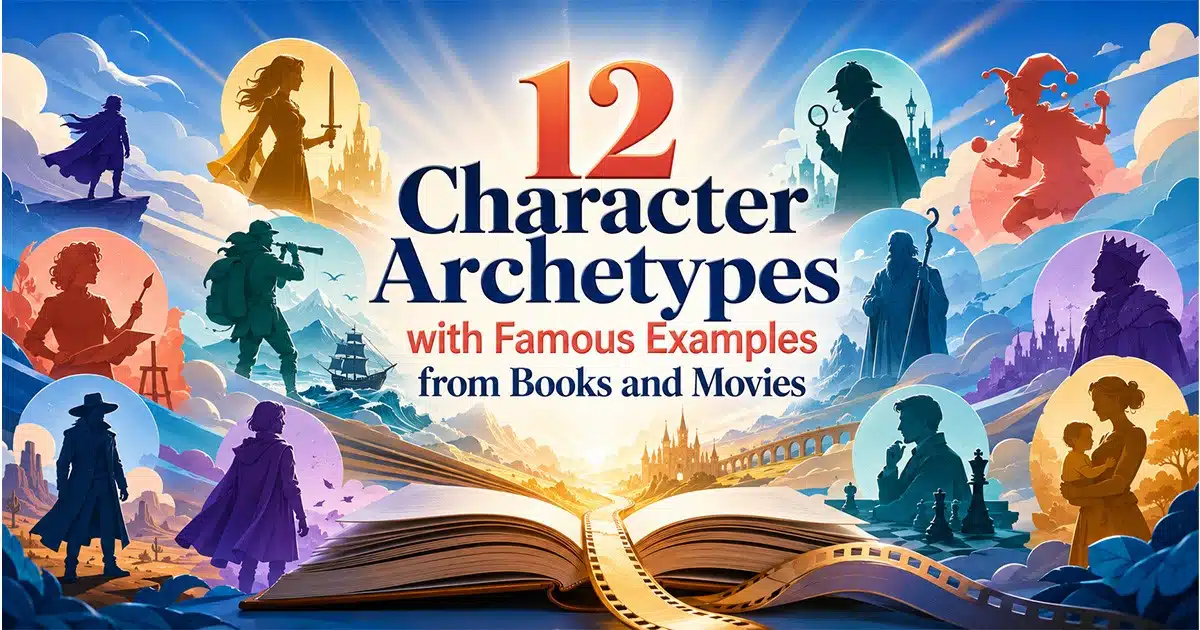
This guide explores 12 character archetypes from books and movies, explains why they remain so powerful, and shows writers how to use literary archetypes without producing predictable characters.
What Are Character Archetypes?
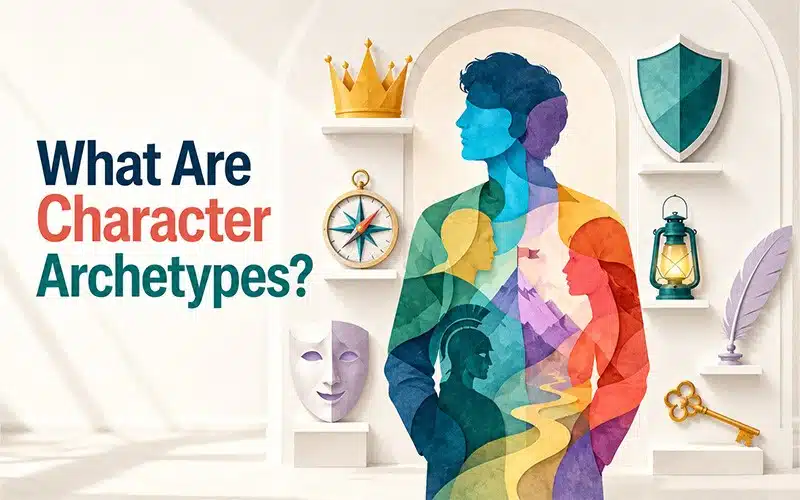
Character archetypes are recurring models based on recognizable human desires, fears, and behaviors. Instead of describing an entire personality, an archetype identifies its central emotional drive. The Hero seeks to demonstrate courage, the Explorer pursues freedom, the Caregiver protects others, and the Ruler values order and control.
The concept is commonly associated with Swiss psychiatrist Carl Jung, whose work examined recurring symbolic patterns in human psychology. The twelve-part framework used here is a later Jungian-influenced model developed and popularized by Carol S. Pearson. Authors and screenwriters now apply these patterns as creative tools for understanding what characters want, fear, and struggle to achieve.
However, common character archetypes are not the same as plot roles. A protagonist may behave like a Hero, Rebel, Lover, Creator, or Sage. Literary archetypes also do not determine whether someone is good, evil, central, or secondary. They provide a foundation; background, culture, relationships, values, and difficult choices create the individual.
Why Do Character Archetypes Appear in So Many Stories?
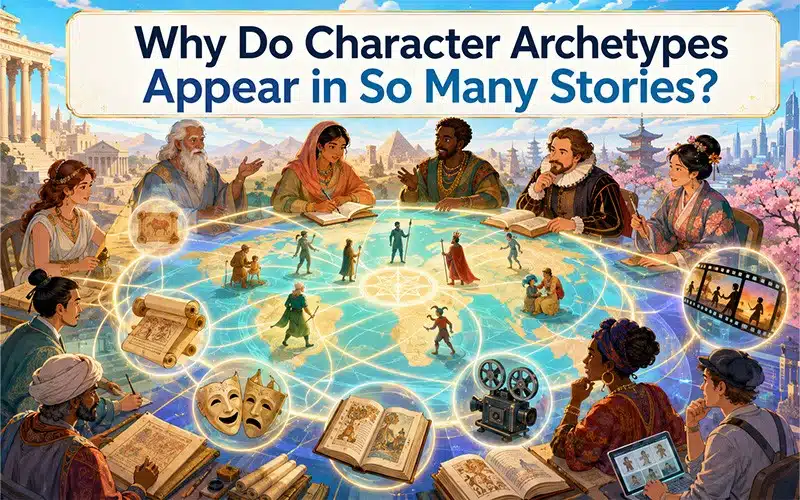
Character archetypes appear across cultures and genres because they reflect shared experiences: the desire to belong, the need to protect others, the search for freedom, and the fear of losing control. These motivations help audiences connect with unfamiliar characters quickly.
That is why a character archetypes list can include figures from ancient myths, classic novels, modern fantasy, romance, and superhero films. Their worlds differ, but their emotional struggles remain recognizable. They also create natural conflict: a controlling Ruler may oppose an independent Explorer, while an Innocent may be influenced by a cynical Rebel.
The strongest archetype examples add unexpected complexity. A Hero may be terrified, a Caregiver may become controlling, and a Jester may hide sadness behind humor. Audiences recognize the pattern but continue reading to discover how that particular person will challenge it.
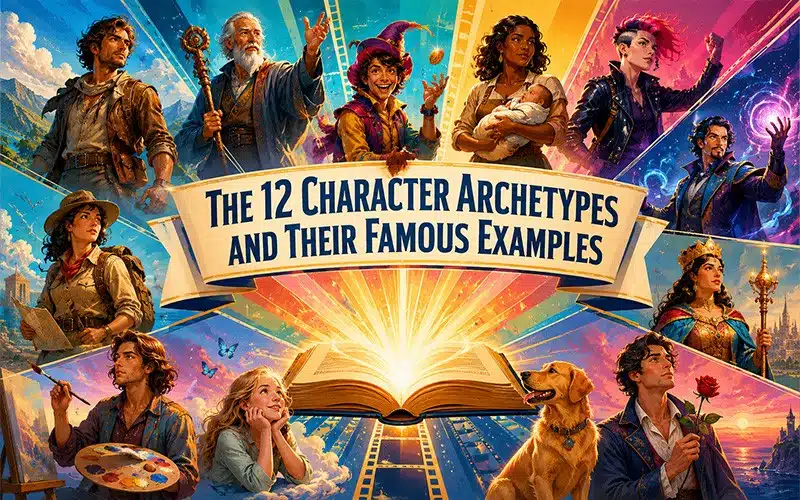
The 12 Character Archetypes and Their Famous Examples
This character archetypes list focuses on the motivations behind each pattern rather than surface-level personality traits. Fictional people may combine several types or change as their stories unfold, so the archetype examples below identify the pattern most relevant to each character’s desires, fears, and decisions.
- The Innocent
Central desire: Safety and happiness
Greatest fear: Corruption or losing trust
Strengths: Optimism, sincerity, and imagination
Weakness: Naivety and vulnerability
The Innocent believes goodness can prevail, even when the world suggests otherwise. Although inexperienced, this character’s hope can reveal possibilities that cynical figures overlook.
Dorothy Gale in The Wonderful Wizard of Oz reflects this pattern through her trusting nature and desire to return home. Paddington Brown also expects decency from others, even when met with suspicion. The Innocent becomes most compelling when hardship challenges their faith without completely destroying it.
- The Everyman
Central desire: Belonging and connection
Greatest fear: Rejection or isolation
Strengths: Empathy, humility, and perseverance
Weakness: Conformity and low confidence
The Everyman is relatable because they possess no extraordinary power, status, or authority. When placed in unfamiliar circumstances, they rely on persistence, friendship, and practical judgment.
Arthur Dent in The Hitchhiker’s Guide to the Galaxy is an ordinary man unexpectedly thrown into an absurd intergalactic adventure. Bilbo Baggins in The Hobbit similarly begins as a comfort-loving individual who would rather remain at home than face trolls and dragons. Their ordinariness gives audiences an accessible entrance into extraordinary worlds.
- The Hero
Central desire: To prove worth through action
Greatest fear: Failure or helplessness
Strengths: Courage, discipline, and resilience
Weakness: Pride and recklessness
The Hero confronts challenges requiring bravery, sacrifice, or personal growth. Heroism may involve physical action, but it can also emerge through moral conviction or emotional endurance.
Harry Potter repeatedly chooses to confront danger despite his uncertainty and fear. Wonder Woman is driven by a similar determination to protect humanity and defend her principles. Effective Heroes are not fearless or invincible. They become heroic because they decide that protecting someone or pursuing what is right matters more than their personal safety.
- The Caregiver
Central desire: To protect and support others
Greatest fear: Failing someone in need
Strengths: Compassion, generosity, and loyalty
Weakness: Self-neglect or controlling behavior
The Caregiver finds purpose in helping others and may appear as a parent, healer, teacher, friend, or protector. Their defining quality is a willingness to place another person’s needs ahead of their own.
Marmee March in Little Women offers stability and emotional guidance to her daughters during hardship. Samwise Gamgee in The Lord of the Rings expresses the same devotion by supporting Frodo when the journey becomes unbearable. This pattern develops a darker side when protection becomes possessiveness or continuous sacrifice produces resentment.
- The Explorer
Central desire: Freedom and discovery
Greatest fear: Confinement or stagnation
Strengths: Curiosity, independence, and adaptability
Weakness: Restlessness and avoidance of commitment
The Explorer is drawn toward unknown places, experiences, or truths. The journey may be physical, but it can also represent an internal search for identity and authenticity.
Huckleberry Finn travels down the Mississippi while questioning the beliefs society taught him. Indiana Jones embodies the adventurous side through his pursuit of lost histories and mysterious artifacts. Among common character archetypes, the Explorer works particularly well in stories about travel, self-discovery, independence, and the personal cost of freedom.
- The Rebel
Central desire: To challenge injustice
Greatest fear: Powerlessness or conformity
Strengths: Independence, conviction, and resourcefulness
Weakness: Extremism and destructive defiance
The Rebel refuses to accept a system simply because everyone else considers it normal. This figure may be an outlaw, revolutionary, whistleblower, outsider, or ordinary person who finally refuses to remain silent.
Katniss Everdeen in The Hunger Games becomes a symbol of resistance against a system sustained by violence and fear. Robin Hood challenges corrupt authority by taking from the powerful to assist the oppressed. A Rebel becomes more meaningful when they have an alternative vision to create rather than merely an institution to destroy.
- The Lover
Central desire: Intimacy and devotion
Greatest fear: Rejection or loneliness
Strengths: Passion, empathy, and commitment
Weakness: Jealousy or loss of identity
The Lover is defined by devotion, which does not have to be romantic. This attachment may involve a partner, family, community, artistic calling, or deeply held ideal.
Elizabeth Bennet in Pride and Prejudice reflects a thoughtful version of this pattern. Her relationship with Mr. Darcy requires both individuals to confront their mistaken assumptions. Jack Dawson in Titanic displays its openly romantic and self-sacrificing side. The Lover faces the greatest tension when forced to choose between personal attachment and another important value.
- The Creator
Central desire: To make something meaningful
Greatest fear: Mediocrity or unrealized potential
Strengths: Imagination, originality, and dedication
Weakness: Perfectionism and obsession
The Creator wants to bring something new into existence, whether it is art, technology, a social system, or life itself. Imagination can transform the world, but ambition becomes dangerous when creation matters more than responsibility.
Victor Frankenstein is one of the clearest literary archetypes showing the Creator’s shadow side. He succeeds in producing life but refuses to accept responsibility for what he has made. Tony Stark is another brilliant inventor whose creations can either defend humanity or endanger it. Both demonstrate the consequences of innovation without accountability.
- The Jester
Central desire: Joy and freedom
Greatest fear: Boredom or insignificance
Strengths: Humor, spontaneity, and insight
Weakness: Irresponsibility or hidden pain
The Jester entertains, disrupts tension, and voices truths others are afraid to express. Although frequently treated as comic relief, this figure can expose uncomfortable realities through humor.
Puck creates confusion and comedy in Shakespeare’s A Midsummer Night’s Dream. Genie in Disney’s Aladdin uses humor and boundless energy, yet his desire for freedom gives him genuine emotional depth. Strong Jesters often understand more than they reveal, using humor as both a social weapon and a shield against vulnerability.
- The Sage
Central desire: To discover truth
Greatest fear: Ignorance or deception
Strengths: Wisdom, intelligence, and objectivity
Weakness: Detachment and overthinking
The Sage believes knowledge can lead to better decisions. This figure often appears as a scholar, detective, adviser, philosopher, or mentor but must learn that information cannot solve every emotional problem.
Sherlock Holmes represents the analytical Sage, using observation and deduction to uncover hidden truths. Yoda provides a more spiritual interpretation through his emphasis on patience, discipline, and self-knowledge. A Sage becomes more believable when their wisdom has limits or when circumstances force them to act without complete information.
- The Magician
Central desire: Transformation
Greatest fear: Losing control
Strengths: Vision, influence, and intuition
Weakness: Manipulation and arrogance
The Magician understands forces others cannot perceive. Unlike the Creator, who makes something new, this figure transforms people, situations, or systems through specialized knowledge. The magic may be literal or represented through science, leadership, psychology, or strategy.
Prospero in The Tempest uses supernatural knowledge to control events around him. Gandalf guides others toward transformation without completing their challenges for them. This pattern often raises an important question: will exceptional power be used to liberate people or control them?
- The Ruler
Central desire: Order and stability
Greatest fear: Chaos or losing authority
Strengths: Leadership, confidence, and responsibility
Weakness: Rigidity and authoritarianism
The Ruler seeks control because they believe order is necessary. This figure may be a monarch, political leader, parent, executive, or anyone responsible for maintaining a system.
Mufasa in The Lion King represents responsible authority by teaching Simba that leadership includes duty and respect for life. Lady Macbeth presents a darker variation, pursuing royal power until ambition contributes to her collapse. As these archetype examples show, the Ruler can become either a wise protector or an oppressive force.
Ultimately, a character archetypes list should be treated as a flexible creative guide. Familiar patterns can overlap, evolve, and reveal unexpected qualities under pressure. The archetype provides the emotional foundation, but a character’s history, relationships, contradictions, and choices make that individual memorable.
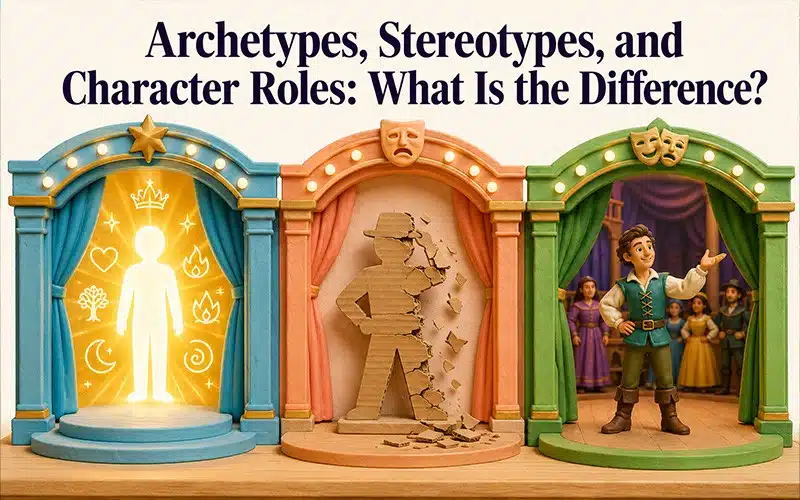
Archetypes, Stereotypes, and Character Roles: What Is the Difference?
Character archetypes are sometimes confused with stereotypes, tropes, and story roles, but these terms describe different aspects of storytelling. Understanding the distinction helps writers use familiar patterns without flattening characters into predictable types.
An archetype represents a broad human motivation, such as the Hero’s need to demonstrate courage or the Caregiver’s desire to protect others. A stereotype reduces a person or group to an oversimplified set of assumptions, often based on identity, occupation, age, culture, or appearance. The first provides a flexible emotional foundation; the second replaces individuality with generalization.
A trope is a recognizable storytelling convention. “Enemies to lovers,” “the chosen one,” and “the reluctant detective” are tropes because they describe familiar situations or devices. A story role, meanwhile, explains a character’s function in the plot. The protagonist drives the central journey, while the antagonist creates opposition. Either one can embody different character archetypes.
| Term | What It Describes | Simple Example |
| Archetype | A recurring motivation or human pattern | A Rebel fighting an unjust system |
| Stereotype | A shallow assumption about a type of person | An elderly character who is automatically helpless |
| Trope | A familiar storytelling device or convention | A secret heir to the throne |
| Story role | A character’s function within the plot | Protagonist, antagonist, or supporting character |
Strong archetype examples remain recognizable while still possessing individual histories, beliefs, habits, and contradictions. The same Hero framework could produce a confident warrior, a frightened parent, or a quiet student who finally speaks against injustice.
Even common character archetypes should surprise the audience sometimes. A Caregiver may resent being needed, a Sage may make an emotional decision, or a Ruler may willingly surrender power. Those contradictions do not weaken the pattern; they make the person inside it feel human.
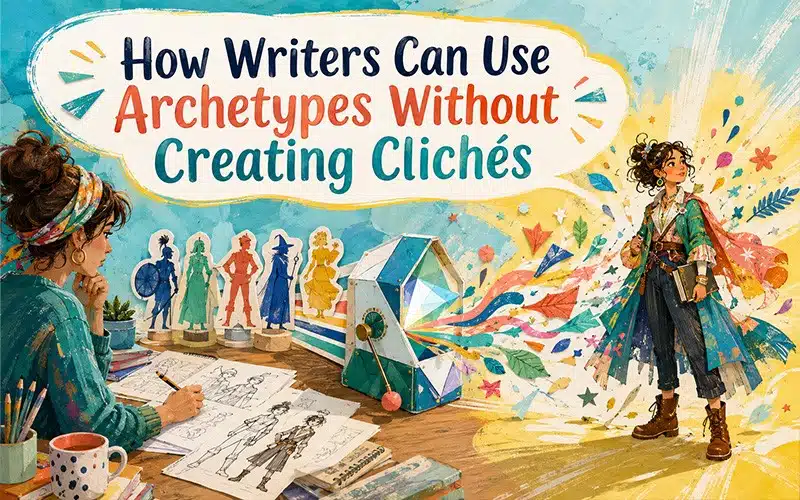
How Writers Can Use Archetypes Without Creating Clichés
Character archetypes work best as starting points for exploration, not instructions that determine every decision a fictional person makes. Once you know what fundamentally drives your character, move beyond the label by asking what shaped that desire and what might force it to change.
Begin with a character archetypes list and choose one dominant pattern. Then add a secondary archetype that creates internal tension. A Hero who also carries the fears of an Innocent may act bravely while privately longing for safety. A Caregiver with the ambition of a Ruler may genuinely protect others but struggle to let them make independent choices.
Next, give the character a contradiction that cannot be explained by the archetype alone. A Rebel might secretly crave approval from authority. A Lover may struggle to express affection. A Sage could possess extensive knowledge but consistently misunderstand other people’s emotions. These complications prevent common character archetypes from becoming mechanical.
Writers should also consider how upbringing, culture, relationships, social position, and past mistakes influence behavior. Two characters can share the same basic motivation while expressing it in completely different ways. This is why literary archetypes have remained useful across genres and generations: the underlying pattern may be familiar, but its human expression can continually change.
Try this short exercise: write down what your character wants, what they fear, what false belief they hold, and what choice would place those three elements in conflict. Then ask which part of their identity will dominate when the consequences become unavoidable. The answer may reveal not only the character’s archetype but also the direction of their emotional arc.
America Publishers Author Spotlight regularly explores storytelling, books, and the creative choices that shape memorable writing. Its editorial resources offer readers and emerging authors further insight into character development and the wider craft of storytelling.
Conclusion
The reason familiar fictional figures continue to feel fresh is simple: an archetype may establish a recognizable foundation, but personality, experience, conflict, and choice determine who a character becomes. The same basic pattern can produce a hopeful child, a reluctant adventurer, a conflicted leader, or a hero whose greatest battle takes place within.
For readers, recognizing character archetypes can reveal why certain relationships, struggles, and transformations feel so powerful. For writers, they provide a practical way to uncover a character’s central desire, deepest fear, natural strengths, and dangerous flaws. They should never function as rigid labels, however. The most memorable characters often combine multiple patterns, contradict expectations, and change when their beliefs are tested.
Use these twelve models as creative doorways rather than finished blueprints. Start with a familiar emotional truth, then add the history, imperfections, decisions, and surprises that make the person unmistakably your own.
Frequently Asked Question
-
What are the 12 main character archetypes?
The twelve commonly used types are the Innocent, Everyman, Hero, Caregiver, Explorer, Rebel, Lover, Creator, Jester, Sage, Magician, and Ruler. Each is organized around a central desire and fear. The Hero seeks to demonstrate courage, for instance, while the Explorer pursues freedom and the Caregiver wants to protect others. These categories are flexible frameworks rather than strict personality classifications.
-
What is the most common archetype in storytelling?
The Hero is arguably the most recognizable because many stories center on someone confronting danger, hardship, or injustice. However, not every protagonist is a traditional Hero. Depending on the genre, the central figure might behave more like an Everyman, Rebel, Lover, Explorer, or Sage. Several patterns can also operate within the same story.
-
Can one character belong to more than one archetype?
Yes. Combining two or more patterns often produces a more believable character. Hermione Granger, for example, displays the knowledge-seeking qualities of a Sage, the achievement-driven courage of a Hero, and the loyalty of a Caregiver. One pattern may dominate initially, while another becomes more important as the character grows or encounters new challenges.
-
What is the difference between an archetype and a stereotype?
An archetype expresses a broad and recognizable human motivation, such as the desire for freedom, knowledge, love, or control. A stereotype reduces an individual or group to shallow and frequently harmful assumptions. Archetypes allow room for complexity and variation; stereotypes erase those differences. Writers can avoid stereotyping by giving each person a distinctive background, worldview, voice, and capacity for contradiction.
-
Are archetypes the same as protagonists and antagonists?
No. Protagonist and antagonist describe functions within a plot, whereas an archetype describes the motivation influencing a person’s behavior. A protagonist could be a Hero seeking justice, a Creator pursuing an ambitious vision, or a Rebel challenging authority. Similarly, an antagonist could act as a controlling Ruler, a manipulative Magician, or even a Caregiver whose desire to protect has become destructive.
-
How can writers choose the right archetype for a character?
Begin by identifying what the character wants most and what they are most afraid of losing. Then consider how those forces influence their decisions under pressure. Choose the model that best represents this internal drive, but do not stop at the label. Add a conflicting desire, personal history, mistaken belief, moral boundary, and difficult choice. These details will turn a recognizable foundation into a distinctive individual.
